00:00:01
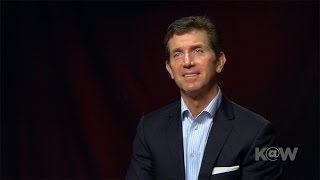
Our Guest today is Bob Moritz chairman
00:00:04
and Senior partner of pricewater house
00:00:06
Coopers LLP the US member of PWC
00:00:10
International we plan to speak about two
00:00:13
topics leadership and financial
00:00:16
literacy Bob thank you so much for
00:00:18
joining us here today happy to be here
00:00:21
so you've been in your current role of
00:00:23
chairman of price order house scoopers
00:00:26
since July of 2009 that's correct uh but
00:00:29
I wonder if you could tell our audience
00:00:30
about your earliest experience of
00:00:33
leadership what was that like probably
00:00:36
the earliest example of leadership was
00:00:39
when I used to work back at home during
00:00:43
high school and college Years uh believe
00:00:45
it or not I worked at a women's clothing
00:00:47
store my role model was in charge of uh
00:00:51
the back office so to speak responsible
00:00:54
for delivery stock uh management of the
00:00:57
the office and the functions and over
00:01:00
the first couple of years while he was a
00:01:01
clearly a role model someone people that
00:01:03
sought out I ended up eventually
00:01:06
becoming that person probably by the
00:01:07
time I was a sophomore perhaps uh in
00:01:10
college at that point in time so gave me
00:01:12
a chance to see what it was like to be
00:01:14
that sought-after individual to have the
00:01:17
responsibility to look after other
00:01:18
people and the responsibility for the
00:01:21
accountability of getting the job done
00:01:23
each and every day in the right way
00:01:25
possible now based on that early
00:01:28
experience how did that shaped the kind
00:01:30
of leader you became and and did you
00:01:33
believe that leadership is something
00:01:35
that's inborn or it's something that you
00:01:37
learned I personally believe leadership
00:01:39
can be
00:01:40
learned as I think about my own career
00:01:43
progression starting with the time I was
00:01:45
at this clothing
00:01:46
store I saw many different examples of
00:01:50
people that inspired me Shaped me and
00:01:53
even sponsored me in my own career
00:01:56
progression and if you have the right
00:01:58
mindset where every opportunity is a
00:02:00
learning opportunity you do have the
00:02:03
opportunity to grow into and learn
00:02:05
examples of how to do things and not do
00:02:08
things and that goes both to management
00:02:09
and Leadership responsibilities so in
00:02:12
that particular role I think it did give
00:02:13
me an appreciation of what others do how
00:02:17
they do it the personalities associated
00:02:19
with it and how do you think about
00:02:21
pulling the strings to get the most out
00:02:23
of the people to get an effective team
00:02:25
to operate as appropriately as possible
00:02:27
and for you to get some credit
00:02:30
um not from a compensation perspective
00:02:32
but rather from a self-fulfillment
00:02:34
perspective in terms of what it's it
00:02:35
like to have a high performing team and
00:02:37
you actually be a major role player in
00:02:40
that team and that means one day you
00:02:41
might be leading it one day you might be
00:02:43
supporting it one day you might be part
00:02:44
of it but that's the interesting part of
00:02:46
leadership it's not necessarily just by
00:02:48
those that have a title it's by the
00:02:51
acting and the behaviors that people
00:02:52
bring to the job each and every day
00:02:54
right now and and looking over your your
00:02:57
your uh bio one of the things that that
00:03:00
I found really interesting is that you
00:03:02
spent three years uh in pwc's Tokyo
00:03:05
office uh how was leading in Japan and
00:03:09
in Asian culture different than leading
00:03:11
in the US much different um it really
00:03:15
was an inflection point in my career to
00:03:18
understand for the first time ever
00:03:20
personally being outside of the states
00:03:22
to interact with business and for that
00:03:25
matter a culture uh that was much
00:03:27
different than I was used to uh from a
00:03:28
western civilization
00:03:31
so the first challenge was how do you
00:03:33
become
00:03:34
accepted um and it taught me honestly
00:03:37
the first learnings I ever equated to
00:03:40
around the concept of diversity because
00:03:42
in Japan I was the minority without
00:03:44
changing skin color or gender or
00:03:46
anything else associated with it um
00:03:48
second was the responsibilities that
00:03:51
were provided to you you could choose to
00:03:53
work 247 or you can choose to
00:03:56
self-correct work versus life um and
00:03:59
make each one of those personal and
00:04:01
professional opportunities a leadership
00:04:03
responsibility and a balancing act that
00:04:05
you have to take responsibility for and
00:04:07
third the position itself gave me a
00:04:09
higher obligation higher sense of
00:04:10
purpose I was sent there to serve our us
00:04:14
and European uh institutions
00:04:16
particularly with a focus on the
00:04:17
financial institutions but on a
00:04:19
self-initiated way to then interact with
00:04:22
the Japanese the Japanese government
00:04:23
agencies and other things like that
00:04:25
which was all part of what I'll call an
00:04:27
innate obligation to serve a high higher
00:04:30
responsibility which I think really
00:04:32
helped position me to understand a life
00:04:35
outside of the US help understand the
00:04:37
concepts of diversity and for that
00:04:39
matter understand and appreciate the
00:04:41
concepts of
00:04:43
responsibility and people's belief in
00:04:45
you that you can be accountable for
00:04:47
those things and then it's up to you to
00:04:48
actually dictate what you want to do
00:04:49
with them and how you want to do it so
00:04:51
as you just said it helped uh redefined
00:04:54
the way you looked at diversity how how
00:04:56
has that translated into the way you
00:04:58
lead PWC today
00:05:00
so it is translated into sort of three
00:05:03
different things um diversity in and of
00:05:05
itself and inclusiveness is a huge
00:05:07
priority for me personally um it's
00:05:10
something I speak about all the time um
00:05:12
and that could be across cultures gender
00:05:15
race uh sexual orientation doesn't
00:05:17
matter um and as a result we PWC try to
00:05:21
then profile ourselves as we think about
00:05:23
the type of people were recruiting and
00:05:25
the inclusive environment for them to
00:05:26
individually succeed and I have to role
00:05:28
model that I have to lead that from the
00:05:29
fr front and as a result that's why I
00:05:31
Look to have a very diverse team because
00:05:33
at the end of the day diverse teams give
00:05:35
you the best thinking the best thinking
00:05:36
gives you the best actions and
00:05:38
ultimately the best results I think is
00:05:40
proven by some uh many different
00:05:41
academic studies and the like the second
00:05:44
thing though is how do you allow for an
00:05:47
organization like us even though I
00:05:48
oversee the US operations I still have a
00:05:51
global responsibility so making sure
00:05:54
that our under PE understand people
00:05:56
understand the cultural aspect of doing
00:05:59
business business globally and not
00:06:00
making any assumptions about what is
00:06:03
said or unsa is hugely important so
00:06:06
there's times where you need to set the
00:06:08
right environment there's times you need
00:06:09
to actually interject and course correct
00:06:12
there's times you need to let people
00:06:14
learn on their own or sometimes
00:06:16
interject to help them learn and that's
00:06:18
hugely important as you think about a
00:06:20
professional service firm like PWC
00:06:22
having the best talent the only way
00:06:24
you're going to have the best talent is
00:06:24
to have the most diverse Talent so I've
00:06:26
got to lead that by example from the
00:06:27
front so based on what you said said um
00:06:30
I I guess a very important aspect would
00:06:32
be uh to develop u a leadership style
00:06:36
that would be effective globally uh how
00:06:39
how would you define your own leadership
00:06:41
style and how did you consciously
00:06:43
develop it I think leadership styles
00:06:47
develop both by conscious dedication and
00:06:50
change but also by a lot of unconscious
00:06:52
things that happen uh because at the end
00:06:54
of the day there's again human behavior
00:06:56
there were three things that really
00:06:58
impacted me as I
00:07:00
had my career PR progression one was I
00:07:02
actually spent a year in the human
00:07:03
capital function so as a Professional
00:07:05
Services firm it was a great opportunity
00:07:07
to see the other side how do you meet
00:07:11
understand and develop a relationship
00:07:13
with people to understand what they want
00:07:15
figure out a way to match that with what
00:07:17
you need and how do you get the two
00:07:20
together to inspire the most and get the
00:07:21
highest performance out of people so
00:07:23
they can reach their fullest potential
00:07:24
great learning opportunity that allowed
00:07:27
me to then apply those same learnings at
00:07:29
that at that point in time at a early
00:07:30
junior age later on in career path Japan
00:07:33
was another one and the the last one was
00:07:36
probably the events in
00:07:38
2001 where you had the combination of
00:07:41
the demise of Anderson rcom and Enron
00:07:44
you saw people with tears in their eyes
00:07:46
that lost everything uh you also saw the
00:07:48
events of 911 and it gave you as a
00:07:51
leader a higher moral obligation to
00:07:55
protect and serve so my style is very
00:07:59
inclusive
00:08:00
and more consensus building you have to
00:08:01
strike the right balance between
00:08:03
consensus building building and
00:08:04
decision- making second is
00:08:07
transparency the average age of our
00:08:09
organization is 29 no one probably
00:08:12
appreciates that when they think about
00:08:13
an organization like PWC so I've got to
00:08:16
turn the place upside down and engage
00:08:18
everyone as if they're coming off a
00:08:19
campus in the creation of our strategy
00:08:22
and understanding of our strategy and
00:08:24
then their role in playing a role in the
00:08:27
strategy and its execution so rather
00:08:29
than just talk from the top down I
00:08:31
actually want to engage from the bottoms
00:08:33
up so making sure that communication and
00:08:35
transparency is visible to all of our
00:08:37
employees because as I said if I can get
00:08:40
39,000 people doing a little bit better
00:08:42
each and every day the place has un
00:08:44
unbelievable exponential potential and
00:08:47
the last piece is how do you as best you
00:08:52
can coach people individually and spend
00:08:56
some time and you do that in our
00:08:57
organization with four key behaviors
00:08:58
you've got to have a relationship
00:09:01
relationships take time you've got to
00:09:03
deliver value that's value to the person
00:09:06
next to you to the left or right that
00:09:08
you are able to invest in the long term
00:09:11
and team together you're both in this
00:09:13
together an our firm uh Professional
00:09:16
Services firm I would argue we're not an
00:09:18
individual sport it's a team sport and
00:09:20
last but not least you ever have to uh
00:09:22
have a degree of empathy you and if
00:09:25
you're going to have empathy for the
00:09:26
person situation you need to have a
00:09:27
relationship so that becomes really
00:09:30
important and you need to actually
00:09:31
deliver some value to that person that
00:09:33
helps them along the way so those
00:09:34
behavioral aspects are really important
00:09:36
so that's the other element of
00:09:37
leadership in terms of how do you
00:09:39
demonstrate that more and more each and
00:09:40
every day on a consistent
00:09:42
basis so you've described your
00:09:44
leadership principles how do you apply
00:09:46
these to developing leaders within PWC
00:09:50
so PWC has a huge
00:09:53
responsibility to enhance someone's
00:09:55
resume regardless if they stay or go
00:09:57
from our organization I say many times
00:10:00
we're an extension of the universities
00:10:01
and colleges around the world in terms
00:10:04
of the learnings that people can achieve
00:10:06
on campus and we continue off campus so
00:10:08
I've got to create the right environment
00:10:11
for
00:10:11
learning I've got to create the right
00:10:14
expectation of our leaders to engage
00:10:16
with those right
00:10:17
behaviors and as needed put programs in
00:10:20
place to help people's individual
00:10:22
development because in everyone there is
00:10:25
a leader in some way shape or form title
00:10:28
or not does not matter and as a result
00:10:31
how do you lead by example how do you
00:10:33
coach appropriately when needed how do
00:10:35
you challenge respectfully to improves
00:10:38
people's behaviors and ultimately
00:10:40
performance and get them to Aspire to be
00:10:44
something they never thought they were
00:10:45
capable of themselves and Inspire them
00:10:48
enough to
00:10:50
succeed and that's the kind of
00:10:52
one-on-one conversations that has to
00:10:54
happen that has that's the role modeling
00:10:56
when you're in front of large groups of
00:10:57
people to talk about the world and
00:10:58
possibilities and how they play a role
00:11:00
and that ties together engagement of
00:11:02
strategy individual role playing their
00:11:06
individual performance and then
00:11:07
hopefully the development of leaders
00:11:09
it's amazing how many people have left
00:11:11
our
00:11:12
organization uh for the right reasons to
00:11:14
go on out things that are CEOs CFOs
00:11:17
board members and the like I'd actually
00:11:19
at times when you look at the facts were
00:11:20
probably as good um as the Goldman and
00:11:23
the general exit of the world that have
00:11:25
at some point in time with been PWC and
00:11:27
have left us to go on and do great
00:11:28
things or stay with PWC and do some
00:11:31
great things inside the firm that's
00:11:32
that's that's great uh now when you try
00:11:34
to
00:11:35
recruit people for senior leadership
00:11:38
roles what attributes do you look for so
00:11:42
I've done this recently with my own
00:11:44
leadership team uh what I look for in
00:11:46
terms of attributes is someone who's
00:11:48
going to demonstrate behaviors that I
00:11:50
expect um I'm going to look for somebody
00:11:53
who serves not somebody who should be
00:11:56
served themselves um I look for
00:12:01
agility I look for how did you deal with
00:12:04
a challenging issue in front of you and
00:12:07
what did you do to work your way through
00:12:08
it up until the point of making
00:12:10
decisions and what did you do thereafter
00:12:12
and how did you yourself coach others
00:12:15
along the way so this is not about your
00:12:17
own self image it's around a learning
00:12:20
opportunity for everybody else around
00:12:21
you so I look for those key thingses and
00:12:23
typically in a recruiting process try to
00:12:25
get to examples of that the last thing I
00:12:27
do look for is I'm always recruiting for
00:12:30
best athlete um while they may be
00:12:32
recruited for a particular role I want
00:12:34
to make sure they have an understanding
00:12:36
of the culture and whether culturally
00:12:37
they fit in PWC and I also want to ask
00:12:40
that question because I'm hoping at
00:12:42
whatever age they may be it's for a
00:12:43
lifetime so I'm looking to say this is
00:12:46
only an option of a role that will
00:12:48
create multiple options for many
00:12:50
different roles over your career path
00:12:53
and I know in today's
00:12:54
generation people will leave jobs many
00:12:57
times over we continue to to say two
00:12:59
things if you stay two years at versus
00:13:01
six years at PWC you probably have a 10
00:13:04
times multiple of career earnings and a
00:13:06
10 times multiple of uh career
00:13:08
progression the other thing we say is
00:13:11
that you can have many different
00:13:13
opportunities in PWC because of the
00:13:14
things we do without ever leaving and
00:13:17
that's what we want to make sure happens
00:13:19
even with our senior people as we
00:13:20
recruit out in the marketplace right now
00:13:22
I'm going to take one of the things that
00:13:24
you just said and turn it back at you
00:13:27
during your leadership career what would
00:13:29
you say is the most
00:13:32
challenging uh or the biggest challenge
00:13:34
that you you ever faced how did you
00:13:37
overcome it and what did you learn from
00:13:40
it probably the biggest challenge I ever
00:13:43
had to deal with
00:13:45
was the events on
00:13:48
9911 I was just responsible for our
00:13:51
financial services
00:13:54
practice any given day we've got 250
00:13:56
people in the World Trade Centers I'm
00:13:58
working on
00:13:59
clients thankfully that day we had two
00:14:01
training sessions a lot of people had
00:14:02
left the World Trade Centers a couple of
00:14:05
us were at a training event across the
00:14:07
river in New Jersey someone walked in
00:14:09
and said a planeet hit the first Tower a
00:14:11
lot of us went outside we saw the second
00:14:13
plane hit the tower then we saw both
00:14:14
Towers come down from
00:14:16
afar cell phones didn't work and from a
00:14:19
personal perspective I knew my family
00:14:21
and friends were generally
00:14:23
safe but I had as a leader now 250
00:14:26
people that I had no idea where they
00:14:28
were huge challenge in terms of what do
00:14:30
you do how do you organize people to
00:14:34
track everybody down how do you decide
00:14:37
what to do and when to do it and
00:14:39
thankfully that day all of our people
00:14:42
got out of the building we had about 60
00:14:43
people in the building they all got out
00:14:44
everyone was safe that was in the
00:14:45
buildings unfortunately because of our
00:14:47
size and scale we did have six people on
00:14:49
the planes that lost their lives that
00:14:52
day the most challenging thing was day
00:14:54
two we closed the office down but three
00:14:57
of us went into the office to plan out
00:15:00
how will we track everybody down from a
00:15:02
personal perspective and what will we do
00:15:05
with our clients thereafter and it was
00:15:08
always people
00:15:09
first by the afternoon became the most
00:15:12
challenging point if you hadn't heard
00:15:14
from those people at what point in time
00:15:17
did you call mom or dad to say we've not
00:15:19
heard from your son or daughter have you
00:15:23
it might not have been top of mind for
00:15:24
them to call us but worst fears might be
00:15:28
that they're under Rubble
00:15:29
so the learnings then which I do equate
00:15:32
to going back to my time in human
00:15:34
capital and the HR function was how do
00:15:37
you make sure you take care of people
00:15:38
first if you do that the rest will
00:15:41
actually be taken care of itself um and
00:15:44
that was probably one of the biggest
00:15:46
challenges I've ever dealt with from an
00:15:47
emotional perspective a leadership
00:15:50
perspective and then making the tough
00:15:51
calls in terms of what to do and what
00:15:52
not to do and when to do it sure oh
00:15:55
that's um that's a great answer uh one
00:15:59
thing I've I've often noticed is that uh
00:16:03
truly responsible leaders uh look beyond
00:16:07
the immediate bottom line and try to do
00:16:10
things that affect society as a whole
00:16:13
and and that's what sort of brings me to
00:16:15
the the initiative of financial literacy
00:16:18
earn your future now I will say in the
00:16:20
interest of full disclosure that
00:16:22
knowledge at Wharton is a partner with
00:16:24
PWC it is very proud to be a partner
00:16:26
with PWC in this initiative
00:16:29
but what inspired you to make financial
00:16:32
literacy such a priority for your firm
00:16:35
so like everything else this isn't a bob
00:16:38
meritz decision this was a team decision
00:16:40
for us to go
00:16:41
forward we have two fundamental beliefs
00:16:44
one is if you look to today's societal
00:16:47
problems government can't solve them by
00:16:49
themselves business can't solve them by
00:16:52
themselves nor can the communities solve
00:16:54
them by themselves and particularly if
00:16:56
you look over the last 5 years or so
00:16:58
that's ever more evident than uh
00:17:00
previously so we had an obligation to
00:17:03
step our game up on corporate
00:17:05
responsibility broadly we decided to
00:17:07
focus on four areas one was around pro
00:17:10
bono work in the communities uh because
00:17:12
of the difficulties of the economy in
00:17:14
the like second was this concept of
00:17:17
diversity third was the concept of going
00:17:19
green as you think about the challenges
00:17:21
of limited natural
00:17:23
resources and fourth was the education
00:17:25
system particularly youth um in that and
00:17:28
then we narrow it down to financial
00:17:30
literacy and the way we got to this
00:17:32
particular topic was pretty
00:17:35
interesting 75% or so of the teachers K
00:17:39
through 12 don't feel equipped to
00:17:42
teach turning on its other head we have
00:17:45
39,000 people that know all of this
00:17:49
stuff that's what they do for a
00:17:52
living to not ask our people to engage
00:17:55
in this I would argue is reckless as a
00:17:59
leader because you misused the assets to
00:18:01
serve a higher purpose in society so we
00:18:04
took the opportunity to say we will do
00:18:06
three things we'll create the curriculum
00:18:08
that we'll put online there for free for
00:18:10
teachers to use we started off with 20
00:18:13
courses and went to 30 based upon the
00:18:15
demand we taught teachers as you know
00:18:18
because obviously the first one was done
00:18:19
here on campus and last but not least we
00:18:22
said we would dedicate a million hours
00:18:23
of our people's time to go in the
00:18:25
classrooms and co-
00:18:27
teach huge
00:18:29
uplifting opportunity for our individual
00:18:31
people because again our 39,000 people
00:18:34
average age of 29 they want to give back
00:18:36
too so you've got to demonstrate to them
00:18:39
that their values are consistent with
00:18:42
the Enterprise's values it's not always
00:18:45
about just the bottom line it's about
00:18:47
doing both and giving them the
00:18:50
opportunity where they see their values
00:18:52
and our values aligned actually allows
00:18:54
for more stickiness for them to see PWC
00:18:56
as an institution that they want to be
00:18:58
part of want to stay with so we got
00:19:01
great benefit in three ways one is the
00:19:05
personal performance of those people is
00:19:07
higher now because they feel great that
00:19:09
they've contributed communities get
00:19:12
something back and we're seeing test
00:19:13
scores post the instructions go up
00:19:16
significantly and last but not least
00:19:18
there's a business opportunity here in
00:19:20
terms of the brand of PWC and what we're
00:19:21
all about which hopefully allows those
00:19:24
39,000 people to say man it's
00:19:25
unbelievable what PWC does in the
00:19:27
marketplace not just how we serve our
00:19:29
clients or the corporates or the
00:19:31
governments but rather what we do in the
00:19:32
communities as well so netn net was a
00:19:34
win-win-win we saw it was a GD
00:19:36
opportunity and uh hopefully it's
00:19:37
something we can continue for a little
00:19:39
long time but more importantly have a
00:19:40
huge impact on society and the next
00:19:42
Generations of Future Leaders going
00:19:43
forward what's your um ambition for the
00:19:47
ear future program uh do you plan to go
00:19:51
Global at some point or limited to the
00:19:53
US so first from a US perspective we
00:19:56
want to have an impact on 2 and a half
00:19:58
to three million students these are
00:20:00
Future Leaders um you know 10 15 years
00:20:03
from now so we want to make sure there's
00:20:04
an impact on them and again allow those
00:20:06
individuals who may not as be as
00:20:08
fortunate to have the world um in front
00:20:10
of them as a big potential uh we are
00:20:13
taking this globally uh we've talked to
00:20:15
various other countries now in terms of
00:20:16
what to do and how to do that and again
00:20:18
going back to the first part of the
00:20:19
conversation is how do you do that on a
00:20:22
culturally sensitive way respectful of
00:20:25
the different preferences or biases
00:20:27
conscious or unw otherwise that might be
00:20:30
in certain countries so we're talking to
00:20:32
certain countries they've actually in
00:20:33
many cases agreed to do something so
00:20:35
we're bringing all of that together now
00:20:36
to take a little bit more Global and
00:20:37
have an impact on the world as well as
00:20:39
in the United States great uh I have one
00:20:41
last question uh what words of advice
00:20:44
would you have for young people who want
00:20:48
to become financially literate but who
00:20:50
also want to nurture leadership
00:20:53
qualities within themselves what would
00:20:55
you tell
00:20:56
them so to anybody body
00:20:59
listening leadership comes from doing
00:21:02
the right things when no one's
00:21:04
looking uh to serving others not just
00:21:08
yourself and to maximize the team not
00:21:11
you as just the
00:21:13
individual and as I say with
00:21:16
npwc all of people on campus right now
00:21:19
are great in terms of their IQ what
00:21:21
we're looking for is the continued
00:21:23
evolution of their IQ but more
00:21:25
importantly is the the EQ the CQ and the
00:21:28
PQ and I call it the emotional quoti
00:21:30
which is the leadership skills
00:21:31
communication skills people that want to
00:21:33
be part of your teams want to be led by
00:21:35
you inspired by you and hopefully you
00:21:37
share some of yourself to do that the CQ
00:21:41
is that cultural quotient um this
00:21:43
country and the world tremendously
00:21:45
diverse a lot of different perspectives
00:21:46
around it um you've got to get out of
00:21:49
your own way and think things are
00:21:50
different than just the way you were
00:21:52
raised um and if you're not willing to
00:21:54
take a risk and open yourself up and not
00:21:56
willing to at least allow for for
00:21:58
another point of view you're missing a
00:22:00
big learning opportunity and development
00:22:02
opportunity for yourself to be a better
00:22:03
leader and last but not least is this PQ
00:22:06
what I call it the passion quotient if
00:22:08
you can't wake up every day energize to
00:22:11
make and have an impact you're not doing
00:22:15
what I think is appropriately been given
00:22:17
to you as a right to have a bigger
00:22:19
influence than just yourself and if you
00:22:22
want to be a leader it's more than just
00:22:23
yourself it's everybody around you not
00:22:25
you Bob mors thank you so much for
00:22:28
speaking with know at Warton happy to be
00:22:29
here thanks very
00:22:34
[Music]
00:22:53
much