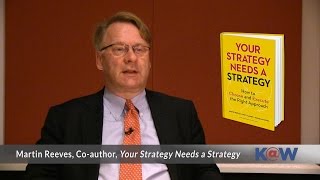
00:00:03
[Music]
00:00:16
technically I'm retired but I'm engaged
00:00:18
with uh many things I'm on three
00:00:20
publicly traded companies two here in
00:00:23
the US company called
00:00:25
aeroflex uh and ATK allian Tech Systems
00:00:29
also one that trades on the London
00:00:32
exchange cabam PLC I'm also an advisor
00:00:36
to the Center for strategic and
00:00:38
international studies and to Veritas
00:00:41
capital and Investment Banking firm I'm
00:00:43
also Vice chairman of the defense
00:00:45
Business board and then in my spare time
00:00:48
a trustee of a university and a charity
00:00:51
and I run a little Consulting
00:00:56
business let me summarize uh a little
00:00:59
bit about what I talked about today in
00:01:01
the keynote address to the Aerospace and
00:01:03
defense conference the theme of the
00:01:05
conference as you probably aware was
00:01:07
strategic agility I tended to focus not
00:01:11
as much on the strategy side of that but
00:01:13
more on the agility side specifically
00:01:16
the need to match a company's culture to
00:01:19
one's strategy and how to rapidly change
00:01:22
company culture because the commonly
00:01:24
head belief is it takes years to change
00:01:26
a culture in my own experience there are
00:01:29
specific steps that one can take to
00:01:32
accelerate that process so I went
00:01:35
through the various steps first I
00:01:38
covered very briefly my thoughts on
00:01:40
strategy because my own pet peeve is
00:01:43
many strategies are simply aspirational
00:01:46
statements so they may be a goal but
00:01:49
they're so General that they might apply
00:01:51
to almost any company such as we wish to
00:01:54
be world class who doesn't uh so they're
00:01:57
not specific enough and they don't talk
00:01:59
to
00:02:00
the steps that a company needs to take
00:02:02
to differentiate themselves in the
00:02:04
marketplace so that's
00:02:07
execution right so particularly use the
00:02:09
example of Southwest Airlines who one of
00:02:12
their tenants one of the pillars of
00:02:14
their strategy is to be best value hence
00:02:17
common fleet but the way they emphasize
00:02:21
the value in the public domain is no
00:02:24
baggage fees no change when you change
00:02:27
your Airline reservation no change phase
00:02:30
so they have something that actually
00:02:32
sets them apart and helps Advance their
00:02:35
strategy and clearly the bottom line
00:02:37
reflects that then I went on uh to
00:02:40
culture starting with the first step of
00:02:43
taking an inventory of what the culture
00:02:44
is but not by walking around and asking
00:02:47
what's the culture like here because
00:02:49
nobody knows how to answer that question
00:02:51
I went through a series of questions
00:02:53
like what's it like to work here uh
00:02:56
what's the informal system what's the
00:02:58
formal system how does information flow
00:03:00
within this
00:03:01
organization how does misinformation
00:03:03
flow within the organization and
00:03:05
questions of that elk that are a little
00:03:07
more provocative and you get uh people
00:03:11
to actually start talking about people
00:03:13
at all levels start to talk about what's
00:03:15
this place really
00:03:19
like to change a culture I think the
00:03:22
first thing one needs to decide is what
00:03:25
do you have what's your strategy again
00:03:28
let me give a couple of examples if your
00:03:30
strategy like Southwest Airlines
00:03:33
everybody cooperates that's the way you
00:03:35
have these friendly people facing the
00:03:38
public uh then you need to have a
00:03:40
culture where people actually are
00:03:42
working together if on the other hand
00:03:44
you're running a car dealership or a
00:03:45
series of car dealerships maybe you
00:03:48
actually want to Foster competition the
00:03:50
best salesman gets a big bonus every
00:03:52
month the best dealership gets the
00:03:54
reward every month and there's much less
00:03:57
emphasis on cooperation and much more
00:04:00
emphasis on cooperation if you're
00:04:02
running a power plant you better have an
00:04:05
emphasis in your culture of risk adverse
00:04:07
if you're running an entrepreneurial
00:04:10
banking business that uh gives Venture
00:04:13
Capital to uh startups you better have a
00:04:17
high tolerance or risk or you're not
00:04:18
going to be very successful so it's not
00:04:22
a question of what's a successful
00:04:24
culture or what isn't a successful
00:04:25
culture it's more a question of what
00:04:28
culture do you have what do you need to
00:04:29
advance your strategy and then what are
00:04:31
the levers to affect that
00:04:37
change I think the most effective lever
00:04:39
is ultimately a a compelling case with
00:04:45
Clarity made to the people how do you
00:04:47
get their hearts and minds and the way
00:04:49
you do that is to have something that is
00:04:53
quite specific as I previously mentioned
00:04:56
uh but also realistic and then some
00:04:58
early SU esses so if we're if a strategy
00:05:01
for example as Wharton is trying to do
00:05:04
advance in the international marketplace
00:05:07
they better start to devote some real
00:05:08
resources have some tangible things some
00:05:11
early successes so there's credibility
00:05:14
around the internationalization of the
00:05:17
business people start to see more you
00:05:20
know you're recruiting more heavily
00:05:21
overseas and possibly
00:05:23
domestically and those kinds of specific
00:05:27
steps uh actually get people to say you
00:05:30
know this isn't just
00:05:31
rhetoric the management of this
00:05:33
institution is serious about doing this
00:05:36
and I'm starting to see so maybe there's
00:05:38
something I can do I have a friend in
00:05:40
China or India maybe I can talk to them
00:05:43
about uh coming here to
00:05:48
school well I'll give you a an example
00:05:51
in one of my early experiences in when I
00:05:54
was one of the first jobs at as
00:05:56
president of about a $200 million
00:05:59
company and and this was a company in
00:06:01
crisis hence they brought in a new
00:06:03
president they weren't making money and
00:06:05
were losing market share but the the
00:06:08
most frequent manifestation when I did
00:06:10
that cultural inventory was they were
00:06:13
going from crisis management was
00:06:14
spending most of the time solving
00:06:16
problems crisis to crisis to crisis as a
00:06:19
matter of fact they describe themselves
00:06:21
as we're always putting out fires so I
00:06:24
came up with the theme of we as a matter
00:06:27
of fact the first management meeting I
00:06:29
actually came out in a fireman's outfit
00:06:31
complete with a captain's hat Chief's
00:06:34
hat and an axe uh it actually got a
00:06:37
pretty good laugh and then I made the
00:06:38
point we've got to go from firefighting
00:06:40
to fire prevention more to Smoky the
00:06:42
Bear but it wasn't just that theme I had
00:06:46
some underlying specifics behind here's
00:06:49
the steps that we've got to take in
00:06:50
order to affect that change still took a
00:06:53
year to really turn the company around I
00:06:55
shouldn't have to make many very many
00:06:57
changes in the people they they just
00:06:59
needed to kind of think in a new
00:07:05
paradigm with regard to the Aerospace
00:07:08
and defense environment admittedly the
00:07:09
economy is improving but one of the
00:07:11
points that I made is business as usual
00:07:14
and Aerospace in defense is going to be
00:07:17
very unusual going forward on the
00:07:19
defense side we've had a 10-year
00:07:21
wonderful period of increasing budgets I
00:07:24
don't think there's very many people
00:07:25
around that think that that's going to
00:07:26
continue some talk about a stair step
00:07:29
downward Ward but more likely we may
00:07:31
have a bit of a slide going downward and
00:07:33
anybody who's been in a roller coaster
00:07:35
knows when you go over that top of start
00:07:37
going down you get this bad feeling in
00:07:39
the pity of your stomach and that's
00:07:41
going to cause change on the Aerospace
00:07:43
side we're seeing certainly growth and
00:07:46
probably continued growth as the economy
00:07:48
improves but the big change there is
00:07:51
whereas the international market with
00:07:53
great customers they're about to become
00:07:56
great competitors China's talking about
00:07:58
building an airplane India is talking
00:08:00
about building an airplane so the
00:08:02
competitive environment May well change
00:08:05
you just have to look at the automobile
00:08:07
industry and what happened to General
00:08:08
Motors and Chrysler and Ford the
00:08:11
dominant players US market foreign
00:08:13
competition came in it's a different
00:08:16
world
00:08:19
today I don't have a crystal ball as to
00:08:22
what's going to happen in m&a but I
00:08:23
would suspect that this is a continuing
00:08:27
process I I think the government is
00:08:30
starting to send some signals that
00:08:32
they're would be less happy now that the
00:08:35
big guys are as big as they are they'
00:08:38
probably be less happy about
00:08:40
consolidation at that level and they'll
00:08:42
still be reviewing everything on a
00:08:44
case-by casee basis but I don't believe
00:08:47
they will
00:08:49
uh try to thwart what's typically gone
00:08:53
on at the lower levels uh more
00:08:56
consolidation but remember every time
00:08:58
there's consolidation
00:09:00
that also creates opportunities for new
00:09:02
startups there's always people leaving
00:09:04
these big companies or getting out of
00:09:06
college starting their own companies so
00:09:08
it's a it's in like in almost every
00:09:10
industry it's a continuing uh Evolution
00:09:13
I don't see that materially changing
00:09:16
over the next decade compared with the
00:09:18
last
00:09:22
decade for those who can obviously in
00:09:25
some of the defense business China is
00:09:28
still considered you know on the other
00:09:30
side of the fence and there's going to
00:09:31
be very limited cooperation and very
00:09:35
limited either selling or partnering on
00:09:38
the Aerospace side and and some of the
00:09:40
companies I'm working with
00:09:43
uh most of the
00:09:45
companies look to China as this huge
00:09:48
Market which it is and have decided that
00:09:51
they need to do it in a partnership
00:09:53
basis so finding or establishing or
00:09:57
transferring technology consistent with
00:10:00
our export regulations and developing
00:10:03
Partners in China has proven to be very
00:10:06
successful both in addressing the market
00:10:08
and frankly in also helping to address
00:10:11
the US market because there's no
00:10:13
question that they have capability lower
00:10:15
cost capability in many segments of what
00:10:17
they can
00:10:21
do I tend to look backward you know
00:10:24
those who you know the off said if you
00:10:27
ignore history you're destined to repeat
00:10:29
it if you look 5 years is in that cycle
00:10:32
is a relatively short period of time but
00:10:34
if you look at longer look at the great
00:10:36
world
00:10:38
powers uh going all the way back to
00:10:41
Egypt
00:10:42
Greece
00:10:44
Rome more recently the United Kingdom
00:10:48
and now the us one of the things that
00:10:50
tends to happen is they don't last
00:10:53
forever I know that sounds very
00:10:55
unamerican but they don't last forever
00:10:58
uh they tend to frequently lose their
00:11:00
way and the cycle time gets shorter and
00:11:02
shorter and
00:11:03
shorter uh so we as Americans and we in
00:11:07
the US better recognize
00:11:11
that China India certainly as two
00:11:15
examples they are going
00:11:17
to it the current Club of one is going
00:11:22
to expand hopefully we still be a great
00:11:25
country and a great economic power and a
00:11:27
great world power but we're not going to
00:11:29
be alone May hopefully won't be
00:11:31
adversarial the way it was us and the
00:11:33
Soviet Union it's going to be something
00:11:35
quite different but I don't see it as
00:11:38
being the US and nobody else closely on
00:11:42
our heels I think inevitably uh China
00:11:44
will be there as a more equal partner
00:11:47
going forward and you see many people
00:11:49
recognizing that both on the industrial
00:11:52
side and the uh political side starting
00:11:54
all the way back with Nixon who you know
00:11:57
opened uh started to open open the door