00:00:01
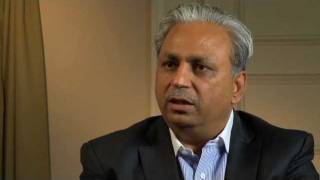
our guest today is ganesha
00:00:04
ceo of emphasis ganesh thank you so much
00:00:06
for joining us today
00:00:08
my pleasure so emphasis
00:00:12
what is emphasis and what exactly do you
00:00:14
do
00:00:15
actually our business is we leverage i.t
00:00:19
services
00:00:20
and business process and work with our
00:00:23
customers
00:00:24
to help them solve their business
00:00:26
problems
00:00:27
and that has been our focus uh
00:00:30
throughout
00:00:31
in terms of size we are seventh largest
00:00:34
out of india
00:00:36
so that kind of defines us i refuse to
00:00:38
call ourselves as an offshore i.t
00:00:40
services company
00:00:42
because increasingly it is not about
00:00:44
being offshore
00:00:45
it is about being bringing business
00:00:47
value to your customers
00:00:49
so uh let's stop right there you said
00:00:52
you are the seventh largest indian i.t
00:00:55
services company
00:00:56
with six big competitors ahead of you
00:00:59
in financial terms
00:01:02
how do you compete and how what value
00:01:06
do you bring to the customer so
00:01:09
that's an interesting point because i
00:01:10
just don't compete
00:01:12
with those six players and they are very
00:01:14
very capable
00:01:16
place actually we are competing in front
00:01:19
of the customer
00:01:20
and ultimately customer chooses based on
00:01:23
the value that you are bringing
00:01:25
and the approach that you're adopting
00:01:28
the strategy that you have
00:01:29
the focus that you have are you able to
00:01:32
solve the business problem for them
00:01:34
can you work with them in a partnership
00:01:36
mode do you have a delivery
00:01:38
which is uh which is top class which
00:01:41
does not let the customer fail
00:01:43
so if you look at all that at that point
00:01:45
of time there is no discussion are you
00:01:46
number seven are you number five are you
00:01:48
number three
00:01:50
so what we have done as emphasis is we
00:01:52
have
00:01:53
selected few customers
00:01:57
we have selected few countries because
00:01:59
as a billion dollar company we cannot be
00:02:01
everything to everyone
00:02:02
and these customers roughly about 75
00:02:06
customers that we are focused on
00:02:08
we are focused on five countries we
00:02:11
bring the best of emphasis to them
00:02:13
and my job as a ceo is to make sure that
00:02:16
the best of
00:02:17
emphasis is better than what anybody
00:02:20
else can provide to that customer
00:02:22
so that's what i do for living so let's
00:02:24
take an ex
00:02:25
specific example of of one of those 75
00:02:29
customers
00:02:30
what could you do for just give me any
00:02:33
example of
00:02:35
a project that you have done for a
00:02:36
customer and that
00:02:38
adds value that may be different than
00:02:39
one of your competitors could have
00:02:42
offered
00:02:42
see the the point is um i'm fairly
00:02:46
certain that many people
00:02:48
can do something similar that that we do
00:02:51
the question is are they better than us
00:02:54
in that number two are they focused on
00:02:57
that customer
00:02:58
are you able to demonstrate a track
00:03:00
record with that customer
00:03:02
it is not enough to say i exist in the
00:03:04
marketplace
00:03:05
because this is about unique challenges
00:03:08
faced by that customer
00:03:10
to solve those problems so whether you
00:03:13
look at
00:03:14
client onboarding solution whether you
00:03:17
look at risk and compliance solution for
00:03:19
the mortgage industry
00:03:21
or you're looking at solutions which are
00:03:23
in the crm space if you're
00:03:26
if you're a bank all these areas
00:03:29
many many service providers exist what
00:03:32
we specialize in
00:03:34
is not the technology it is not the
00:03:36
services
00:03:37
it is about knowing the customer
00:03:40
ensuring
00:03:40
technology services together become a
00:03:43
solution
00:03:44
in enabling that business outcome for
00:03:46
our customers
00:03:48
so you became the ceo of emphasis
00:03:51
in 2009 what was your mandate
00:03:55
and what was your vision for the company
00:03:58
see
00:03:59
it has evolved over a period of time a
00:04:01
mandate
00:04:02
you know traditionally if you're a
00:04:04
listed company
00:04:05
every ceo will start saying that my job
00:04:08
is to create shareholder
00:04:09
wealth we adopted a slightly different
00:04:13
approach
00:04:13
because shareholder wealth is an outcome
00:04:16
it cannot be the objective for the ceo
00:04:19
so my focus as a ceo is
00:04:22
creating value for my customers and that
00:04:26
too
00:04:26
a value which is sustainable value it
00:04:29
changes with time
00:04:30
it changes with technology because there
00:04:33
is no such thing that this solution
00:04:35
which was good
00:04:36
in 2010 would be good in 2014. the
00:04:39
business model which was good in 2010
00:04:41
would be good in 2014. so the whole
00:04:44
vision
00:04:45
mission our approach has evolved over a
00:04:47
period of time
00:04:48
and what i needed to ensure is that we
00:04:52
are in tune
00:04:53
with our customers and changing
00:04:55
marketplace in fact customers
00:04:56
customerify me
00:04:58
got it so you you talked about creating
00:05:01
shareholder value
00:05:03
and and your biggest shareholder uh
00:05:06
hp also used to be your biggest customer
00:05:09
but
00:05:10
based on my understanding of emphasis
00:05:14
uh hp has basically cut uh
00:05:17
emphasis loose and you almost have to
00:05:20
reinvent yourself
00:05:22
as as uh providing uh services to the
00:05:26
market
00:05:27
uh how have you navigated this
00:05:30
particular challenge
00:05:31
so let me give my answer in two parts
00:05:34
let me give you the first part our
00:05:35
relationship with hp
00:05:36
we have two types of relationship with
00:05:38
hp one as a shareholder
00:05:40
second as a customer and these two
00:05:42
relationships are not mixed
00:05:45
because both hp as a bigger share owner
00:05:47
doesn't want to see any dilution in
00:05:49
corporate governance and we
00:05:51
don't want to see any dilution in
00:05:52
corporate governance so there is
00:05:54
complete meeting of mines there
00:05:56
as far as customer is concerned in 2009
00:05:59
when we looked at the data
00:06:01
as as the board of the of the company we
00:06:04
saw the concentration risk
00:06:06
had gone up because 72 percent of our
00:06:08
revenue was coming from hp
00:06:10
so that was actually a trigger for our
00:06:12
transformation
00:06:13
many times you know companies transform
00:06:15
based on certain triggers certain events
00:06:17
and some of them are external events
00:06:19
some of them are internal events our
00:06:21
trigger was we felt that the
00:06:23
concentration risk is very high 72
00:06:25
percent
00:06:26
and our direct business was not growing
00:06:29
so these were the two triggers which
00:06:31
caused us to kind of step back and say
00:06:33
what do we do
00:06:34
and that started the first wave of our
00:06:36
transformation
00:06:37
we said we want to bring the value of
00:06:40
hyper specialization to our customers
00:06:43
and we picked two industry verticals
00:06:46
banking capital market and insurance we
00:06:49
picked
00:06:49
we were operating in 16 different
00:06:51
countries we said we will focus on eight
00:06:53
countries
00:06:54
so the whole strategy was based on inch
00:06:56
wide mile deep
00:06:58
and we started building value in terms
00:07:01
of knowledge
00:07:02
depth and there were lots of good things
00:07:05
going for emphasis
00:07:06
we were arguably we were the birthplace
00:07:09
of bpo
00:07:10
from india right so that was our
00:07:12
heritage
00:07:13
we had very budding and and growing
00:07:16
practice around
00:07:17
um applications and infrastructure so we
00:07:20
brought the power
00:07:21
focused on that was our first wave of
00:07:23
transformation
00:07:24
now we are on to our third wave what was
00:07:27
the
00:07:27
what was the second wave so second wave
00:07:29
we basically said
00:07:31
you know as a billion dollar company
00:07:33
marketplace is changing
00:07:35
can i change the marketplace absolutely
00:07:38
not
00:07:38
we are too small to change the
00:07:40
marketplace so how can i become more
00:07:42
valuable so we adopted
00:07:44
a strategy of named account we said we
00:07:47
want to focus on select accounts
00:07:50
initially it was select industry select
00:07:52
countries
00:07:53
we went further focused select accounts
00:07:57
whether it is existing customers or new
00:07:59
logos so we created a sales force which
00:08:02
is compensated
00:08:03
only if you are able to get business
00:08:06
from these customers
00:08:07
and that was our wave 2 and we also
00:08:10
created a solution specialized sales
00:08:12
force
00:08:13
now wave three that we are in we are
00:08:15
focused on being a positive disrupter
00:08:18
in other words bringing the value of the
00:08:21
new world to our customers
00:08:23
reinventing ourselves challenging the
00:08:25
status quo
00:08:26
and defining that new world in the
00:08:29
context of value creation
00:08:32
disruptors are somebody who take the
00:08:34
value out of the system
00:08:36
we want to be a positive disrupter in
00:08:37
other words destroy the old value
00:08:40
but replace it with new value in equal
00:08:43
if not
00:08:43
in greater terms give me an example of
00:08:46
positive disruption
00:08:47
and how you've implemented that for one
00:08:49
of your customers so if you
00:08:51
see the newer model of i.t services
00:08:54
consumption
00:08:55
what is very popular is anything as a
00:08:57
service now the traditional model in
00:08:59
which
00:09:00
offshore companies have operated is time
00:09:02
and material and in some cases fixed
00:09:04
price
00:09:04
now the moment you move to anything as a
00:09:07
service model
00:09:08
what it does is it brings variability
00:09:09
into the cost for from the customer
00:09:11
standpoint
00:09:12
and they are not looking at offshore
00:09:15
they are looking at
00:09:16
either transaction based pricing it
00:09:18
could be business transaction
00:09:20
or it could be an i.t transaction now
00:09:22
when you do that
00:09:23
it has the potential of disrupting the
00:09:26
traditional
00:09:27
model of providing people
00:09:31
to a client or just doing traditional
00:09:34
offshoring
00:09:34
so you're destroying that value but by
00:09:37
bringing anything as a service you're
00:09:39
replacing it with a higher
00:09:40
ip higher knowledge higher partnership
00:09:44
with the customer so that is a classic
00:09:46
example
00:09:47
of disrupting the old value chain
00:09:50
replacing it with a new one and creating
00:09:53
new value
00:09:54
and you should be prepared to
00:09:56
cannibalize your own business
00:09:58
so i'll come back to the question of
00:10:00
strategy but let me ask you first a
00:10:02
related question so you have made
00:10:05
four acquisitions aigss
00:10:09
fortify wide corporation and digital
00:10:12
risk
00:10:13
could you tell me a little bit about
00:10:15
what were your goals for each of these
00:10:17
acquisitions
00:10:18
and how that fit into your overall plan
00:10:21
and your overall strategy for emphasis
00:10:23
see um we defined our strategy first
00:10:26
and we said this we defined that this is
00:10:29
in 2010 this is where we want to be
00:10:32
2011 this is where we want to be 12 13.
00:10:36
now at that stage uh the there were
00:10:39
three choices in front of us in select
00:10:41
areas
00:10:42
build buy or partner
00:10:45
now and and then you assess whether by
00:10:48
buying
00:10:49
can it accelerate the pace of your
00:10:52
strategic pursuit
00:10:54
and can you mitigate the risk of
00:10:56
acquisition because in technology field
00:10:58
majority of acquisitions
00:10:59
actually fail we were very careful
00:11:03
and we went through this you know
00:11:06
process of
00:11:07
ensuring that these are good
00:11:08
acquisitions but that is the
00:11:10
beginning of it's almost like choosing a
00:11:12
life partner right you do
00:11:14
all the screening but after the marriage
00:11:16
you have to ensure that it is nurtured
00:11:18
properly for a successful marriage
00:11:20
so we also focused on integration we
00:11:23
adopted models ranging from tightly
00:11:25
coupled
00:11:26
right tightly governed or loosely
00:11:28
coupled
00:11:29
and and tightly governed do we allow the
00:11:32
the
00:11:32
brand of that company so digital risk is
00:11:35
actually
00:11:36
loosely coupled and tightly governed
00:11:38
digital risk has a very
00:11:39
vibrant uh brand they are known in
00:11:43
risk and compliance area of u.s
00:11:45
residential mortgage
00:11:46
it didn't make sense for us to kill that
00:11:48
brand we have let that structure remain
00:11:50
intact
00:11:51
in fact we have nurtured it further and
00:11:54
they are doing a stellar job
00:11:56
so you horses for courses you cannot say
00:11:59
that this is
00:11:59
my integration strategy and you apply it
00:12:02
uniformly across whatever integration
00:12:05
and one more thing which we are
00:12:07
extremely careful about
00:12:09
do not acquire to fill the gap in your
00:12:12
revenue
00:12:13
because the moment you do that you may
00:12:16
be renting the revenue for a short while
00:12:18
and you may have a bigger gap in time to
00:12:20
come
00:12:22
what's your assessment of the
00:12:25
global i.t services market today and
00:12:28
what kind of
00:12:30
opportunities and risks does that create
00:12:33
for emphasis
00:12:34
in fact you know i have a controversial
00:12:38
point of view on i.t services excellent
00:12:41
i'd love to hear it
00:12:42
uh see the um i believe
00:12:45
the way it services are being sold and
00:12:48
consumed today
00:12:50
may cease to exist in years to come in
00:12:52
fact
00:12:54
i will go to the extent in a people may
00:12:57
not buy it services
00:12:59
in let's say five to six years time
00:13:01
nothing called it services may be
00:13:03
procured
00:13:04
so if you are an i.t services business
00:13:07
what do you do about it
00:13:08
right because the concept may be it
00:13:10
services inside
00:13:12
rather than saying i buy it services
00:13:15
so that being the case people may be
00:13:17
buying business transactions
00:13:19
maybe buying business outcome
00:13:21
significant amount of automation and
00:13:24
innovation
00:13:24
will eliminate what shall i say human
00:13:27
intervention
00:13:28
in a significant manner when all this
00:13:31
happens
00:13:32
how do you exist and how do you survive
00:13:34
how do you thrive how do you prosper
00:13:36
how do you kind of excel and that's the
00:13:40
the roadmap that we have developed for
00:13:43
emphasis
00:13:44
our belief is that i.t services in
00:13:48
itself
00:13:48
will grow but in not in its traditional
00:13:51
form
00:13:51
and we have prepared the organization as
00:13:54
part of our third wave of transformation
00:13:56
to take us towards that being a positive
00:13:59
disrupter
00:14:00
to enter the arena of new range of
00:14:03
services
00:14:04
and which we are leveraging our named
00:14:06
account strategy because
00:14:07
we want to do it in collaboration with
00:14:10
our customers
00:14:11
right and being just focused on select
00:14:13
customers does
00:14:15
give us that opportunity to do so so
00:14:17
let's
00:14:18
you know uh dive a little deeper into
00:14:20
into the question of strategy
00:14:22
uh can you explain a little more about
00:14:25
what your strategic vision is uh
00:14:28
especially in the area of strategy
00:14:30
positive disruption and what lessons can
00:14:32
other companies learn from
00:14:34
emphasis experience in this regard
00:14:37
so um the positive disruption as i
00:14:41
described it
00:14:42
the whole idea is to create new set of
00:14:44
value chain
00:14:46
and by ensuring that you're taking your
00:14:48
customers along with it so it's a
00:14:50
positive disruption that view
00:14:52
but i also want to highlight one more
00:14:54
thing we operate at the confluence of
00:14:57
people
00:14:58
planet and profit so it is extremely
00:15:01
important for
00:15:02
all corporates including us to be a
00:15:04
responsible citizen and ensuring that we
00:15:07
are taking the community along with us
00:15:09
we are ensuring that we are balanced
00:15:11
between profit and and
00:15:13
and doing the right thing so that is the
00:15:15
confluence in which we are
00:15:17
we are operating now sharing the lessons
00:15:19
with others
00:15:21
to to have a point of view that
00:15:23
transformation will end
00:15:25
especially if you're a technology
00:15:26
company is probably a myth
00:15:29
because by the time you believe that
00:15:32
that a transformation has ended
00:15:35
something new you will have to do so
00:15:37
instead of saying that
00:15:39
i have transformation one two and three
00:15:42
we describe it as that we are on a
00:15:44
transformation journey
00:15:46
we did wave one we are doing wave two
00:15:48
and we are on to our wave three
00:15:51
as a ceo my job is to ensure that these
00:15:54
waves are interconnected they are
00:15:55
leveraging each other rather than acting
00:15:57
in conflict of each other
00:15:59
and continuously and as part of
00:16:02
transformation
00:16:03
most important challenge is
00:16:06
changing people's mindset
00:16:10
changing organization structure
00:16:12
measurement system
00:16:13
incentive schemes these are all easy
00:16:16
things easier rather
00:16:17
not easy easier so the physical aspect
00:16:21
of transformation is easier chemical
00:16:23
aspect is extremely tough
00:16:26
and to be honest successful
00:16:28
transformation requires you to manage
00:16:30
the chemical transformation well
00:16:33
and which is around people
00:16:36
and and as a ceo initially i thought
00:16:40
by changing the measurement system
00:16:42
incentive scheme
00:16:44
it be it it works actually that's a myth
00:16:48
so ceo has to be leading front
00:16:52
front he has to be an enabler for rest
00:16:55
of the team to leverage the
00:16:57
transformation
00:16:58
he cannot expect that the teams will
00:17:00
change automatically
00:17:02
series of workshop communication and
00:17:05
and just changing the measurement system
00:17:07
alone won't do the trick
00:17:09
so how do you bring about a chemical
00:17:10
transformation you bring about by first
00:17:13
of all personifying the transformation
00:17:15
yourself as a ceo
00:17:16
and ensuring that your customers
00:17:20
are with you uh your employees are with
00:17:22
you
00:17:23
and your board is with you by
00:17:26
actually demonstrating success so you
00:17:29
have to work on few such cases
00:17:32
making them into a success and and to be
00:17:34
a learning leader yourself
00:17:36
because you may have thought that this
00:17:38
is what you want to do in some
00:17:40
small percentage of cases you will have
00:17:42
to make a u-turn and and reset the
00:17:44
direction
00:17:45
you should be prepared for that because
00:17:46
you're staring at the future without
00:17:48
having all the data at your disposal
00:17:50
and deciding that this is where you want
00:17:52
to head so
00:17:53
so one of the things which which i get
00:17:56
assisted by my direct reports is
00:17:59
they are authentic they give me the
00:18:00
feedback and i should be prepared to
00:18:02
listen to them
00:18:03
as to what's working what's not working
00:18:05
including to the person who is right at
00:18:07
the field level
00:18:08
and that's how i keep myself motivated
00:18:11
i have done many mistakes in this
00:18:13
journey last five years
00:18:15
certainly not proud of them but i am not
00:18:18
afraid to commit mistakes because if i
00:18:20
become
00:18:20
afraid of committing mistakes i'll not
00:18:22
try something new
00:18:24
what's the biggest mistake that you've
00:18:26
made and what did you learn from it
00:18:28
and just to add to it what's been your
00:18:30
biggest accomplishment and what did you
00:18:31
learn from it
00:18:33
see um to say that uh something as a
00:18:36
biggest mistake
00:18:37
um i don't know whether i can rank them
00:18:40
biggest and
00:18:41
whatnot i have committed enough mistakes
00:18:44
so i'll
00:18:44
tell you one of the things which i have
00:18:46
learned is that
00:18:47
many a times your biggest strength is
00:18:49
your biggest weakness
00:18:51
so um i absolutely love
00:18:55
working with people people are my
00:18:57
strength
00:18:58
and at the same time people are my
00:19:00
weakness so
00:19:01
um i struggle at some point of time to
00:19:04
to come to terms with the fact that
00:19:06
somebody needs to be taken out
00:19:08
but and and uh so i have a team which
00:19:11
advises me on that because i make sure
00:19:13
that my weakness is
00:19:15
uh is kind of that gap is covered by
00:19:18
having a good team with me
00:19:20
who is able to advise me on the on those
00:19:22
uh things
00:19:24
and my biggest accomplishment is
00:19:27
to have a very capable trusted
00:19:31
authentic team reporting to me
00:19:34
because they have been instrumental in
00:19:37
many ways
00:19:38
taking us from where we were at one
00:19:41
point of time
00:19:41
our direct business stood at 28
00:19:45
of our total revenue today this that's
00:19:48
very same business it stands at
00:19:52
63 percent of our revenue and this is
00:19:54
over a period of about three and a half
00:19:56
years
00:19:57
so i give credit to to my direct team
00:20:00
members
00:20:01
who have enabled it and most importantly
00:20:04
as a ceo of a listed company you need to
00:20:07
have a board
00:20:08
which is challenging you but is
00:20:10
supportive of of the strategy
00:20:13
so i'm blessed with with members who
00:20:16
come from diverse background
00:20:17
they keep me honest they challenge me
00:20:20
and but they are completely supportive
00:20:22
of the strategy
00:20:23
so you have to take these stakehold
00:20:25
holders along in your journey of
00:20:27
transformation
00:20:28
what do you think should be the role of
00:20:30
a ceo
00:20:32
in reimagining strategy
00:20:35
very very interesting question um
00:20:40
i i don't know whether i can comment on
00:20:42
role of a ceo
00:20:43
but i believe i keep myself young
00:20:46
by learning
00:20:50
so being present at warton listening to
00:20:52
you
00:20:54
i will get an opportunity to talk to the
00:20:56
students i spoke to some of the faculty
00:20:58
members
00:20:59
similarly talking to my employees when i
00:21:02
go and visit some schools those students
00:21:04
so when you listen to all these things
00:21:06
you realize
00:21:07
what is happening in the real world i
00:21:09
spend a lot of time with startups
00:21:11
they share with you how they view the
00:21:12
world so being a
00:21:15
listening leader i believe is
00:21:18
extremely important to be uh to be
00:21:22
successful
00:21:23
and that too if you're a ceo you have to
00:21:25
demonstrate that ability to listen
00:21:28
learn and then lead i'd like to end with
00:21:31
a couple of personal questions if you
00:21:33
don't mind
00:21:33
sure uh as a ceo
00:21:37
what do you would you say is the
00:21:40
greatest leadership
00:21:41
challenge you faced how did you deal
00:21:44
with it and what did you learn from it
00:21:47
so the first challenge was when i was
00:21:50
appointed as a ceo this is my very first
00:21:52
role as a ceo
00:21:55
and i came in because i had
00:21:58
i guess they chose me because i had done
00:22:01
the previous roles extremely well
00:22:04
and when i walked into this role the
00:22:07
fact that you're chosen
00:22:08
and the fact that you have done previous
00:22:10
roles well can you tell me a little bit
00:22:12
about your previous roles sure
00:22:14
so i i have done roles ranging from
00:22:17
in a major technology company i was
00:22:20
their i.t
00:22:21
offshore i mean sorry outsourcing head
00:22:23
for asia pacific
00:22:25
and before that i was a head of
00:22:27
southeast asia for i.t services of
00:22:30
that company i was managing director of
00:22:33
india for that
00:22:35
company so i've done different roles by
00:22:37
training i'm a chartered accountant
00:22:39
so i'm a finance guy who went into sales
00:22:41
then
00:22:43
rose through rank and file to to occupy
00:22:45
that position
00:22:46
so coming back to the point which i was
00:22:48
trying to make you think
00:22:49
that what you have done a and which has
00:22:52
earned you the role of a ceo
00:22:54
prepares you well for a ceo i was in
00:22:58
for a shock because role of a ceo is
00:23:01
very very different from being a senior
00:23:05
business leader
00:23:06
in a company because multiple dimensions
00:23:09
of this role
00:23:10
there are today 36 000 employees are
00:23:14
counting on me to ensure that their
00:23:17
future is bright
00:23:18
there are number of customers who look
00:23:21
at you as mr emphasis
00:23:24
and then you have shareholders who have
00:23:26
expectations from the company
00:23:28
so first of all the stakeholders change
00:23:30
dramatically and you think you are
00:23:31
prepared because you have been
00:23:32
successful in previous role
00:23:34
to me that was a biggest eye-opener
00:23:38
and you know and many ways i was
00:23:41
reminded of that
00:23:42
by looking at my performance so i
00:23:45
adopted an approach
00:23:47
which was at least some people found it
00:23:50
strange and but i found it very useful
00:23:54
having completed about three years as a
00:23:56
ceo
00:23:57
i said i'm going to call the first three
00:24:00
years of a ceo as a somebody different
00:24:03
even though i was the ceo and i'm going
00:24:06
to assume that i'm a new ceo now
00:24:08
and i'm going to assess the performance
00:24:10
of previous ceo
00:24:11
and i'm going to ask my team what did
00:24:14
the previous ceo do
00:24:15
well and didn't do well so that way you
00:24:17
take that emotional attachment to your
00:24:20
own actions and your own legacy decision
00:24:22
i went through a very structured formal
00:24:24
process of doing that assessment
00:24:27
and then i published what is this new
00:24:30
ceo going to do
00:24:31
i made it public to my team members i
00:24:34
sent out an email that these are the
00:24:36
behaviors i'm going to show these are
00:24:37
the objectives i'm going to achieve
00:24:39
these are the changes i'm going to make
00:24:41
so that
00:24:42
when you publish it you have no choice
00:24:45
but to change
00:24:47
so otherwise you face public
00:24:48
embarrassment right and ceos are
00:24:50
actually very afraid of
00:24:52
public embarrassment so so i was ready
00:24:55
to be embarrassed if i don't do it i
00:24:56
published it my team was supportive
00:24:59
in fact some of them loved it so much
00:25:01
that they did it themselves
00:25:03
right and uh so so that was uh
00:25:06
so if i may uh started with uh
00:25:09
with the wrong notion as to that i am
00:25:12
ready for ceo job
00:25:14
but then i learned it quickly correct
00:25:17
course corrected then i after three
00:25:20
years i looked back
00:25:21
as if it was somebody else who was doing
00:25:23
it and again i'm start
00:25:24
started the new journey we are on to
00:25:27
wave three of transformation
00:25:29
and uh and i'm very very confident
00:25:32
and of of our wave three
00:25:35
and and very very proud of my team
00:25:38
because
00:25:38
uh you know they have kept me honest
00:25:42
and and i can also tell you my five
00:25:44
years as a ceo i will not trade it for
00:25:46
anything else
00:25:47
so when you did your uh midterm
00:25:49
assessment
00:25:50
or three-year assessment what sort of a
00:25:53
grade did the previous ceo get
00:25:56
an a a b or a c um
00:25:59
you know i'm fairly certain some of my
00:26:01
own board members will be watching this
00:26:03
so
00:26:04
regardless of what they're watching i'm
00:26:06
going to be authentic about how i rated
00:26:08
myself
00:26:09
i gave me three out of five and
00:26:13
and my aspiration is over a period of
00:26:16
time can i score six out of five
00:26:19
and it's a tough journey and i'm not
00:26:22
i'm not cocky about it but what i'm
00:26:25
trying to do is
00:26:26
to be relevant with times to work with
00:26:29
my team members
00:26:30
to listen to youngsters who are creating
00:26:33
a very vibrant world
00:26:35
and to be in tune so i would like to
00:26:37
stay young forever a teenaged
00:26:39
ceo if i may uh one last question ganesh
00:26:44
how do you define success success is
00:26:47
not what you do when you're around
00:26:49
success is
00:26:50
when you're not there how people rate
00:26:53
you after you have left the scene
00:26:55
so it is about leaving a legacy behind
00:26:59
it is leaving something which is which
00:27:01
sustains
00:27:03
leaving somewhere where your successor
00:27:06
is somebody who comes from within your
00:27:09
own ranks
00:27:10
so that they they have an opportunity
00:27:13
to ensure that you have done succession
00:27:16
planning
00:27:17
and to have a strategy and execution
00:27:19
which people talk about
00:27:21
so to me that is success many people say
00:27:24
it is
00:27:24
reaching the share price this kind of
00:27:27
total shareholder returns to me those
00:27:30
are all
00:27:30
outcomes but to me success is leaving a
00:27:33
very
00:27:34
very positive sustainable legacy behind
00:27:37
ganesh thank you so much for speaking
00:27:39
with knowledge at wharton thank you so
00:27:46
much
00:28:04
you