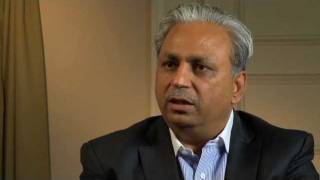
00:00:12
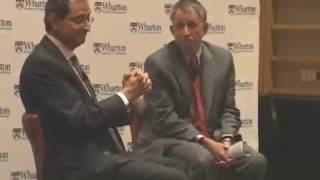
The 2009 Wharton India
Economic Forum, titled "India, the
00:00:16
Road Ahead," took place in
Philadelphia and brought
00:00:19
together CEOs of leading Indian
companies, investors, heads of
00:00:23
nonprofit organizations, sports
celebrities, and Bollywood stars
00:00:27
to discuss where India is headed
in an age of economic
00:00:31
uncertainty. Indian Knowledge at
Wharton brings you one-on-one
00:00:34
conversations with these
leaders.
00:00:36
Steve Guglielmi: Thank you very much
for joining us today.
00:00:38
A lot of women— a lot
00:00:40
of our women readers would be
very interested to know how you've
00:00:43
charted your career. And you
began, I think, in 1984, as a
00:00:48
management trainee. You were
named to the— I think 25th on
00:00:53
Fortune's list of the most
powerful women in business in
00:00:56
2008. You're going— you've been
named the new CEO of ICICI,
00:01:01
and I believe that transition is
happening in— is it April or May?
00:01:04
First of May.
- First of May.
00:01:06
So you know, going
from a management trainee
00:01:09
in 1984 in India to the head of
one of the largest banks in
00:01:14
India, what— what challenges did
you face as you— as you've progressed
00:01:20
through your career?
00:01:22
Chanda Kochhar: Well, I think it's been a very
exciting and a challenging
00:01:26
journey, no doubt about it. I
think, when you talk of a career
00:01:31
span of 25 years, the way I look
back I feel that, you know, as—
00:01:37
as I spent these 25 years, the
organization also really
00:01:41
transformed and grew
substantially. We were a very
00:01:45
small development financial
institution 25 years ago. From
00:01:48
there we are, today, the second
largest bank in the country and
00:01:51
and a very large financial
services group, which meant that
00:01:55
there were a lot of
opportunities for people based
00:01:57
on merit. And as I spent these
25 years, we as an organization
00:02:03
went into commercial banking,
into retail banking, into
00:02:05
infrastructure financing, and,
you know, into international
00:02:09
banking. And somehow, you know,
I was able to really be a part
00:02:14
of most of the new initiatives
that— that were set up by the
00:02:18
organization. So it's partly the
fact that, you know, there—
00:02:23
there was growth in the
organization that gave me the
00:02:25
opportunity to prove myself. The
other thing was that, of course,
00:02:30
there is no substitute to hard
work. So— so as opportunities
00:02:34
came along, of course, you had
to work hard, prove yourself,
00:02:38
and learn from those
opportunities and evolve as an—
00:02:41
as a person.
00:02:42
As a woman, especially starting
your career, did you feel you had
00:02:44
to work harder to prove
yourself?
00:02:47
I think in a way a woman has to
work harder. I don't know
00:02:51
whether to prove herself or not.
But one has to recognize the
00:02:54
fact that a woman is literally
living 48 hours out of 24 hours.
00:02:58
Because, you know, you're just
not managing your career, you
00:03:01
are definitely managing your
family as well. So, in that
00:03:05
sense, I think in any case you
will end up working much harder.
00:03:08
But once you kind of decide to
do that, and once you make up
00:03:11
your mind, and once you believe
that you can do it, I think you
00:03:16
then land up— land up doing it.
And what's important is that as
00:03:20
long as, you know, the— the
opportunities come along your
00:03:24
way on the basis of merit, and
without any biases of gender,
00:03:30
then I think, you know, you can
work along and— and make the best
00:03:34
out of those opportunities.
00:03:35
Do you perceive that there are
still some hurdles for women in
00:03:38
business who would like to
start out in business in India?
00:03:41
And if so, what are they?
00:03:44
I would think that in the past
25 years, of course, things have
00:03:47
changed tremendously. When I
started working, I don't think
00:03:52
one could even imagine— imagine,
at that point in time, that women
00:03:55
would lead very many large
organizations. But I think
00:03:59
today, even socially, there's a
lot more acceptance that women
00:04:04
actually would have their
careers. It starts from the
00:04:06
parents, who themselves want
their daughters to have their
00:04:09
own careers. I think, then again,
when— when people get married,
00:04:14
you know, their husbands or
their in-laws, again, accept this
00:04:16
very nicely that— that the woman
in the house will have a career.
00:04:20
So I think socially there is
much more acceptance. And again,
00:04:25
you know, the biases in the
minds of people in terms of
00:04:27
there are only certain things
that men can do and there are
00:04:30
certain things that women can
do, I think, in a way, are
00:04:33
becoming less. Would I say that
it's become absolutely an even
00:04:37
world in every organization? It
may not have as yet. But I think
00:04:41
things are changing
substantially.
00:04:43
And does ICICI fund women
entrepreneurs? Or if they do, to what
00:04:48
extent do they fund them?
00:04:50
See, ICICI has always been a gender-
neutral organization. So why
00:04:55
even talk of funding women or
not? Even, you know, the fact that
00:04:58
there are so many women in the
ICICI group and doing well. - I
00:05:02
guess the appropriate way to
phrase the question is to what
00:05:04
extent do you— do you have statistics
on the numbers? - Yeah.
00:05:07
So, the status— because we don't
do anything special for women,
00:05:11
but we are, in a way, special,
because we do not keep any
00:05:15
gender biases in our mind. So,
you know, when it's an
00:05:18
entrepreneur, we go by the merit
of the project. When it's an
00:05:21
employee, we just go by the
merit of the employee. We
00:05:23
actually are blind-sighted
00:05:25
to whether the person
is a man or a woman.
00:05:27
- Do you feel it's a factor in
00:05:28
some other organizations,
that there is sort
00:05:30
of a gender bias when
it comes to funding?
00:05:32
I don't. I would not want to
believe so. I would not want to
00:05:36
believe so. But, you know, if
you look at our own
00:05:39
organization, you know, we are a
36,000-strong employee base
00:05:44
and of that 33% of women. So we
have a large women employee
00:05:49
base who are doing well in the
organization.
00:05:52
You do fund a number of women
ventures, because you are, as
00:05:56
you say, gender blind. - That's
right.
00:05:59
Are there any particular
00:06:01
success stories that
you would note?
00:06:03
Yes. If you have heard of, you
know, Kiran Mazumdar, the
00:06:09
biotech company in India, that—
that was a company that started
00:06:13
with our, you know, private
equity venture fund kind of—
00:06:18
you know, kind of association
many, many years ago, when—
00:06:22
when, you know, it was just in
the kind of a seed capital
00:06:25
stage. So there are, you know,
many of these celebrated cases
00:06:31
in that sense, which have become
much bigger. On the other hand,
00:06:34
there are many which may not
have been known as yet. But, you
00:06:37
know, many women entrepreneurs
are doing very well in the
00:06:40
German jewelry business, many of
them are doing very well in the
00:06:43
tourism business. So we have a
lot of the— you know, the
00:06:48
initiatives that women are
running, which have been funded
00:06:52
by us.
- And what advice
00:06:53
would you give to an
entrepreneur who was approaching
00:06:55
the bank for funding?
00:06:58
I think— I mean, always I would,
but especially in the current
00:07:03
times, I would say that the
first important thing is to
00:07:06
start with a structure which is
very robust. By which I mean
00:07:10
that it should have a very good
and a sensible mix of debt and
00:07:14
equity, because it's always very
tempting to start with a heavily
00:07:18
debt-oriented structure, because
you have to put very less. But I
00:07:21
think when you're starting a
venture, you have to plan for—
00:07:25
you know, certain uncertainties.
And if you stretch yourself
00:07:29
right from the beginning with a
heavily debt-oriented structure,
00:07:32
then you're not able to kind of
manage the course if things
00:07:35
kind of don't move in the same
way as you had planned. But if
00:07:38
you start with a little
conservative debt equity
00:07:41
structure it gives you the ability
to kind of establish your base.
00:07:45
And once you do that, then you
can take on— you know, more kind
00:07:50
of data-oriented structures on
top of that.
00:07:53
And what general advice would you
give to women who want to start
00:07:56
in a career like yours? What
should they keep in mind?
00:07:59
The most important thing that
they have to keep in mind is, get—
00:08:03
take out any inhibition in their
own mind. You know, most of the
00:08:07
time, I think it's more an
inhibition in the minds of women
00:08:10
to say, "Oh, but I am a woman. I
have to run my family. So I will
00:08:13
not be able to, you know, make a
good job out of my career." Or that
00:08:17
"If I follow a career, I'll
have to ruin my family life."
00:08:21
Well, I think that's— that's not—
that's only an inhibition to
00:08:23
start with. As I said, you know,
once you believe that you're
00:08:27
equally strong and you can do
both, and you make up your mind
00:08:30
to do both— well, it's a little
hard work. It's not a— it's not
00:08:33
a cakewalk. But if you make up
your mind, I think you can do
00:08:36
it. So the first important thing
is to start with self
00:08:39
confidence. And that is what
gives you the basis to then keep
00:08:42
moving forward.
00:08:43
And what's the biggest challenge,
from your perspective, of
00:08:46
running— doing both?
- Well,
00:08:48
the challenge is that, as I said,
it means you are working much
00:08:52
harder. It means you have to
organize your time much better.
00:08:56
It means you have to prioritize
your time much better. It means
00:08:59
you have to sometimes give up
some things. If you are in the
00:09:02
most important meeting in your
office, you will have to give up
00:09:05
a parents teachers meeting
that's taking place somewhere
00:09:08
else, and somewhere— sometimes
the other way around. So I think
00:09:11
you have to set clear priorities
for yourself. And the priorities
00:09:14
change every day, because
something is more important and—
00:09:17
at a certain point in time. So I
think it means all that, handling
00:09:22
all that. But— and also, I always
believe that, you know, in fact,
00:09:27
women— if they want to grow on
the basis of merit, they should
00:09:30
never expect anything special. I
think once you believe that you
00:09:34
want to rise up in the
organization, then you have to
00:09:36
be willing to give as many hours
of work as the job demands, as
00:09:41
much of travel as the job
demands. Because then, you cannot
00:09:43
say "Oh, but I'm a woman, I'll do
only this." So I think you have
00:09:47
to actually give as much as the
job demands and as much as it
00:09:51
takes to do— you know, to look
after your family. But once you—
00:09:55
as I said, you have to make up
your mind
00:09:57
and then try and do that.
00:09:58
Right. And well, clearly,
you work
00:10:01
many hours a day. What do you do
00:10:03
for fun when you find the time
to enjoy yourself?
00:10:05
Well, whenever I find the time,
my biggest one is to spend time
00:10:09
with my family. I don't think I
really actually find fun if I
00:10:13
have to put myself away and say
"I want time for myself." I think
00:10:16
there is so very little time
that I get with my kids that I
00:10:20
really enjoy each and every
moment of what I get with them.
00:10:22
Right. Well, thanks very much
00:10:24
for talking with us today.
- Thank you.