Search Captions & Ask AI

Does Germany Want to Split-up the Eurozone?

March 20, 2013 / 03:57

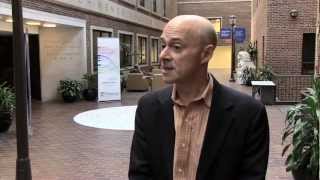
This episode discusses Germany's role in the Euro crisis, focusing on its economic position as the largest creditor nation in the Euro Zone. Key topics include the divided opinions among German citizens and businesses regarding bailouts, the impact of these decisions on the German economy, and the necessity of stability in surrounding European countries.

The conversation highlights the concerns of small savers in Germany who oppose bailouts due to fears of inflation and financial instability. In contrast, large companies that rely on a stable Euro Zone market advocate for economic support to ensure growth.

Smaller, family-owned firms are also mentioned as being anti-bailout, reflecting a broader division within Germany on how to handle the Euro crisis. The episode emphasizes that the situation is complex, with varying perspectives even within Germany.

Additionally, the episode points out Germany's historical context of crises triggered by instability in neighboring countries, suggesting that a realistic approach is needed to maintain the Euro's integrity.

Finally, the discussion touches on the European Central Bank's decision to buy unlimited amounts of Spanish and Italian debt, which, despite initial German dissatisfaction, was seen as a necessary step for the Euro's future.

TL;DR

Germany faces divided opinions on Euro bailouts, balancing small savers' fears with large companies' needs for stability in the Euro Zone.

Episode

3:57
00:00:01
well an important uh aspect uh to
00:00:04
discuss here in this context is uh what
00:00:07
does Germany think about the whole
00:00:09
situation and Germany of course is the
00:00:11
largest economy in the Euro Zone and it
00:00:13
is the largest uh creditor Nation it's
00:00:15
not the only one but it is by far the
00:00:17
largest one and Germany is a an economy
00:00:20
right now where you have uh multiple
00:00:22
opinions as to what should be done uh
00:00:25
you have small Savers uh who of course
00:00:27
uh you know want to you know keep their
00:00:29
mind is safe and they don't want any
00:00:31
inflation and they don't want any you
00:00:33
know of uh any German money to go into
00:00:35
bailouts so they're likely to actually
00:00:37
vote for parties or for politicians in
00:00:40
the elections coming up uh that
00:00:42
essentially are anti- bailout uh but you
00:00:45
also have uh you know large companies in
00:00:47
Germany uh large companies in Germany uh
00:00:50
sell uh throughout Europe uh very
00:00:53
important market for them is the rest of
00:00:54
the Euro zone so they they want these
00:00:57
economies not only to be solid but also
00:00:59
to grow
00:01:00
uh and of course this will benefit not
00:01:02
only them but also German Workers and
00:01:04
the German economy overall and then
00:01:06
another division line in Germany is the
00:01:08
smaller firms the smaller firms which
00:01:10
tend to be familyowned they're very
00:01:12
frugal uh they're very good they are
00:01:14
very competitive on a global scale
00:01:16
they're also kind of anti-bailout uh so
00:01:19
you see Germany you know essentially
00:01:21
divided which is what you would expect
00:01:23
when an issue as contentious and as
00:01:25
complex as the uh you know the Euro
00:01:28
crisis is uh up for you know discussion
00:01:31
and for debate essentially that you get
00:01:33
you know some people in favor some
00:01:34
people against so the picture is not as
00:01:37
easy as oh southern Europe you know they
00:01:39
want to be bailed out northern Europe oh
00:01:41
you know they're reluctant to bail out
00:01:43
the southern Europeans no even within uh
00:01:46
Germany uh you know you can find
00:01:49
companies or you can find you know
00:01:51
individuals who are in favor of the
00:01:53
bailouts because they strongly believe
00:01:55
and it's absolutely true that the future
00:01:57
of the German economy uh is also tied up
00:02:00
to with the uh uh you know the future of
00:02:04
southern Europe well Germany is in
00:02:06
general in a very difficult situation I
00:02:09
don't think it is realistic for Germany
00:02:11
to decide at some point enough is enough
00:02:15
we've had uh you know we've tried for
00:02:17
for 10 years for 12 years to make this
00:02:19
work we're just going to you know leave
00:02:21
the rest of Europe to its own fate
00:02:24
because Germany is right at the heart of
00:02:26
Europe and you know 40 45% 50% of their
00:02:30
exports go to the rest of Europe and the
00:02:33
stability of the country surrounding
00:02:35
Germany to the South to the west and to
00:02:37
the east right uh is really really
00:02:41
important to them I mean Germany has
00:02:42
gone through um you know many crisis
00:02:45
over the last uh 150 years and many of
00:02:48
these crisis were actually triggered by
00:02:50
instability in the areas or in countries
00:02:53
surrounding Germany so I think uh if the
00:02:55
Germans are realistic about the
00:02:57
situation and that they tend to be they
00:02:59
will realize that they need to make this
00:03:02
thing work now that they've committed 12
00:03:04
years ago to the euro they need to make
00:03:06
it work I think a very important step in
00:03:08
that direction was taken last summer
00:03:10
when the European Central Bank decided
00:03:12
to uh buy unlimited amounts of uh
00:03:14
Spanish and Italian debt and the Germans
00:03:16
were unhappy about it but they went
00:03:18
along with it so it is of course hard
00:03:20
when you're a Frugal country when you're
00:03:22
very competitive when you have a big
00:03:23
Surplus when you're a creditor Nation uh
00:03:26
to continue bailing out and to continue
00:03:28
helping out everybody but I don't really
00:03:31
think that Germany has an option
00:03:36
[Music]

Episode Highlights

  • Germany's Economic Dilemma
    Germany, the largest economy in the Euro Zone, faces internal divisions over bailouts.
    “Germany is divided on the bailout issue.”
    @ 01m 19s
    March 20, 2013
  • The Importance of Stability
    The stability of countries surrounding Germany is crucial for its economy.
    “Stability is really important to them.”
    @ 02m 41s
    March 20, 2013

Episode Quotes

  • The future of the German economy is tied to southern Europe.
    Does Germany Want to Split-up the Eurozone?
  • Germany is at the heart of Europe.
    Does Germany Want to Split-up the Eurozone?
  • They need to make this thing work.
    Does Germany Want to Split-up the Eurozone?

Key Moments

  • Economic Divisions01:19
  • Bailout Debate01:33
  • Regional Stability02:41

Words per Minute Over Time

Vibes Breakdown

Related Episodes

Europe: The Problems are "Deeper than We Fully Realize"
August 08, 2012
Captions not detected. You can watch the video, but not search it. If you think this is an error, contact support.
17:11
Europe: The Problems are "Deeper than We Fully Realize"
The Euro Zone of Denial Hits the Wall
October 28, 2011
Captions not detected. You can watch the video, but not search it. If you think this is an error, contact support.
01:15:08
The Euro Zone of Denial Hits the Wall
Searching for a Way Out of Europe's Dead-end Austerity
October 31, 2012
Captions not detected. You can watch the video, but not search it. If you think this is an error, contact support.
05:18
Searching for a Way Out of Europe's Dead-end Austerity
The Pain in Spain: An Economy in Crisis
March 18, 2010
Captions not detected. You can watch the video, but not search it. If you think this is an error, contact support.
29:53
The Pain in Spain: An Economy in Crisis
Wharton's Franklin Allen on the Future of the Eurozone
June 21, 2011
Captions not detected. You can watch the video, but not search it. If you think this is an error, contact support.
13:11
Wharton's Franklin Allen on the Future of the Eurozone
Don't Expect Long-term Relief from the New ECB Funding Proposal
September 13, 2012
Captions not detected. You can watch the video, but not search it. If you think this is an error, contact support.
02:56
Don't Expect Long-term Relief from the New ECB Funding Proposal
In What Form Will the Eurozone Emerge from the Crisis?
June 04, 2012
Captions not detected. You can watch the video, but not search it. If you think this is an error, contact support.
32:32
In What Form Will the Eurozone Emerge from the Crisis?
Europe's Policies Increasingly Risk Default and Uncompetitiveness
September 14, 2012
Captions not detected. You can watch the video, but not search it. If you think this is an error, contact support.
04:04
Europe's Policies Increasingly Risk Default and Uncompetitiveness
Market Update with Wharton's Jeremy Siegel and Scott Richard
March 14, 2012
Captions not detected. You can watch the video, but not search it. If you think this is an error, contact support.
32:57
Market Update with Wharton's Jeremy Siegel and Scott Richard
State of the Economy: Global Markets
January 28, 2013
Captions not detected. You can watch the video, but not search it. If you think this is an error, contact support.
16:26
State of the Economy: Global Markets
Last Chance Café -- Will the ECB Finally Become a Bank of Last Resort?
September 11, 2012
Captions not detected. You can watch the video, but not search it. If you think this is an error, contact support.
05:10
Last Chance Café -- Will the ECB Finally Become a Bank of Last Resort?