00:00:01
[Music]
00:00:08
[Music]
00:00:19
it's a pleasure to have this opportunity
00:00:20
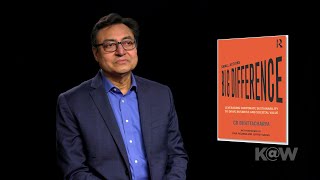
to talk with you both CB and shenar uh I
00:00:23
really enjoyed reading your book on
00:00:24
corporate responsibility I think it
00:00:26
offers a great uh framework uh and a
00:00:28
strong evidentiary base spanning lab
00:00:30
experiments the recent headlines
00:00:32
Financial economics um I guess I'd like
00:00:34
to start by asking you why you think
00:00:36
CEOs board members stakeholders more
00:00:38
broadly are increasingly focused on
00:00:39
corporate responsibility and hungry uh
00:00:41
for the kind of framework that you
00:00:42
provide in this
00:00:44
book one of the reasons is that
00:00:46
stakeholders today are increasingly
00:00:48
conscious of not just buying a good
00:00:50
product but also kind of where does the
00:00:52
product come from so who's the company
00:00:54
that stands behind the product so that's
00:00:56
something that we've seen in the
00:00:57
consumer space and so they increasing
00:01:00
pressure on companies to kind of deliver
00:01:03
and make themselves you know look
00:01:05
responsible in in the eyes of the market
00:01:08
the same way employees today they don't
00:01:10
want just a paycheck I mean they want
00:01:12
something more from a company they want
00:01:13
a sense of fulfillment of in terms of
00:01:16
where they work so companies again you
00:01:19
know even in a reactive mode they have
00:01:20
to kind of you know uh get into the act
00:01:24
of of being good corporate citizens uh
00:01:26
investors as an investor movement as
00:01:28
well uh so multiple stakeholders have um
00:01:32
or you can say society as a whole have
00:01:34
kind of uh risen up to the idea that we
00:01:38
need to um be more responsible as
00:01:42
organizations um and as corporate
00:01:44
citizens and all of that has put kind of
00:01:47
of course the the global warming and and
00:01:49
the climate change movement all of this
00:01:50
the human rights Everything Has Come
00:01:52
Together to kind of suddenly catapult
00:01:54
corporate responsibility I guess uh to
00:01:56
the Forefront great and what motivated
00:01:58
you personally to meet this Demand by
00:02:00
writing this book how did you personally
00:02:02
become interested in the
00:02:03
topic I met the CEO of Ben and Jerry's
00:02:07
uh Ben Goen a long time ago in the
00:02:09
mid90s and he asked a very interesting
00:02:11
question of me and he said can you tell
00:02:14
me whether consumers would buy our brand
00:02:17
rather than a competitor's brand because
00:02:20
of the things that we are doing in the
00:02:21
social and environmental realm uh being
00:02:24
a marketing scholar this was clearly a
00:02:26
marketing question but I had never
00:02:27
thought of you know social
00:02:29
responsibility as a driver of of
00:02:31
consumer purchase and that's when I
00:02:34
looked to my good friend here and I said
00:02:36
okay maybe we need to kind of do
00:02:37
something about this and indeed that was
00:02:40
our our U first kind of dive into into
00:02:43
this area of corporate responsibility
00:02:45
and how stakeholders react to company's
00:02:47
corporate responsibility initiatives
00:02:49
over the years there are many other
00:02:51
companies who came to us with similar uh
00:02:54
questions you know uh PNG General Mills
00:02:57
uh Target Denon I mean all of these
00:03:00
companies kind of had seemed to have
00:03:02
similar questions in mind and so our
00:03:05
body of work just kind of kept growing
00:03:07
plus there were the the whole
00:03:08
theoretical space was wide open so there
00:03:10
was question after question that one
00:03:12
could answer and at some point it looked
00:03:15
like hey I mean we've got you know a
00:03:17
portfolio here that perhaps we can
00:03:19
distill kind of and and disseminate the
00:03:22
findings to you know to to a wider
00:03:24
audience than just those who read
00:03:27
scholarly journals and I think as an
00:03:29
academic one of the things I saw um that
00:03:31
was missing the space is what CB talked
00:03:33
about which is uh the lack of an
00:03:36
academic or conceptual uh uh perspective
00:03:39
and rigor to a lot of the work that I
00:03:41
was seeing and we were seeing in in this
00:03:43
area and so we we thought that was a
00:03:47
really interesting opportunity to kind
00:03:49
of bring some of that as academics given
00:03:51
our unique backgrounds to the to the
00:03:53
questions that were raised in this area
00:03:56
so do you think the the two main
00:03:58
differences between this book and some
00:03:59
of the other pieces in the field are
00:04:00
this academic focus and the marketing as
00:04:02
a discipline um or are there other key
00:04:05
dri key differentiators of the book
00:04:07
those are two of the key ones yes I mean
00:04:09
the stakeholder perspective is is of
00:04:11
course I think um a big differentiator
00:04:14
of of this book from others no one
00:04:17
really has or prior to this no one
00:04:19
really had studied consumers and
00:04:22
employees to find out kind of from the
00:04:24
eyes of the beholder if you will kind of
00:04:26
you know what do they feel about a
00:04:28
company's um corporate responsibility um
00:04:32
if you look at websites every company
00:04:34
says that they're doing great work and
00:04:35
fantastic work uh but this was an
00:04:37
opportunity to kind of look at it from
00:04:39
from the other side and what we found
00:04:42
was uh as you can tell from the book um
00:04:45
quite quite quite telling so I would add
00:04:47
to that the you know the the fact that
00:04:49
we're looking at it through the lens of
00:04:51
the stakeholder is a big
00:04:53
differentiator I was curious about the
00:04:54
labeling there's so many top uh labels
00:04:56
turned around responsibility social
00:04:58
responsibility sustain ability uh how do
00:05:00
you differentiate corporate
00:05:02
responsibility uh from some of these
00:05:03
other um some of these other topics
00:05:06
these other
00:05:08
labels
00:05:10
uh the way I address it typically is
00:05:14
that corporate responsibility is U kind
00:05:16
of a means to an end and and the end
00:05:18
would really be sustainability where we
00:05:21
are thinking of uh the people the planet
00:05:24
and as businesses of course we're
00:05:25
thinking of profit so that triple bottom
00:05:27
line is where we want to get to
00:05:30
and companies are but one of the agents
00:05:34
that can kind of take us there and when
00:05:36
companies engage in what it takes to get
00:05:39
to fulfill that triple bottom line uh we
00:05:41
call that corporate responsibility we
00:05:43
we've clarified that kind of in the book
00:05:45
in in in very simple terms and because
00:05:48
we are not dealing with the the other
00:05:51
actors such as responsible consumerism I
00:05:53
mean that's a big field in of itself
00:05:55
that's that's emerging now um you know
00:05:57
or or or any uh social entrepreneurship
00:06:00
which is another thing that's kind of
00:06:01
leading into it we figured that
00:06:04
corporate responsibility was perhaps the
00:06:06
best label um and the most honest label
00:06:09
for for us in this book okay um you
00:06:12
ground a lot of the analysis in the book
00:06:14
at the level of the individual uh
00:06:15
drawing on psychological research and
00:06:17
experiments uh including many that
00:06:19
you've conducted yourself uh could you
00:06:21
highlight some of the key insights that
00:06:22
come out of this research for people who
00:06:23
are interested in corporate
00:06:25
responsibility um well we we from the
00:06:28
very beginning we took a very contingent
00:06:30
approach in trying to understand
00:06:32
stakeholder reactions our basic premise
00:06:34
was that not everyone is going to react
00:06:36
the same way which is very consistent
00:06:38
with our understanding of how human
00:06:40
beings behave and think and react to not
00:06:42
only what companies do but what happens
00:06:44
in the world around them so uh in that
00:06:47
sense uh so that's the approach that we
00:06:49
took and what we found were uh as it
00:06:52
summarized in the book there was some
00:06:53
key insights the first is that uh a lot
00:06:56
of the people we talk to are not really
00:06:58
fully understanding of what exactly
00:07:01
companies were doing so awareness was
00:07:02
very low uh we found that uh even when
00:07:05
they knew what was happening there were
00:07:07
certain dimensions of their
00:07:09
understanding that really mattered when
00:07:10
it came to how stakeholders at
00:07:13
particular consumers React to what
00:07:14
companies do uh that included uh things
00:07:18
like uh what kind of attributions they
00:07:20
made about why a company is doing what
00:07:23
it's doing which is very key as you know
00:07:25
in this space uh it also related to uh
00:07:29
what expectations they had coming into
00:07:32
what a company should be doing so those
00:07:33
were some of the things and then um uh
00:07:36
finally one of the key things that we
00:07:37
thought really ma what we found really
00:07:39
mattered is uh are are the the consumers
00:07:43
feeling that what the companies are
00:07:45
doing really does something for them
00:07:46
personally and that's very much in line
00:07:48
with the entire uh uh perspective on
00:07:51
consumer needs and things like that so
00:07:55
um I would say those are the key things
00:07:57
anything else yeah I mean in simple
00:07:59
terms we were able to distill this into
00:08:00
the form of of a of of a model um that
00:08:04
folks might find easier to remember and
00:08:06
we call it the three use model and and
00:08:08
we label them understanding usefulness
00:08:12
and unity and unity is really the sense
00:08:14
of belongingness between the company and
00:08:16
the individual uh which drives outcomes
00:08:20
such as kind of loyalty positive word of
00:08:22
mouth resilience to negative information
00:08:24
so we studied outcomes that are really
00:08:27
of interest to to businesses I mean they
00:08:30
and uh businesses have been coveting
00:08:33
these outcomes for a long time and what
00:08:34
we are able to do through this uh micr
00:08:37
psychological perspective is we are able
00:08:38
to show that corporate responsibility
00:08:41
indeed can contribute to these outcomes
00:08:44
even when you hold you know all else all
00:08:46
else all else constant so we are able to
00:08:49
show Fairly convincingly that this is an
00:08:51
additional driver of kind of you know uh
00:08:55
marketing uh and and business coveted
00:08:57
coveted outcomes one of the things
00:08:59
that's interesting is you're able to
00:09:00
draw a contrast you're able to say it's
00:09:02
not just what the company is doing that
00:09:04
may or may not be responsible but how
00:09:06
it's perceived uh and so the perceptions
00:09:08
among consumers and employees are really
00:09:10
what drives outcomes um that gives a
00:09:12
real prominence to the media strategy
00:09:14
and the communication strategy uh that
00:09:16
the company employs can you speak a
00:09:17
little bit about your findings there
00:09:19
yeah I mean communication becomes
00:09:22
absolutely key I mean as I said one
00:09:25
thing was that first of all we found
00:09:26
awareness to be low and a very simple
00:09:30
truth is that if people don't know what
00:09:31
you're doing there is no way that they
00:09:33
can reward you so companies will have to
00:09:35
work on increasing that awareness
00:09:38
however that's a slippery slope because
00:09:40
in our research we found that you know
00:09:42
stakeholders often times uh you know
00:09:45
receive these messages as kind of
00:09:47
propaganda from from from companies or
00:09:50
self-promotion so one of the
00:09:52
implications that we kind of highlight
00:09:54
in the book is that when it comes to
00:09:56
talking about your corporate
00:09:57
responsibility you know tell don't sell
00:10:00
so so don't try to make more of it than
00:10:01
you actually have uh but rather give the
00:10:04
facts out there what we find is that
00:10:07
stakeholders really want companies to be
00:10:10
outcome focused rather than input
00:10:12
focused and what that means is that in
00:10:14
uh don't say that we are spending
00:10:16
hundreds of millions of dollars on on
00:10:18
solving this crisis but rather say that
00:10:20
we've actually saved 100 lives or or
00:10:23
we've kept you know 200 people warm from
00:10:25
the cold winter so if you focus on what
00:10:28
you've achieved as a company in the
00:10:31
corporate responsibility realm that
00:10:33
makes a much bigger difference than kind
00:10:35
of if you just keep on saying that yes
00:10:37
we are you know we we are trying so we
00:10:40
do list these implications um which you
00:10:43
know if companies follow that in their
00:10:45
communication strategy and media
00:10:48
strategy I think they can navigate
00:10:50
what's a reasonably complicated path
00:10:52
it's not straightforward because you
00:10:54
know unlike advertising which which
00:10:56
everybody accepts as okay I mean
00:10:57
Company's trying to sell stuff in when
00:11:00
it comes to corporate responsibility um
00:11:02
there's far more skepticism and and what
00:11:05
we are able to to do in in the
00:11:07
communication strategies is we are
00:11:08
suggesting kind of ways to to to
00:11:10
navigate this path and uh achieve kind
00:11:13
of a a good outcome for the companies
00:11:16
the the one thing I would add to that is
00:11:18
uh also in terms of communication one of
00:11:21
the things we found is that if you can
00:11:23
really address in your Communications
00:11:25
what is it that you're doing in terms of
00:11:27
the needs of your consumer your
00:11:29
stakeholders and if you can address that
00:11:31
very clearly I don't know if you
00:11:32
remember the shell example that we had
00:11:34
in uh one of the earlier chapters where
00:11:37
uh we think one of the key uh issues
00:11:40
there was that they did not really think
00:11:42
about okay what is it that the this
00:11:44
community needs as we're trying to do
00:11:47
good in the environmental space and they
00:11:49
didn't communicate that
00:11:51
effectively so and in what form of media
00:11:55
I mean are we talking about using U
00:11:57
broadcast media using printed media
00:11:58
using social media how do you integrate
00:12:00
these these different forms of the
00:12:02
communication strategy to Target
00:12:03
individual stakeholders with the message
00:12:05
of the outcomes and your uh your efforts
00:12:08
in this
00:12:10
area I I think it spans all of them uh
00:12:14
in our book at this point we did not get
00:12:16
into that level of the kind of the media
00:12:18
planning strategy and and kind of at
00:12:20
what point um or or with which Target
00:12:23
segment a particular media strategy
00:12:25
might be more effective um than another
00:12:27
I think that would have to be kind of on
00:12:29
a case-by Case basis depending on on the
00:12:31
company and and and the context um if
00:12:34
you look at the real world I mean there
00:12:36
is a fair amount of print media as far
00:12:39
as corporate responsibility is concerned
00:12:41
and that's clearly an important one
00:12:43
because people do get a little bit of
00:12:45
time to kind of process the information
00:12:47
that's given uh but social media clearly
00:12:49
you know um things like uh Facebook and
00:12:53
so on have have become also increasingly
00:12:55
prominent um I don't think that what
00:12:58
have the the implications that we've
00:13:00
come up with are kind of more applicable
00:13:03
to a certain form of media or less
00:13:04
applicable to a certain form of media
00:13:06
but rather I think it's best to say that
00:13:09
we would work that out depending on a
00:13:11
particular company context and I think
00:13:13
one of the key points we make is that
00:13:15
when it comes to your media strategy you
00:13:16
have to again segment you know your
00:13:19
stakeholders in your market in terms of
00:13:21
you know what messages you want to go to
00:13:23
which group at what stage of the
00:13:25
evolution of your uh corporate
00:13:28
responsibility
00:13:29
initiatives um uh so you know if you
00:13:34
take if you take Nestle as an example
00:13:35
you know they they identify thought
00:13:37
leaders in the space and they send them
00:13:39
personal Communications whereas they
00:13:41
might put out General ads and then they
00:13:43
have their corporate responsibility
00:13:45
reports so it's really a mixture of and
00:13:48
then they have to address you know if an
00:13:49
NGO attacks them in the social media
00:13:51
space they'd have to be Savvy enough to
00:13:55
to um you know address that issue in
00:13:58
that space
00:14:00
um throughout the book you you provide a
00:14:01
wealth of of great anecdotes and
00:14:04
experiences of individual companies with
00:14:05
with whom you've worked I wonder how
00:14:07
different you feel the the the
00:14:09
perception and the Sea Suite is about
00:14:10
the respons the importance of
00:14:12
sustainability corporate responsibility
00:14:14
uh from the classroom from future
00:14:16
managers and and what explains that
00:14:18
Gap well you know evidence recent
00:14:21
evidence suggests that the SE Suite is
00:14:24
uh taking notice of of of what's going
00:14:27
on and there was a recent stud by
00:14:29
accenta that was actually published in
00:14:31
Business Week where they surveyed um
00:14:34
CEOs and seite U managers and they all
00:14:38
had very um strong unequivocal concerns
00:14:42
about kind of uh sustainability and the
00:14:45
important role that sustainability would
00:14:46
would play kind of in the um um in the
00:14:50
corporate world kind of in in the years
00:14:52
to come um are they actually going to
00:14:55
take note of the details no perhaps not
00:14:57
so for them the message is very simple
00:14:59
from our book I think for the sea Suite
00:15:01
that the message is that the only way
00:15:03
corporate responsibility makes uh a
00:15:06
difference both to society as well as to
00:15:09
the bottom line of the company is if it
00:15:10
is fully integrated into the strategy of
00:15:13
the company that it ought not to be kind
00:15:15
of a Bolton and um you know if if you
00:15:18
give it that respect and if you if you
00:15:20
think about it similar to what you would
00:15:22
think about your business strategy
00:15:23
overall then and only then can you
00:15:26
actually create create value and one
00:15:29
important message that we emphasize is
00:15:31
that the only way to creating value
00:15:34
through corporate responsibility U
00:15:36
business value through corporate
00:15:37
responsibility is to create social value
00:15:39
first so creating social value when I
00:15:42
say social I mean environmental as well
00:15:44
so creating social and or environmental
00:15:45
value is a prerequisite to creating
00:15:48
business value through corporate
00:15:50
responsibility in other words there are
00:15:51
no shortcuts and if if this is a message
00:15:54
that we can actually communicate to the
00:15:56
SE Suite in in simple terms and I have
00:15:59
some tangible examples of where managers
00:16:01
have taken one slide kind of you know
00:16:03
from from our presentation and say okay
00:16:05
this is the one we're going to show um
00:16:07
and uh then I think you know all they
00:16:10
need to do is to then you know give give
00:16:12
go down the chain of command and say
00:16:14
okay guys we need to think about this uh
00:16:16
a little bit differently and uh then
00:16:18
hopefully we'll make a difference so the
00:16:20
this um Bears a lot of similarity to
00:16:22
Michael Porter's recent work on shared
00:16:23
value with Mark Kramer um it's a
00:16:27
seductive appeal to say we can do do
00:16:29
well create profits and create value for
00:16:31
all stakeholders but at the end of the
00:16:33
day we also have to capture that value
00:16:34
uh for our shareholders capture our
00:16:36
share of it uh if we just create social
00:16:39
uh welfare if we just create uh total
00:16:41
benefits uh how do we know that in the
00:16:43
end we'll sustain ourselves as a company
00:16:45
so what advice do you have in terms of
00:16:47
making sure that the company captures
00:16:48
its share of the value it's creating as
00:16:51
opposed to it all being distributed to
00:16:52
external
00:16:55
stakeholders in the approach we take I
00:16:58
mean if if you think about the outcomes
00:17:00
that we study I mean you know if if a
00:17:02
consumer is more loyal to the company's
00:17:06
products or says good things about the
00:17:09
company then that value is acing to to
00:17:13
to the company I mean in in our
00:17:15
framework there is we we are looking at
00:17:18
social value and environmental value and
00:17:20
we're looking at um you know business
00:17:24
value so and our models and and
00:17:27
uh statistical models as as well as the
00:17:30
conceptual Frameworks are able to
00:17:32
demarcate you know between between the
00:17:36
the the creating value for the society
00:17:38
part as well as creating value for for
00:17:40
the company part uh so when an employee
00:17:42
basically stays longer at the company or
00:17:44
is going to be more productive which we
00:17:46
also able to show statistically then
00:17:48
that value is essentially being you know
00:17:51
uh is is essentially being captured or
00:17:53
is acing to to to the company and we
00:17:56
don't see that Danger of of it being
00:17:59
lost I think it comes back to the basic
00:18:01
premise of our book which is that there
00:18:03
is a demand for for uh corporate
00:18:06
responsibility and sustainability from
00:18:09
the companies from the external
00:18:10
stakeholders and so if a company does
00:18:14
that then the stakeholders will reward
00:18:16
them because their needs are being
00:18:18
fulfilled it's also obvious from reading
00:18:20
the book that you're drawing a lot on
00:18:21
statistical studies lab experiments I
00:18:23
wonder you know if there's one that you
00:18:25
think is uh particularly powerful that
00:18:27
you'd like to share with us uh and share
00:18:28
with the
00:18:29
audience one all right well you start
00:18:32
the one the one that stands out for me
00:18:34
always uh is the work that we did with
00:18:37
uh yogurt companies yogurt brands um we
00:18:41
we
00:18:41
contrasted uh Stony field which is very
00:18:44
well known for its work in the uh
00:18:47
corporate responsibility space with
00:18:49
other brands which actually are you
00:18:51
could argue equally involved but are not
00:18:55
really positioned completely or not
00:18:57
fully identified with that and what we
00:19:00
found was very interesting um in that uh
00:19:04
the consumers of Stonyfield felt much
00:19:07
closer to the brand identified felt more
00:19:10
Unity with the brand and ultimately
00:19:13
rewarded the brand more than consumers
00:19:14
of the other brands even though all the
00:19:16
other brands uh were quite actively
00:19:19
engaged in corporate responsibility and
00:19:21
I think to me that really encapsulates
00:19:24
the essence of the book uh which is that
00:19:27
you know if you really understand your
00:19:29
stakeholders if you really know what
00:19:30
they're looking for and if you can uh
00:19:33
deliver on that as part of your
00:19:34
corporate responsibility uh initiatives
00:19:38
then that's going to going back to your
00:19:40
previous question that's going to uh
00:19:43
help you capture more of the value from
00:19:45
it than if you're just kind of doing it
00:19:47
in a sort of scatter shock way let me
00:19:50
add a quick one if I may and this is a
00:19:53
different methodology and this was a
00:19:54
secondary uh data study where uh with
00:19:58
another co-author actually uh uh not the
00:20:01
three who wrote the book but with
00:20:02
another co-author I studied uh Fortune
00:20:04
1,000 companies and what we did was we
00:20:07
related corporate responsibility to the
00:20:09
market value of the firm and what we
00:20:11
found there was that there was these
00:20:13
interesting interactions between
00:20:14
corporate responsibility and the product
00:20:17
quality of the firm and and
00:20:18
innovativeness of the firm and this data
00:20:20
we got from Fortune's most admired
00:20:22
companies and it turned out that you
00:20:24
know corporate responsibility you know
00:20:27
positively contributed to market value
00:20:30
only in those contexts where the firm
00:20:32
was perceived to have good product
00:20:34
quality and was perceived to be
00:20:35
Innovative uh which is interesting
00:20:37
because it shows that mere engagement in
00:20:39
corporate responsibility does not
00:20:41
necessarily yield to kind of you know uh
00:20:43
Better Business returns for for for the
00:20:45
company but you have to as a company you
00:20:48
have to have your house in order so to
00:20:50
speak and you have to make sure that you
00:20:52
know the fundamentals such as product
00:20:54
quality and Innovation uh must be also
00:20:57
up to Snuff you know before a firm goes
00:20:59
out and kind of engages in in in in
00:21:01
corporate responsibility so this one
00:21:03
helps to tie the role of corporate
00:21:06
responsibility with other kind of
00:21:08
strategic elements of the firm in in a
00:21:10
very nice way and again kind of makes it
00:21:12
easier to for for Senior Management to
00:21:15
see why corporate responsibility
00:21:17
actually needs to be integrated into the
00:21:18
business strategy great um what do you
00:21:21
think is the most important Point uh
00:21:22
managers need to remember about
00:21:23
corporate responsibility uh that should
00:21:25
guide their actions today and in the
00:21:27
future
00:21:29
okay
00:21:31
um they should they should basically
00:21:33
remember that again corporate
00:21:36
responsibility has to be thought of in
00:21:38
terms of a long run strategy that it
00:21:41
it's not something that gives immediate
00:21:43
returns you cannot make a difference uh
00:21:46
in the immediate run and you have to
00:21:49
kind of um work hard at it so if there's
00:21:52
one thing we learned from the book is
00:21:54
that it pays to be responsible only when
00:21:59
your stakeholders perceive that there's
00:22:02
some difference that you're making to
00:22:03
the community and and and to the
00:22:05
environment so the sincerity of the firm
00:22:09
um is kind of you know is absolutely has
00:22:12
to be U unquestionably there and if you
00:22:16
make that difference then and only then
00:22:18
can you can you reap reap the value so
00:22:20
we say that there is value to be
00:22:22
extracted but it's not it's not kind of
00:22:26
you know um there to be grabbed it's
00:22:28
it's not simple so you have to kind of
00:22:30
work hard and make a difference to
00:22:32
society and the environment to kind of
00:22:34
kind of get that value out but it's a
00:22:36
win-win for for all so the triple bottom
00:22:39
line is not a zero sum game in other
00:22:41
words which is seems to be kind of a
00:22:44
belief in the in the corporate world
00:22:45
that if we do uh invest in corporate
00:22:48
responsibility we're doing that at the
00:22:50
cost of our business I think our book
00:22:51
clearly shows that that's that's not the
00:22:53
case and the only thing I would add to
00:22:55
that is
00:22:56
um understand and respond to your
00:22:59
stakeholders and it's easy to say but
00:23:02
it's I think quite challenging at the
00:23:04
operational level and I think if
00:23:06
companies can figure out how to do that
00:23:08
effectively um I think that would make a
00:23:10
big
00:23:11
difference thank you very much thank you
00:23:14
thank you for having us
00:23:22
[Music]