00:00:02
I'm Steve Cobrin professor of
00:00:03
multinational management the Wharton
00:00:05
School I'm here with v henish who is the
00:00:06
elite touch professor of management at
00:00:09
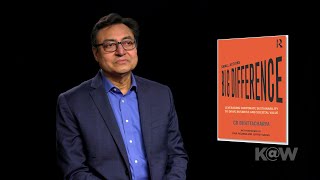
Wharton and author of corporate
00:00:10
diplomacy building reputations and
00:00:13
relationships with internal stakeholders
00:00:15
hello V hi Steve uh tell us what is
00:00:19
corporate diplomacy corporate diplomacy
00:00:21
is the senior level capability to build
00:00:25
and maintain relationships with external
00:00:26
stakeholders deliver on the greatest
00:00:28
needs or the greatest obje Ives of those
00:00:30
stakeholders in a way that delivers
00:00:32
shareholder value great why is it
00:00:34
important it's important because firms
00:00:36
are increasingly looking for growth
00:00:37
opportunities and revenue opportunities
00:00:39
abroad in Emerging Markets Frontier
00:00:41
markets foreign markets and in these
00:00:44
foreign markets they're necessarily
00:00:45
interacting with more stakeholders
00:00:47
stakeholders who vary in their economic
00:00:49
philosophies in their ideologies who
00:00:52
have different histories different
00:00:53
language backgrounds different cultural
00:00:55
backgrounds and so the the ability to
00:00:58
deliver on the growth opportunity ities
00:01:00
in these Emerging Markets requires
00:01:01
successful interactions with more and
00:01:03
more diverse stakeholders well if
00:01:05
there's more and more diverse
00:01:06
stakeholders how do you tell which are
00:01:08
the most important which you really
00:01:10
should be focusing on and deal with you
00:01:12
know there's both a short and and a more
00:01:14
uh subtle longer answer to that the
00:01:15
short answer is the stakeholders who can
00:01:17
do you the most Financial harm are the
00:01:19
most important but that that can give
00:01:21
rise to some uh shortcuts which are
00:01:23
really damaging if we only pay attention
00:01:25
to the squeaky wheel if we only pay
00:01:26
attention to the stakeholder who
00:01:28
threatens violence we're really creating
00:01:30
perverse incentives so I think a fuller
00:01:32
answer is we want to focus on the
00:01:34
stakeholders with whom a productive
00:01:36
relationship a relationship in which
00:01:37
we're helping that stakeholder obtain
00:01:39
his or her objectives is delivering on
00:01:41
shareholder value so we both need to
00:01:43
know how much they can hurt us how much
00:01:44
they can help us and whether we can
00:01:46
build and maintain a longlasting
00:01:47
relationship with them well how do you
00:01:49
figure that out how do you determine
00:01:50
whether it can help you or hurt you
00:01:52
you've just listed a whole list of
00:01:53
stakeholders so it really takes a
00:01:55
financial analysis you have to
00:01:56
understand how they impact the bottom
00:01:58
line in what way do they impact Reven
00:01:59
VES or costs uh really doing the
00:02:02
financial analysis and that's where this
00:02:04
approach uh differentiates itself a lot
00:02:05
from the corporate sustainability
00:02:07
movement or corporate social
00:02:08
responsibility movement it's not about
00:02:10
just the moral case we're really working
00:02:12
through step by step and trying to
00:02:13
understand where it appears on the p&l
00:02:15
statement what are the costs that could
00:02:16
be avoided through a better relationship
00:02:18
what are the revenue gains that could be
00:02:20
obtained and how can the actions we
00:02:22
undertake with stakeholders helping them
00:02:24
achieve those objectives really show up
00:02:25
on the balance sheet and then figuring
00:02:27
out what the return is on them sure and
00:02:30
you must have to engage stakeholders you
00:02:32
certainly do you have to build that
00:02:34
relationship with them and so it's not
00:02:35
just about talking to them it's not just
00:02:37
about a communication strategy it's
00:02:39
really rolling up your sleeves working
00:02:41
with them to attain their goals so you
00:02:43
know a kind of a a simple story of this
00:02:46
is you know if one of the biggest needs
00:02:47
is uh housing for example you know one
00:02:50
approach might be bring in some prefab
00:02:51
housing from Florida um have some
00:02:54
contractors put it up and and then wow
00:02:56
you've created their homes but no you
00:02:58
really haven't somebody else has you
00:03:00
know if you can get your country manager
00:03:01
if you can get your CFO to be out there
00:03:03
laying mortar uh putting up cinder
00:03:05
blocks helping someone build their home
00:03:07
using local technology with local
00:03:09
contractors creating local jobs and
00:03:11
working side by side the resident then
00:03:13
you've really started building a
00:03:15
relationship with them and so you want
00:03:16
to be in the trenches with them you want
00:03:18
to be part of the action and you want to
00:03:20
be working with them in the attainment
00:03:21
of their goals so you're arguing then if
00:03:24
that corporate diplomacy is really a
00:03:25
Mainline management function is that
00:03:27
correct absolutely it's not something
00:03:29
that should be said segmented into well
00:03:30
we have a government Affairs team we
00:03:32
have a community uh Affairs team we have
00:03:34
a sustainability team we're really
00:03:36
thinking from a strategic perspective
00:03:38
about how to integrate those and who's
00:03:40
more responsible for integration than
00:03:41
Senior Management whether it be the
00:03:42
country manager the general manager or
00:03:44
the seite if we're in a multinational
00:03:46
corporation and that brings up an
00:03:48
interesting point how do you integrate
00:03:50
corporate diplomacy into the mainstream
00:03:52
of the corporation into management great
00:03:54
question I think it's it's another way
00:03:55
in which this approach differentiates
00:03:57
itself from the CSR movement we're not
00:03:59
deciding what better what's right we're
00:04:01
not just focused on what stakeholders
00:04:02
care about we're speaking the language
00:04:04
of Finance we're speaking npv Roi we're
00:04:07
turning everything into the same
00:04:09
decision calculus that Senior Management
00:04:11
already uses so we're not going to
00:04:12
present a parallel analysis or a
00:04:14
parallel set of objectives we're not
00:04:16
going to do triple bottom line we're
00:04:17
going to turn everything into uh or link
00:04:20
everything to the kpis that the managers
00:04:22
are currently tracking whatever is on
00:04:24
that dashboard that they look at in the
00:04:25
morning whatever the indicators are that
00:04:27
they're tracking on a daily basis we're
00:04:29
going to figure out how external
00:04:31
stakeholders link into that and how we
00:04:34
can monitor that how we can improve upon
00:04:36
those existing kpis if we're thinking
00:04:38
about a big investment decision how do
00:04:40
we decide whether we're going to go
00:04:41
ahead with aund million or a billion
00:04:42
dollar investment we're going to work
00:04:44
through that same project valuation cash
00:04:46
flow model the one that's already on the
00:04:47
books the one that they already use in
00:04:49
the investment committee meetings we're
00:04:50
not going to create a green light red
00:04:52
light smiley face frowny face that goes
00:04:55
on top of the ROI we're going to use
00:04:57
that same calculation and we're going to
00:04:59
augment it by bringing in the way
00:05:01
stakeholders can affect it great you
00:05:03
note in the book that perceptions matter
00:05:06
more than facts yes it's interesting
00:05:07
statement what do you mean by that V too
00:05:10
often I think when we're confronted with
00:05:11
an allegation of a a human rights abuse
00:05:13
an environmental spill a unfair
00:05:16
treatment of workers we respond with the
00:05:18
facts we respond with no here are are
00:05:20
policies no here's what the scientists
00:05:22
tell us here's what really happened but
00:05:25
nobody makes a political or social
00:05:27
judgment about whether you're behaving a
00:05:29
appropriately or how they feel about you
00:05:31
based on the facts they do it based on
00:05:33
emotion based on gut uh based you know
00:05:36
if you think about how you go into The
00:05:37
Ballot Box when we go in and we decide
00:05:39
who we're going to vote for we're not
00:05:41
pulling the lever based on a net
00:05:42
presentent value calculation of our
00:05:44
future lifetime earnings under a
00:05:45
Republican or Democrat or socialist or
00:05:47
conservative we're doing something more
00:05:49
subtle uh we're thinking about who we
00:05:51
trust who we have more confidence in and
00:05:54
I'm arguing that stakeholders are doing
00:05:55
the same thing and so if we're going to
00:05:57
shape the way they feel about us we
00:05:59
can't just stop at are you better off or
00:06:01
are you worse off uh what are the facts
00:06:04
about what really happened we have to
00:06:05
assess how they trust us whether they
00:06:07
trust us and we have to try to build
00:06:09
that trust does that relate to a social
00:06:11
license to operate is that exactly
00:06:13
social license to operate is a broader
00:06:15
construct than just are you better off
00:06:17
or worse off is looking at a more
00:06:19
holistic perspective of how we perceive
00:06:21
a company uh the social license to
00:06:23
operate is the the general is the
00:06:25
perception by a stakeholder that you're
00:06:27
behaving in an appropriate manner uh
00:06:29
that you're acting in a way they
00:06:30
perceive as fair or just and what you're
00:06:33
trying to do is build up not just
00:06:35
whether they perceive you're helping
00:06:36
them or hurting them financially or
00:06:38
materially but are you behaving
00:06:39
appropriately do you deserve their trust
00:06:42
and that takes more than just thinking
00:06:43
about the facts it takes more than just
00:06:45
thinking about the financial benefits it
00:06:47
requires thinking about the relationship
00:06:49
how do you know when you have it and who
00:06:52
gives it to you well each stakeholder
00:06:53
gives it to you so the stake social
00:06:55
licensed operate is granted by each
00:06:57
stakeholder at a moment in time and it
00:06:59
can be with drawn by any stakeholder in
00:07:00
a moment in time so this really focuses
00:07:03
the attention on an ongoing process it's
00:07:05
not just the design and the
00:07:06
implementation of the entry strategy
00:07:08
it's everything you do every day who you
00:07:10
hire who you partner who you contract
00:07:12
with where you build how you build all
00:07:15
those things on a day in day out basis
00:07:17
affect each stakeholder's degree of
00:07:19
social license or the degree to which
00:07:21
they Grant you the social license you
00:07:23
have to monitor that in real time you
00:07:24
have to watch it in real time you have
00:07:26
to adapt to change in real time uh and
00:07:29
so so it's something that's an ongoing
00:07:30
management function not just something
00:07:32
at the time of Entry not just something
00:07:33
at the time of Crisis something that
00:07:35
Senior Management should be focused on
00:07:36
on an ongoing basis corporate diplomacy
00:07:39
sounds very complex uh lots of
00:07:41
stakeholders to manage lots of issues
00:07:44
perhaps different in every country in
00:07:45
which you operate absolutely are there
00:07:47
tools that can help you sort all of this
00:07:49
out well there are tools and and the
00:07:51
book covers quite a few of them uh
00:07:52
stakeholder mapping tools so how do you
00:07:54
V visualize the stakeholder landscape
00:07:56
you know if you think about what oil gas
00:07:57
and mining companies do in terms of do
00:07:59
IG on geology how much do they do in
00:08:01
terms of due diligence on the political
00:08:03
space so there there a number of tools
00:08:05
regarding how we take all the complex
00:08:07
information on who the stakeholders are
00:08:08
what they want how they're connected and
00:08:11
create visuals that can actually guide
00:08:12
strategy uh we also talk about scenario
00:08:14
analysis for financial valuation so how
00:08:16
do we actually calculate the npv or the
00:08:18
ROI of stakeholder engagement and then
00:08:20
we talk through tools about how we build
00:08:22
up trust and Frameworks that help think
00:08:24
about trust and and Trust building tools
00:08:26
that relate to Communications uh and
00:08:28
tools that relate to creating an
00:08:29
organizational culture an organizational
00:08:31
mindset that support stakeholder
00:08:33
engagement as well as uh learning tools
00:08:35
that create a more uh supportive
00:08:37
learning environment or adaptive
00:08:39
environment so there's six tool sets of
00:08:41
tools or Frameworks uh which together
00:08:43
build up this framework of corporate
00:08:45
diplomacy and you go into these six set
00:08:47
of sets of tools in detail in your book
00:08:49
corporate diplomacy I do we provide
00:08:51
examples of each um both uh tools
00:08:54
examples of the use of the tools firms
00:08:56
that have used them the other thing I
00:08:57
try to draw is parallels from different
00:08:59
sectors I draw lessons from the front
00:09:01
lines of corporate diplomacy uh the
00:09:03
front lines of the mining and oil and
00:09:05
gas companies that I've referred to also
00:09:07
providers of infrastructure services
00:09:08
like Wireless Communications
00:09:10
Transportation infrastructure uh also
00:09:12
sustainable tourism uh another industry
00:09:14
that's ironically on the front lines uh
00:09:16
in very touchy environmental spaces or
00:09:19
political spaces but also the military
00:09:21
counterinsurgency campaigns lessons from
00:09:23
the development agencies so a diverse
00:09:25
set of sectors who have struggled with
00:09:27
corporate diplomacy challenges and I
00:09:29
look at how common uh use of these tools
00:09:33
uh is across these six sectors and then
00:09:36
say well this is these are tools that
00:09:38
managers can use who are going into
00:09:39
these sectors for the first time it
00:09:41
sounds comprehensive uh let me ask you
00:09:44
what are the critical takeaways that you
00:09:46
would suggest to managers who are either
00:09:48
corporate diplomats or should be
00:09:50
corporate diplomats well one of the
00:09:53
lessons I draw from looking at the front
00:09:54
lines and looking at the experience of
00:09:56
best practices is many of the firms I
00:09:58
survey in the book have written off aund
00:10:00
million or a billion dollars of losses
00:10:02
because they've mismanaged their
00:10:03
relationships with external stakeholders
00:10:05
and as a result they've reflected
00:10:07
they've built new tools new capacities
00:10:09
they've tried to become better corporate
00:10:11
diplomats so they've learned from their
00:10:12
mistakes I guess one of the takeaways
00:10:15
from the book is that it's possible to
00:10:16
learn from someone else's mistakes you
00:10:18
don't have to wait until you write off
00:10:19
a100 million or a billion dollars to
00:10:21
invest in this capacity you can learn
00:10:23
from the firms that were there first
00:10:24
that were on the front lines that lost
00:10:27
and learned so why not learn from
00:10:28
someone else's mistakes learn from best
00:10:30
practice and that's what I try to pull
00:10:32
together in the book great and again the
00:10:33
book is Corporate diplomacy yes
00:10:35
corporate diplomacy building reputations
00:10:37
and relationships with external
00:10:38
stakeholders thank you V thanks Steve
00:10:43
[Music]