00:00:03
this podcast is brought to you by Indian
00:00:05
knowledge at Warton please visit
00:00:07
knowledge. won. up.edu India for more
00:00:12
[Music]
00:00:14
information India imagine was the theme
00:00:17
of the 2008 Wharton India economic Forum
00:00:20
that was held in Philadelphia recently
00:00:22
the dayong event attracted several
00:00:24
leaders including apj Abdul Kalam former
00:00:28
president of India as well as CEOs of
00:00:30
Indian companies nonprofit groups
00:00:33
Consulting and private Equity firms
00:00:35
Indian knowledge at Wharton brings you
00:00:37
one-on-one conversations with these
00:00:39
leaders we're going to speak today with
00:00:40
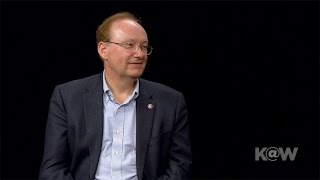
Vikram akula founder and CEO of SKS micr
00:00:44
Finance vickram thanks so much for
00:00:46
joining us today thank you for having me
00:00:49
I'd like to start by asking how you got
00:00:51
involved with micro Finance can you tell
00:00:53
us a little bit about how and why sure
00:00:56
uh I was born in India but grew up in
00:00:57
the states and uh I'll go back to my
00:00:59
childhood here I used to go back to
00:01:00
India quite a bit during school holidays
00:01:03
and I would see the extreme poverty we
00:01:05
have in India and then come back to a
00:01:07
suburb of America and it was that jux
00:01:10
position of extreme poverty on the one
00:01:12
hand and extreme wealth that made me say
00:01:14
Okay I want to do something to try and
00:01:16
eradicate this kind of poverty so upon
00:01:18
graduating from college I went and
00:01:20
worked with an NGO basically as a field
00:01:22
agent as a loan officer doing micro
00:01:24
finance and I saw the tremendous impact
00:01:27
that micro Finance has on the lives of
00:01:29
the poor
00:01:30
um but I also thought that you could do
00:01:32
it in a more scalable Manner and that's
00:01:34
when I left that NGO to set up SKS uh
00:01:38
The Entity that I now run let's talk a
00:01:40
little bit about the constraints that
00:01:42
face you in the world of micr Finance
00:01:45
for example lack of capital is always a
00:01:47
problem lack of capacity is another
00:01:50
issue and of course micr Finance has
00:01:52
huge transaction costs what kind of
00:01:55
Innovations has SKS brought about to
00:01:58
tackle these issues
00:02:00
yeah these these this is what I call the
00:02:01
three C's the lack of capital the lack
00:02:03
of capacity and the high cost of doing
00:02:05
micr finance and in my analysis these
00:02:08
are the three constraints that prevented
00:02:10
micr Finance institutions from scaling
00:02:12
up R rapidly so what we've done is three
00:02:15
things against these problems that we
00:02:17
think can overcome those constraints the
00:02:19
first is to use a for-profit model to
00:02:22
overcome the constraints of capital the
00:02:25
second is to use best practices from the
00:02:27
business world to overcome the
00:02:28
constraints of capacity
00:02:30
and the third is to use technology to
00:02:32
overcome the constraints of costs to say
00:02:34
a quick word on each we believe that
00:02:36
even though most microfinance
00:02:38
institutions are nonprofits and even
00:02:40
though Professor yunice who's a mentor
00:02:42
of mine talks about micr Finance as a
00:02:43
social business meaning not paying
00:02:45
dividends we feel that in fact you have
00:02:48
to structure things in a for-profit way
00:02:50
you have to pay investors High dividends
00:02:52
because otherwise there's no way you're
00:02:54
going to kind of access the capital the
00:02:56
kind of capital that poor people need so
00:02:58
we're structured as a for profit and
00:03:00
that's been able that's enabled us to
00:03:02
tap into commercial capital and provide
00:03:05
an unlimited amount of um Finance to the
00:03:07
poor on the second dimension of capacity
00:03:10
if you look at most micr Finance
00:03:12
institutions they're structured as NOS
00:03:14
they're small they think about you know
00:03:16
thousand clients or maybe 10,000 clients
00:03:18
whereas a business whether it's
00:03:19
Starbucks or Coke or McDonald's thinks
00:03:21
about millions or tens of millions so
00:03:24
what we've done is we've looked at those
00:03:25
types of companies and adopted the
00:03:27
techniques that they've used within micr
00:03:29
finan and that's given us an extremely
00:03:31
fast growth rate and finally when it
00:03:33
comes to technology um we've developed
00:03:36
an automated management information
00:03:37
system because at the end of the day
00:03:39
you're doing millions of very tiny
00:03:40
transactions and there's a high cost to
00:03:42
doing that unless you use technology
00:03:44
you'll never be able to bring down the
00:03:46
cost and to scale rapidly just to go
00:03:48
back to that last point do you use
00:03:51
mobile phones to manage transactions
00:03:53
sure we're doing a a pilot project right
00:03:55
now with mobile phones and clearly we
00:03:57
think Mobile Banking is the future
00:03:59
because doesn't make sense to try and
00:04:01
build a retail you know brick and mortar
00:04:03
infrastructure in rural India from a
00:04:05
cost perspective it makes no sense at
00:04:06
all and mobile technology today is
00:04:08
robust enough that you can actually very
00:04:10
easily do Banking and we actually have a
00:04:12
very successful pilot that we've done
00:04:14
the problem is the regulatory
00:04:16
environment and the Central Bank in
00:04:18
India has not understood Mobile Banking
00:04:21
in its full potential and therefore
00:04:22
there are regulations that make it
00:04:24
prohibitive for us to do this and if
00:04:27
those regulations get changed then
00:04:29
clearly this is the investment that we'd
00:04:30
make and this would be the future of
00:04:32
micr Finance if you don't mind let's go
00:04:34
back to that last Point first about
00:04:36
getting capital from private sources I
00:04:39
understand that SKS micr Finance has
00:04:42
received capital from Venture
00:04:44
capitalists when that happens does that
00:04:46
change the expectations in any way what
00:04:49
I mean is do Venture capitalists treat
00:04:51
you more gently because you're lending
00:04:53
money to poor women entrepreneurs than
00:04:56
they would if you were lending to say a
00:04:58
technology entrepreneur
00:05:00
so we certainly have uh social investors
00:05:02
who come at it with a double bottom line
00:05:04
of making a social impact as well as a
00:05:06
for-profit impact but we also have
00:05:08
investors who have a Pure commercial
00:05:10
interest take for example example
00:05:12
Sequoia Capital the investors in Yahoo
00:05:15
Google and so on they're not interested
00:05:17
in the social purpose they're in there
00:05:19
because their LPS need to earn a high
00:05:21
return so they come in at a Pure
00:05:23
commercial Angle now many people think
00:05:25
that there's a dichotomy between the
00:05:27
social purpose and the commercial
00:05:29
purpose but we actually don't think
00:05:30
there is a dichotomy we think that if
00:05:32
you do what's right by the borrowers if
00:05:34
you charge reasonable interest rates
00:05:36
provide good service not only is that
00:05:38
intrinsically the right thing to do but
00:05:40
that's the way to build a good business
00:05:42
especially when you're working with the
00:05:43
base of the pyramid because the base of
00:05:45
the pyramid customers is extremely loyal
00:05:47
and if you treat them well they'll stay
00:05:48
with you if they feel they're being
00:05:50
exploited or taken advantage of they
00:05:52
will turn on you in a second now if you
00:05:55
treat them well it's not only the right
00:05:57
thing to do but they'll stay with you
00:05:58
and that becomes comes how to build a
00:06:00
long-term healthy business and that's
00:06:02
what our commercial investors want
00:06:05
typically what are the interest rates
00:06:06
for micr Finance Loans so we we charge
00:06:10
an average interest rate of 24% now that
00:06:12
seems extraordinarily high but let me
00:06:15
put this in context informally the The
00:06:17
Village money lender or the loone Sharks
00:06:19
will charge anywhere from 50% to as high
00:06:21
as a th% interest so we're charging much
00:06:23
less than what they charge and I'll also
00:06:26
submit that our interest rate is
00:06:27
actually the lowest cost finan in
00:06:29
available to the poor because even
00:06:31
though a retail bank might charge let's
00:06:33
say 12% or a subsidized government loan
00:06:35
might cost 7% if you actually talk with
00:06:38
borrowers and ask them how many trips
00:06:40
they're making to a bank branch what are
00:06:42
the lost wages the bus fairs what are
00:06:44
the broker fees and sometimes bribes
00:06:46
they're paying to access that 7% loan
00:06:48
they actually end up paying much higher
00:06:50
than 30% so at 24% we're actually the
00:06:52
lowest cost financing available to the
00:06:54
poor and the poor are earning such high
00:06:57
Returns on their microenterprises that
00:06:59
they have no problem paying 24% if their
00:07:01
returns are averaging 100% or so well it
00:07:04
sounds like the rates of interest you
00:07:06
charge are less than what some credit
00:07:08
card companies charge their customers
00:07:10
but the point you rais is a really good
00:07:12
one some time ago we interviewed
00:07:14
Muhammad yunus the founder of gramine
00:07:16
bank and the Nobel laurate and he told
00:07:18
us that he thought micr finance
00:07:21
companies need to be regulated because
00:07:23
the rates of Interest they charge are so
00:07:26
high and so urious that they're almost
00:07:28
as bad as the rates they get from the
00:07:30
village money lender do you happen to
00:07:32
agree with that point of view well I
00:07:34
think the best way to tackle interest
00:07:36
rates is competition and certainly in
00:07:39
some areas you've got some mfis that are
00:07:41
you know really trying to extract and
00:07:43
charge High interest rates over time
00:07:45
you'll see competition pulling that down
00:07:47
now when we compete in different areas
00:07:49
the first thing you see is the local
00:07:50
incumbent mfi will immediately drop its
00:07:53
interest rates and we think that's the
00:07:54
best way to do it so we wouldn't be in
00:07:56
favor of Regulation that caps interest
00:07:58
rates we were afraid that that that'll
00:08:00
prevent other competitors from coming in
00:08:02
and prevent the more robust way of
00:08:04
lowering interest rates having said that
00:08:06
we think there is a scope for regulation
00:08:08
when it comes to ethical practices such
00:08:11
as truth and advertising transparency
00:08:13
with your borrowers those are the types
00:08:15
of things that we think will will make a
00:08:17
big difference to making sure that the
00:08:19
the sector remains healthy and prevents
00:08:21
the bad apples from coming in as you've
00:08:24
gone about trying to build SKS micr
00:08:26
Finance what's the biggest challenge
00:08:28
you've faced and how have you overcome
00:08:31
it sure the biggest challenge so far and
00:08:34
and clearly the challenge going forward
00:08:36
is the political environment the fact is
00:08:38
that um micr Finance is still very much
00:08:41
understood by politicians misunderstood
00:08:44
by politicians and bureaucrats and
00:08:46
people hear the interest rates and they
00:08:48
don't understand the context and they
00:08:49
feel that something exploitative is
00:08:51
going going on so we spend a lot of time
00:08:53
trying to educate politicians trying to
00:08:55
educate bureaucrats so they understand
00:08:57
the power that micr Finance has and
00:08:59
understand understand how it works to
00:09:01
actually help the poor the poor
00:09:02
certainly understand this our customers
00:09:04
do they come back to us year after year
00:09:06
it's the political Elite that doesn't
00:09:08
understand it and sometimes misuses
00:09:11
micro Finance for political ends that's
00:09:13
been the biggest challenge how many
00:09:15
customers do you have and how would you
00:09:18
describe your typical borrower sure So
00:09:21
currently we've got um nearly 2 million
00:09:23
customers spread across 25,000 villages
00:09:26
in 15 states of India um a typical
00:09:29
borrower typical first loan is about
00:09:31
8,000 rupees or
00:09:33
$200 um a woman might take a loan to to
00:09:36
buy a cow will sell the milk and then
00:09:38
repay the loan on a weekly basis she
00:09:40
might do a small Village Grocery she
00:09:42
might do vegetable vending or another
00:09:44
type of trading activities and what we
00:09:46
see is there's very high Returns on
00:09:48
investment and each year she's eligible
00:09:50
to take a larger loan so even though
00:09:52
$200 may seem relatively small
00:09:54
eventually we'd like to get borrowers
00:09:56
and we see many borrowers moving into,
00:09:58
loans and then you begin to see huge
00:10:00
impacts in terms of poverty eradication
00:10:03
where do you think SKS micr finance will
00:10:05
be 5 years from now so our our vision or
00:10:09
give you I'll give you our two-year goal
00:10:10
we're close to 2 million clients now and
00:10:13
we hope to scale to 8 million clients um
00:10:16
in the next two years now today we're
00:10:17
the largest mfi in India if we hit that
00:10:20
number of 8 million we'll become the
00:10:21
largest mfi in the world so in terms of
00:10:24
scale that's one thing that we'd like to
00:10:25
do but we also have a vision to use micr
00:10:28
finance that channel that we've created
00:10:30
to distribute the full range of
00:10:32
financial services now we do primarily
00:10:34
credit and some insurance but we know
00:10:36
poor people need savings they need
00:10:37
remittances and they need other products
00:10:39
as well so we want to introduce a range
00:10:41
of different products we also think
00:10:43
there's opportunities to leverage this
00:10:45
channel to introduce non-financial
00:10:47
products as well so currently we're in
00:10:50
discussions with groups about doing
00:10:52
Education Loans and and talking with
00:10:54
education providers to provide lowcost
00:10:55
schools we have a health insurance
00:10:57
product and we're teaming up with low
00:10:59
hospitals we are um giving loans to buy
00:11:02
cell phones to buy you know consumer
00:11:05
package goods and we think there's the
00:11:06
whole range of non-financial products
00:11:09
that poor people need that we can
00:11:11
deliver through our Channel as well
00:11:13
vicam thank you so much for joining us
00:11:14
today thank you as
00:11:16
[Music]
00:11:17
well for more information please visit
00:11:20
knowledge. won. up.edu India
00:11:25
[Music]