00:00:01
[Music]
00:00:08
[Music]
00:00:20
hello I'm hog Levens from knowledge at
00:00:22
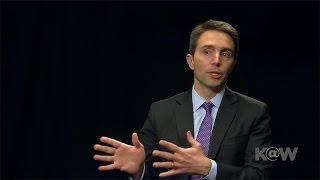
Wharton and today we're here with Bruce
00:00:24
brussard who is the CEO and president of
00:00:27
human the fourth largest Healthcare
00:00:30
Insurance Group Bruce welcome to
00:00:31
knowledge at Wharton well thank you I'm
00:00:33
so glad to be here Bruce uh on the web
00:00:36
this morning I see that your your
00:00:37
comments in Louisville and earlier in
00:00:40
Texas uh raised something of a buzz uh
00:00:42
there uh you said that uh were there are
00:00:45
a lot of bumps in a road coming with the
00:00:47
implementation of the Affordable Care
00:00:49
Act and also very interesting uh you
00:00:52
indicated that the price of
00:00:54
insurance wasn't likely to be going down
00:00:56
anytime soon and this has to do with the
00:00:59
3:1 ratio and the way that's will be
00:01:01
tightened up can you uh uh tell us a
00:01:03
little bit more about that yeah hog I I
00:01:06
we first I want to say that we are very
00:01:08
very positive on the fact that healthc
00:01:10
care reform is going to expand coverage
00:01:12
so we're we're glad about that but it is
00:01:14
going to raise the cost of care and what
00:01:16
we see is is that the 3 to1 ban that
00:01:19
we're talking about is really going to
00:01:22
uh cause the younger population and the
00:01:24
healthier population to pay more um to
00:01:28
help with the older population because
00:01:30
that band is going to restrict your
00:01:31
pricing of the difference between the
00:01:33
lowest and the highest and so young
00:01:36
people who are very healthy will be
00:01:38
paying more than they expect to pay in
00:01:40
order to fund old people who will be
00:01:42
using more than certainly than the young
00:01:44
people fundamentally that's a good way
00:01:46
to say it and you know there's a there's
00:01:48
a lot of work going on right now in the
00:01:50
details of healthcare reform so it's not
00:01:53
completely finalized but the way it
00:01:54
looks today and what the experts are
00:01:56
telling us is I think the public is
00:01:58
going to see an increase in healthcare
00:02:00
Insurance in
00:02:01
2014 and overall looking down the road
00:02:04
at the implementation of the Affordable
00:02:06
Care Act you're the Press coverage of
00:02:09
your remarks seem to be saying that uh
00:02:11
you were still concerned about the
00:02:12
fragmented kind of uh uh somewhat
00:02:15
chaotic nature of where everything was
00:02:17
going could you give us an idea of uh
00:02:20
you indicated there were bumps in the
00:02:22
road what are some of the largest bumps
00:02:24
that concern you on the insurance side
00:02:26
and on the care delivery side well one
00:02:28
of the challenges we have is CMS has a
00:02:31
lot of work going on right now and so we
00:02:34
have not seen all the details around the
00:02:36
healthcare reform so we sit here now in
00:02:38
February and the implementation is going
00:02:41
to be at the end of the year in fact
00:02:43
people will start buying in the coming
00:02:45
um probably in the fourth quarter or so
00:02:47
and so we're asking the question of just
00:02:49
some more details in that aspect of that
00:02:51
so first it's just trying to provide the
00:02:53
details the second aspect it is so
00:02:56
complicated it is such a complicated
00:02:58
Bill and there's so many interrelated
00:03:00
details that I don't think anyone knows
00:03:03
all the various different parts of this
00:03:05
um aspect of it and the concern is is
00:03:07
what we don't know in terms of uh the
00:03:10
health insurance exchanges which are a
00:03:12
large part of all this um we're looking
00:03:15
down the road it's a matter of months
00:03:17
now before things have to start
00:03:18
happening uh we know some states are
00:03:21
doing some things some states are
00:03:23
refusing to do things some states are
00:03:25
setting up their own some are going
00:03:27
Federal uh what are your actual
00:03:29
expectations of what will be there uh
00:03:32
you know on this upcoming deadline do
00:03:34
you think we'll make the deadline do you
00:03:35
think it's realistic to expect Health a
00:03:37
year from now health exchanges will be
00:03:40
up and running and actually be in use in
00:03:42
50 states I don't know if it'll be in 50
00:03:45
states I mean I think there are going to
00:03:47
be Decisions by some some states that
00:03:49
will probably decide not to do that um I
00:03:52
actually today is the final deadline of
00:03:54
what states have to decide if it's going
00:03:56
to be a federal program or a state
00:03:57
program in that regard I
00:04:00
um I do think that when we talk about
00:04:02
bumps in the road I think the The Hope
00:04:06
and I think everyone's intention is to
00:04:07
get it um off the ground and I think
00:04:10
they I don't see any reason different
00:04:12
differently from that but I do think
00:04:14
that there will be a lot of details that
00:04:16
have to be worked out over the coming
00:04:17
months that that could prevent it but I
00:04:19
I think the intentions are fully to have
00:04:21
it up and on the cost issue of the young
00:04:24
versus the old do you think the public
00:04:27
fully appreciates what's coming do you
00:04:29
think think the Press has gotten this
00:04:31
right or do you think this is a subject
00:04:33
that has or has not been uh talked about
00:04:36
enough in public I don't think it's been
00:04:38
talked about enough in public C I think
00:04:40
the the plan has really been talked
00:04:43
about around the expansion and and the
00:04:46
communication of the reform has been
00:04:47
around that but I do not see there's
00:04:50
been a real large um conversation around
00:04:54
the what the impact is to the the public
00:04:56
uh and in terms of and in terms of the
00:04:58
Health Insurance Exchange is the latest
00:05:00
reports out of human uh are that you
00:05:03
hope to open them uh you hope to be part
00:05:06
of them in 10
00:05:07
states uh can you tell us the 10 states
00:05:09
or uh we're really not telling the 10
00:05:11
states but there are there are states
00:05:13
that today we um have a significant
00:05:16
presence in in states where we feel that
00:05:19
we can offer the the best plan for
00:05:21
members that participate in the exchange
00:05:23
so it's really our our bigger states
00:05:25
that we we're focusing on and I'm
00:05:27
guessing that some of those States will
00:05:29
be St established exchanges and some of
00:05:32
them are likely to be Federal
00:05:33
established exchanges do you have any
00:05:35
sense of which will be better in terms
00:05:37
of business model for you I don't know
00:05:40
if we have one that's uh better from a
00:05:43
um a point of view of financial or for
00:05:45
that matter ease of use uh but we do
00:05:47
think that uh a federal funded is is
00:05:50
easier for us because we're able to deal
00:05:52
with one exchange and the rules of one
00:05:54
exchange as opposed to dealing with
00:05:56
multiple rules of of each state next
00:05:59
issue uh we're really interested in is
00:06:01
uh the whole issue of retail medicine
00:06:04
and by that we mean over the last
00:06:06
several years there been an explosion of
00:06:08
the creation of walk-in clinics mostly
00:06:11
staffed by uh uh nurse practitioners in
00:06:14
drugstores in mallfront
00:06:16
stores um in other consumer venues and
00:06:20
in parallel there's been uh uh uh
00:06:23
ambulatory uh facilities popping up
00:06:25
everywhere that are essentially a
00:06:27
cheaper alternative to emergency med Med
00:06:30
um and I'm just wondering in terms I
00:06:32
know that that human is becoming
00:06:34
involved in some of that and in the big
00:06:37
picture uh is this whole retail medicine
00:06:40
thing a good thing or a bad thing for
00:06:43
big insurance companies and or big
00:06:45
Health delivery companies I think for
00:06:47
the consumer it's a it's a good thing I
00:06:49
think it's um cost effective I think
00:06:52
it's also brings convenience and what we
00:06:54
see in our relationship with our
00:06:56
customers is that they are asking for
00:06:58
that they're asking for something that
00:06:59
is cost effective and convenient that um
00:07:03
and there's a lot of conditions today
00:07:05
that can be um appropriately treated in
00:07:09
those settings uh so we're we're
00:07:11
actually excited about that we have a
00:07:13
organization called Concentra that
00:07:15
actually has a lot of those clinics and
00:07:17
we also have guidance centers um in a
00:07:20
lot of our markets that um help in that
00:07:22
ability to provide that convenience and
00:07:24
costeffective Care does Concentra
00:07:26
function as as kind of a feeder Network
00:07:29
for any of your other products or it's
00:07:31
just a standalone thing it does it um at
00:07:35
um if it's an episodic treatment so if
00:07:37
someone comes down with a cold and needs
00:07:39
a needs some help there then um if it is
00:07:42
a longer standing condition we'll refer
00:07:44
them back to their primary care
00:07:46
physician or to um whatever provider
00:07:48
that they that they have a relationship
00:07:50
with uh so irrelevant if it's a human uh
00:07:54
physician or a physician a non-human we
00:07:57
still refer them back to that that
00:07:59
physician
00:08:00
some of the observers have uh raised
00:08:03
concerns about uh patients who go to
00:08:06
Minute Clinics and and other kind these
00:08:08
sorts of drugstore clinics uh and I
00:08:11
think the numbers I forget the
00:08:12
percentage is a high percentage of all
00:08:14
who go next time also go there rather
00:08:17
than their primary care physician
00:08:19
there's a concern that these clinics
00:08:21
have the ability to disconnect patients
00:08:24
from the continuity of of primary care
00:08:27
and and all the the health implications
00:08:28
of that what are your thoughts on that
00:08:30
well two two sides of that you bring up
00:08:32
two very interesting points one is the
00:08:34
from the standpoint that they are voting
00:08:37
with their feet they're voting with the
00:08:39
price and the convenience side so if
00:08:40
they're going back it's an enjoyable
00:08:42
experience that is an experience that is
00:08:44
that is U uh something that they desire
00:08:47
the second aspect I think you're
00:08:49
pointing out to is a a a fundamental
00:08:52
challenge in the healthcare delivery
00:08:54
system and that is around connectivity
00:08:56
of information and the healthc care has
00:08:59
been divided among itself within silos
00:09:01
and that connectivity of information has
00:09:03
been lacking we are optimistic in the
00:09:06
future that that particular issue will
00:09:07
be taken care of and so that if they do
00:09:09
go to an episodic kind of um u u service
00:09:14
such as a Urgent Care Center or a
00:09:16
primary care that when they do decide to
00:09:18
go back into their Continuing Care um
00:09:22
delivery system that they're able to get
00:09:23
their information but I still believe
00:09:26
that uh you will see a continued growth
00:09:29
in the retail side because of that
00:09:30
convenience and price and I think the
00:09:32
real key for us as leaders in healthcare
00:09:35
is how do you connect that to the more
00:09:37
traditional side where there is more uh
00:09:39
chronic conditions and more acute care
00:09:42
needed and some strategic speculation if
00:09:45
you look down the road 10 years and tell
00:09:47
me uh the the uh the networks not
00:09:50
necessarily human but the networks of
00:09:52
these clinics and these Ambulatory Care
00:09:55
Centers and the traditional hospitals
00:09:57
and other care Delivery Systems where do
00:09:59
you see the relationship going are we
00:10:01
likely to see them most of them become
00:10:04
aligned feeder systems are we likely to
00:10:06
see parallel competition where do where
00:10:09
do you think it's going in the big big
00:10:11
picture I think the primary care model
00:10:14
will continue to grow to be a very
00:10:16
influential part into the referral
00:10:18
system of Health Care um whether it's a
00:10:21
primary care model in the uh setting
00:10:24
that you're referring to a a retail
00:10:26
setting or a primary care in a
00:10:28
traditional setting around a f Family
00:10:30
Practice delivery model but we we are
00:10:33
big Believers that that model will
00:10:34
continue to be a very important part of
00:10:36
healthcare because Health Care needs
00:10:39
somebody to help navigate through the
00:10:41
Journey of care and the primary care um
00:10:45
Family Practice oriented Physicians are
00:10:47
really at the Key of that and the issue
00:10:50
the one point you raised which is
00:10:51
chronic care and these clinics and
00:10:53
Ambulatory Care Centers there's a great
00:10:56
deal of concern among primary care
00:10:58
physicians we've talked to and and
00:11:00
hospitals and others that chronic care
00:11:02
particularly conditions like like
00:11:04
diabetes account for a lot of the care
00:11:06
that's given and a lot of the revenues
00:11:08
that are generated and if the clinic
00:11:11
systems begin to uh pull in uh you know
00:11:14
diabetic patients on a big scale it has
00:11:17
Revenue implications for everyone do you
00:11:19
see uh again looking down five or 10
00:11:22
years do you see that that the The
00:11:24
Chronic care delivery will become a
00:11:27
normal part of what these Clinic
00:11:29
networks and even Ambulatory Care
00:11:31
networks do I think um with staffed with
00:11:34
primary care physicians they very well
00:11:36
could do that I think um I believe that
00:11:39
as we see the future that healthc care
00:11:41
will continue to be more segmented and
00:11:44
and uh patients like diabetes uh
00:11:47
diabetics will actually be have a
00:11:49
holistic view of Health Care I mean
00:11:51
treatment so they will not only have a
00:11:53
primary care aspect they'll have a
00:11:55
nutritionist there I think they'll have
00:11:57
foot specialists in there and there will
00:11:58
be able to be taken care of it from a
00:12:00
holistic point of view from from an
00:12:02
individual and to me that's where a
00:12:05
whether you're a family practice or a
00:12:07
Urgent Care Center is how you can
00:12:09
compete it's looking at the person in a
00:12:11
much more holistic fashion as opposed to
00:12:14
a particular treatment um and I think
00:12:16
the the the patients will go to that
00:12:19
particular model as opposed to just
00:12:21
convenience because you're delivering
00:12:22
much more
00:12:23
value okay Bruce another big Trend out
00:12:26
there in in healthcare land today uh is
00:12:29
this movement uh in keeping with the
00:12:31
Affordable Care Act towards team care
00:12:34
bundled care uh a completely different
00:12:36
sort of integrated approach to healthc
00:12:38
care I know that human has been involved
00:12:41
in this longer than most other uh
00:12:43
companies tell us a little about where
00:12:45
this is all going and what this is going
00:12:47
to mean to healthc care reform in the
00:12:49
very near future yeah we have a and we
00:12:52
have a big belief that um integrated
00:12:54
care is an important part of the
00:12:55
delivery model both in being able to
00:12:58
reward for cost and quality and being
00:13:00
able to oversee the the Journey of
00:13:02
Health for individuals in fact we saw
00:13:05
that in recent president's um speech
00:13:08
around talking about pay for performance
00:13:09
that was a I think a very highlighted
00:13:12
the need for that at himana we believe
00:13:14
in the integrated delivery system
00:13:16
through what we refer to as the
00:13:17
integrated model and that really has
00:13:19
three components to it one component is
00:13:22
on the delivery system where we create
00:13:25
relationships with primary care
00:13:27
physicians and providers in general
00:13:29
around aligned incentives on quality and
00:13:32
cost the member experience is another
00:13:35
area that we Orient to and really
00:13:37
encouraging people to be actively
00:13:39
involved in their health care and uh we
00:13:42
have a just as an example we have a
00:13:44
particular company called Vitality that
00:13:47
they actually encourage people around
00:13:49
membership and reward on health so if
00:13:51
you take 10,000 steps a day you get 15
00:13:55
points and what that we've found is
00:13:56
between understanding your health
00:13:58
through health risk assessment and
00:14:00
participating in these programs you
00:14:02
become actively engaged in your uh
00:14:05
health and and really have an impact on
00:14:06
that and then the last is data and
00:14:08
analytics and I think for us to um to
00:14:12
really make advancements in care uh we
00:14:14
need to have the data in analytics and
00:14:16
that includes integration of systems
00:14:18
along with clinical analytics and then
00:14:20
also
00:14:21
consumers and how far away are we from
00:14:24
that it part that's a huge concern yeah
00:14:27
um there seems to be hundreds of silos
00:14:30
of different systems uh looking down the
00:14:33
road how soon do you think there will be
00:14:35
some sort of rudimentary Universal
00:14:38
system of medical information exchange
00:14:41
between all of us I think uh we're
00:14:43
making progress there slow the first
00:14:46
step was to to Really wire the offices
00:14:49
which was the electronic medical record
00:14:51
now everyone has separate medical
00:14:53
electronic medical records the next step
00:14:54
is bringing those together uh healthc
00:14:57
care exchanges will probably be the
00:14:59
first step in that aspect of that and
00:15:01
actually human has taken that step by
00:15:03
acquiring a company just recently called
00:15:05
certify and it is a company that
00:15:07
connects one EMR to another EMR so that
00:15:10
we and our providers can see not only
00:15:14
what's going on at the particular
00:15:15
Primary Care office for example or a
00:15:18
hospital we can see across the um Health
00:15:21
Care delivery system and and what has
00:15:23
that individual seen and both recently
00:15:26
and also historically okay and I think
00:15:29
that brings us almost to the end let me
00:15:31
ask you one final question which is
00:15:32
again looking forward uh to the
00:15:35
implementation uh of of the Affordable
00:15:37
Care Act what do you think will be what
00:15:40
is the biggest unappreciated challenge
00:15:43
that insurers and Care delivery
00:15:45
companies will face going down the road
00:15:48
into that the the challenge that the
00:15:50
general public least understands well
00:15:52
we've talked about pricing I mean
00:15:54
obviously that's the case I I think um I
00:15:58
honestly think that's probably the
00:15:59
largest issue is the pricing aspect of
00:16:01
that there's a lot of details to work
00:16:03
out the problem is we don't know those
00:16:05
details um and that's why I say it'll be
00:16:08
a bumpy road until we know those details
00:16:09
and are able to work that out I think
00:16:11
it'll be um it'll be just some some
00:16:14
bumps on the road I do think and I have
00:16:16
very large um um a very big belief that
00:16:20
the future of Health Care is is is on a
00:16:23
good road I think we are in some
00:16:26
troubled times right now relative to the
00:16:28
implementation this but I look to the
00:16:30
Future and I see technology Information
00:16:33
Systems I see the ability to bring all
00:16:35
this together and have an impact on the
00:16:37
cost and Care long term great thank you
00:16:40
very much for being at knowledge at
00:16:41
Wharton well thank you very much enjoyed
00:16:43
it
00:16:47
[Music]