00:00:00
Recently, the White House announced that
00:00:01
it wanted to move forward with an idea
00:00:03
of bringing alternative investments into
00:00:05
things like 401k retirement plans. One
00:00:08
of the options could potentially be
00:00:10
private equity. The question for many
00:00:13
people is how would this play out and is
00:00:15
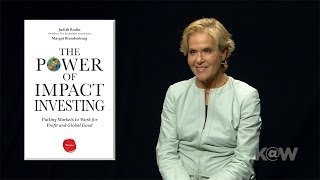
this a good idea? Bouju Esmer is a
00:00:18
senior lecturer in finance and academic
00:00:21
director of the Harris family
00:00:22
alternative investment programs at
00:00:24
Wharton and she joins us to discuss all
00:00:26
of this. Bourju, great to see you again.
00:00:28
How are you? Very good. It's great to
00:00:30
see you then.
00:00:31
>> Thank you. What What is it that's
00:00:33
driving this idea of bringing
00:00:36
alternative uh investments into
00:00:39
traditional 401k and retirement plans?
00:00:42
>> Mhm. There are actually several forces
00:00:44
behind it. Uh one is when we look at
00:00:48
public markets, they are representing a
00:00:50
smaller share uh of the economy. So we
00:00:53
have fewer companies that are going
00:00:55
public uh and they're staying private
00:00:58
longer. Just to give you some numbers,
00:01:00
mid1 1990s there were around 8,000
00:01:03
public listed companies. Now it is short
00:01:05
of 4,000. The median age at the initial
00:01:09
public offering also doubled. So if
00:01:12
investors if we just focus on public
00:01:15
markets we are basically looking at uh
00:01:17
more older companies um and we have
00:01:20
fewer options to invest uh invest from.
00:01:24
The other thing is the um of course
00:01:28
investors are becoming more and more um
00:01:31
educated about different invest
00:01:32
opportunities. So people are hearing
00:01:34
about private equity all the time and
00:01:37
they don't want to miss out. Um when we
00:01:40
look at the returns, private equity has
00:01:43
outperformed public markets 2 to 4%
00:01:47
depending on uh the the timing and the
00:01:50
uh and how you slice the data 2 to 4%
00:01:53
more than public public uh investments.
00:01:57
Of course, recent years the this uh this
00:02:01
softened a little bit. uh but at the
00:02:03
same time we look we look at pension
00:02:05
funds they've been investing in uh
00:02:08
private equity for decades now. So why
00:02:12
would individual uh retirement plan
00:02:15
holders uh miss that opportunity? So now
00:02:19
policy makers are looking for ways to uh
00:02:22
improve retirement returns as well
00:02:25
because people are living longer. They
00:02:27
need more savings. They want p a piece
00:02:30
of of uh private capital market and
00:02:33
private equity industry is also looking
00:02:35
for new capital sources. Yeah. uh for
00:02:39
for many reasons.
00:02:41
>> That was going to be my next question
00:02:43
because it seems like when you think
00:02:44
about the dynamics of the benefits
00:02:47
laying out, obviously there's a
00:02:49
potential for the investor as you said
00:02:51
to be able to get into other areas that
00:02:53
maybe traditionally they were not
00:02:55
involved in. But for the private equity
00:02:57
firm potentially this opens the door to
00:03:00
a lot more resources coming in than
00:03:02
they've seen in the past.
00:03:03
>> Very well said. Uh it can be mutually
00:03:06
beneficial. There's no question the
00:03:08
industry seizes as a new fundraising
00:03:11
channel. When we look at fundraising, it
00:03:14
was around $330 billion in 2024. We are
00:03:18
looking at 401k plans with more than 12
00:03:21
trillion. So this is a great new uh flux
00:03:26
of capital for private equity firms.
00:03:29
Remember I said uh when we look at
00:03:32
private equity and the usual SAS usual
00:03:35
investors they are the in uh the
00:03:37
institution investors pension funds
00:03:39
endowments sovereign wealth funds most
00:03:42
of the institutional um players they
00:03:46
already reach their allocation limits um
00:03:48
so they don't they cannot commit more
00:03:52
capital to private equity so for private
00:03:54
equity firms it is great fresh stable
00:03:57
money for for making investments
00:04:00
When you think about the regulatory side
00:04:02
of this, would there have to be limits
00:04:03
put in place in terms of just how much
00:04:06
people could invest in private equity?
00:04:09
You know, how would that work out?
00:04:11
>> Yes, I think limits are essential. Um,
00:04:15
but before the limits, let's also talk a
00:04:17
little bit about why regulations are
00:04:20
important and why we are talking about
00:04:21
this. So uh plan sponsors uh these are
00:04:25
generally the employers they have
00:04:27
fiduciary responsibilities
00:04:30
uh under the employee retirement income
00:04:32
security act. So what it means is if you
00:04:36
are uh if you are giving this this
00:04:38
option or uh this this uh plan to to the
00:04:41
to the employees you should give them a
00:04:44
prudent menu of investment options.
00:04:47
Okay. So most people everyone I think we
00:04:51
can all say that investments carry risk.
00:04:53
So if there's an investment option in
00:04:55
that pool with with low return or if you
00:04:59
lose money because of that investment
00:05:01
option it's fair but if these options
00:05:04
are also coming with high fees then it
00:05:08
be it might be seen as imprudence that
00:05:11
uh which could expose the employer to
00:05:13
lawsuits. So from the employer side plan
00:05:16
sponsors it's really important to have
00:05:18
the regulations
00:05:20
uh the the private capital it was not
00:05:23
barred from 401k plans before
00:05:27
they tried some of them tried uh in
00:05:30
western private markets but then there
00:05:31
were some lawsuits related to this
00:05:34
sponsors employers they don't want to be
00:05:36
sued if they give that option why
00:05:39
because there's almost almost like a
00:05:41
parental duty for the employers to
00:05:43
protect ed the people. So going back to
00:05:45
your question, I think limits are
00:05:47
essential and uh I I've been writing a
00:05:50
piece on this and my suggestion is 15%
00:05:55
cap. Uh so 15% of a diversified fund can
00:05:59
be put in alternatives. Why 15%, it's
00:06:02
not arbitrary is C uh this aligns with a
00:06:05
CC rule uh for illquid holdings in
00:06:09
mutual funds. So this time this way
00:06:12
there is some kind of a diversification
00:06:14
benefits you can put your money out says
00:06:16
but at the same time you are not
00:06:18
compromising uh liquidity
00:06:21
>> you mentioned uh the role that the
00:06:24
company has to think about in terms of
00:06:26
the level of investments part of this is
00:06:29
also and I think you've alluded to this
00:06:31
in the past is the fact that the
00:06:33
investor in general is quite a bit more
00:06:35
on top of their investments of
00:06:37
understanding the types of of programs
00:06:40
and investments that they're trying to
00:06:42
make right now. So companies are dealing
00:06:45
with in many cases a much more savvy
00:06:47
investor than maybe say a couple of
00:06:49
decades ago.
00:06:50
>> That's accurate. But I should also we
00:06:54
should be cautious about this as well
00:06:55
because it you can learn uh more about
00:06:59
it with with generative AI. You can also
00:07:02
have access to amazing sources. That's
00:07:05
great. But it's not just education.
00:07:08
These are really complex investments.
00:07:10
Knowing about them is not enough and
00:07:12
there is opakeness that comes with it as
00:07:15
well. So I think it's important for uh
00:07:18
investors to know um the risk of the
00:07:22
investment how it's not as liquid as a
00:07:26
public uh equivalent uh investment
00:07:28
option and they should also know that uh
00:07:32
there will be a lot of uncertainty about
00:07:34
the value of uh portfolio companies in
00:07:39
the the uh alternative funds in the
00:07:41
private capital fund. Are there other
00:07:44
types of alternative investments you see
00:07:45
as maybe also becoming part of the mix
00:07:48
here as we move forward? Private equity,
00:07:50
but others on top of that.
00:07:52
>> Um, private credit is another idea. Uh,
00:07:56
it can be in the in the mix. So, private
00:07:58
credit is basically lending to companies
00:08:00
outside the public wants which has grown
00:08:03
rapidly in the last couple of years. Um
00:08:06
and especially in high rates uh high
00:08:08
interest rate environment uh they can
00:08:11
offer attractive yields as well. Um so
00:08:14
there is that uh there's the a
00:08:16
blockchain uh or bitcoin I should say uh
00:08:19
that is in the mix. Real estate um is
00:08:22
also in the mix.
00:08:24
>> Bourju great to talk to you again.
00:08:25
Thanks very much for your time today.
00:08:27
>> Thank you Dan. Thank you, Bourju Esmer,
00:08:30
who is a senior lecturer in finance and
00:08:33
academic director of the Harris Family
00:08:35
Alternative Investments Program here at
00:08:37
the Warden School.