00:00:01
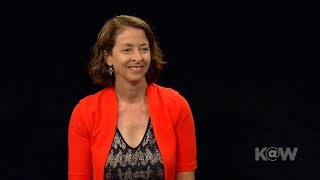
hello my name is Jacob gray and I'm the
00:00:03
senior director of the Wharton social
00:00:05
impact initiative and I'm happy actually
00:00:07
delighted to be here with dr. Judith
00:00:10
Roden who is the president of the
00:00:12
Rockefeller Foundation and a past
00:00:14
president of the University of
00:00:15
Pennsylvania and we're here to talk
00:00:17
about her book the power of impact
00:00:19
investing which was co-authored with
00:00:21
Margo Brandenburg so welcome dr. you I
00:00:24
know a lot of people have heard the term
00:00:26
impact investing not everyone knows what
00:00:30
it means so just from a high level to
00:00:32
start out can you can you sketch out for
00:00:34
us what impact investing is right it's
00:00:36
the intention to produce both the social
00:00:39
or environmental and a financial return
00:00:41
so it's a conscious investment that
00:00:44
really looks for a double bottom line
00:00:46
okay so in the book you talk about
00:00:50
impact investing as existing on this
00:00:52
continuum with traditional grant making
00:00:54
over here and traditional financial
00:00:57
investing over here and so my question
00:01:01
is our impact investors people who are
00:01:03
coming at this from more the
00:01:05
grant-making perspective and they're
00:01:06
trying to find new ways to do good or
00:01:08
are they coming from the traditional
00:01:10
finance perspective trying to make their
00:01:11
capital work harder as the field started
00:01:16
to develop it was either people who were
00:01:20
investing philanthropically through
00:01:22
grants through Family Foundation's or
00:01:25
other kinds of grant making who were
00:01:28
looking for ways to develop further
00:01:31
flows of capital where they could use
00:01:34
their grant making potentially to help
00:01:37
bring in another kind of investor
00:01:39
sometimes by deep risking the investment
00:01:41
of being that first year of
00:01:43
concessionary financing and then
00:01:45
allowing another investor to come in and
00:01:48
they found that that helped to build the
00:01:51
field and build that capacity and in
00:01:53
fact the term impact investing was
00:01:57
developed at the Rockefeller Bellagio
00:02:00
conference center in 2007 when we
00:02:02
convened a group of investors to talk
00:02:05
about what they had learned working in
00:02:06
the space interestingly Jacob we've been
00:02:09
working more recently around the world
00:02:12
rather than just
00:02:13
in Europe and North America and what we
00:02:16
are finding is the Gateway in Asia the
00:02:20
Gateway in Latin America and I think in
00:02:22
Africa too is from the financial
00:02:25
investor who is becoming more socially
00:02:27
responsible in his or her own country
00:02:30
okay and really is starting to think
00:02:32
well I know how to do the financial and
00:02:35
maybe I can put that money to work for
00:02:37
social purpose okay all right that's
00:02:39
really interesting so it's a different
00:02:40
angle so you know in the in the book you
00:02:45
cite the example of delight the the
00:02:46
solar technology company which I think
00:02:48
is a really accessible example of a
00:02:51
social impact enterprise in other words
00:02:53
an enterprise in which impact investors
00:02:55
put their money can you talk a little
00:02:58
bit more about how that company works
00:03:00
somehow its what its social theory of
00:03:02
change is um its theory of change is
00:03:05
that electricity poverty is one of the
00:03:09
root causes of poverty globally really
00:03:12
so people who have no source of lighting
00:03:15
that is reliable they tend to use
00:03:17
kerosene or they can't have any lighting
00:03:20
at night or they burn wood and that's
00:03:22
environmentally unsustainable and so how
00:03:26
do we get either solar or other battery
00:03:30
light that doesn't come from solar but
00:03:33
some way to really allow these people
00:03:36
often in very remote areas of the world
00:03:39
to have access to lighting and they
00:03:42
started as a very small almost
00:03:44
flashlight model idea yeah and then we
00:03:50
ran a competition for them because they
00:03:54
wanted to know could they scale their
00:03:56
technology to light a whole room with
00:03:58
the kind of technology that they already
00:04:00
had and we're at a global competition
00:04:02
through InnoCentive which is a platform
00:04:05
that has inventors from around the world
00:04:08
registered and they compete to win a
00:04:10
prize and the winner was somebody in
00:04:14
China and they helped them to develop
00:04:18
the technology that allows that to light
00:04:21
a room so that allowed them to go to
00:04:23
scale and then impact investors started
00:04:27
coming
00:04:27
and now they are a phenomenal example so
00:04:30
that's one example that is where there's
00:04:34
direct investment into a social
00:04:37
enterprise and that's wonderful for some
00:04:40
kind of impact investors and we give a
00:04:41
lot of those examples in a book I mean
00:04:44
people who want to touch and feel the
00:04:46
enterprise yes they want to help them
00:04:49
they have they are themselves wealthy
00:04:52
enough they have sources of capital but
00:04:55
they really want to engage with the
00:04:57
enterprise and they want to see and feel
00:04:59
the outcome of the work yeah but not
00:05:01
every impact investor is like that some
00:05:04
impact investors really have very strong
00:05:08
views about social purpose but some feel
00:05:11
that they don't have the time or the
00:05:12
experience or the energy frankly to
00:05:15
engage that deeply with the enterprise
00:05:17
itself and so there's grown just as
00:05:20
there is in the financial only industry
00:05:23
funds that are investing in these social
00:05:28
enterprises that do the social and the
00:05:30
financial due diligence and the
00:05:32
investors then invest in the funds sown
00:05:35
in capital is a very well-known one now
00:05:37
that there are many others great funds
00:05:40
exciting and so they can really use
00:05:43
those opportunities to make impact
00:05:48
investments but in a traditional
00:05:50
investor way mm-hmm
00:05:52
so I have noticed in the field so I was
00:05:56
an impact investor for 14 years before I
00:05:58
came to Wharton and over time the field
00:06:00
has really professionalized and changed
00:06:02
and you know I've noticed in the funds
00:06:04
where as fund managers way back when I
00:06:08
started might have been more like the
00:06:11
executive director of a nonprofit type
00:06:12
now we're seeing something different
00:06:14
we're seeing people who come I mean if
00:06:17
you can talk a little bit about what
00:06:19
there's the sophistication of the
00:06:21
industry now well the reason that that's
00:06:22
important is twofold one the
00:06:25
sophistication of the industry is
00:06:27
helping it to grow so we have very
00:06:30
experienced people now who are
00:06:33
experienced investors doing it but it
00:06:36
also is a stamp of approval we're seeing
00:06:39
people
00:06:39
leave from Goldman or JPMorgan or you
00:06:44
know the traditional investment banks
00:06:47
and move into this space in really
00:06:50
interesting ways my favorite group as a
00:06:53
group who invented the social impact
00:06:56
bond social in social finance UK oh yes
00:07:00
and those are young folks who went the
00:07:03
investment banking route then stayed for
00:07:06
about eight or twelve years and then
00:07:09
with the leadership of serve on Alcoa
00:07:12
and in the UK started social finance and
00:07:16
invented this amazing impact investment
00:07:19
instrument different from a fund and
00:07:21
different from investing in a social
00:07:23
enterprise social impact bonds all over
00:07:26
the world I mean it's been and we we
00:07:27
Rockefeller funded bringing it to other
00:07:30
places in the world and we're scaling it
00:07:32
in the u.s. that's very exciting yeah I
00:07:34
often I was thinking about what you're
00:07:36
saying about the stamp of approval from
00:07:39
new people in the field and often I tell
00:07:41
students that I would never make it into
00:07:43
this field at this point as I did
00:07:45
because I don't have their credentials
00:07:47
so talk a little bit more about the
00:07:54
overall scale I mean how big of an
00:07:56
industry is this and and why is it
00:07:59
what's the promise that's so exciting to
00:08:02
you at the Rockefeller Foundation
00:08:03
Rockefeller got interested in this
00:08:05
because we are so clear when you look at
00:08:08
the magnitude of philanthropy around the
00:08:12
world which is enormous and wonderful
00:08:14
and you add to it the magnitude of
00:08:17
development assistance that comes from
00:08:20
individual countries such as USAID in
00:08:23
the US or differed in the UK and so many
00:08:26
others around the world when you add
00:08:28
those together it doesn't get to the
00:08:31
trillions of dollars that we're going to
00:08:33
need to solve the social and
00:08:34
environmental problems and I mean this
00:08:36
really broadly because I call crumbling
00:08:39
infrastructure in the United States a
00:08:41
social problem and so it's it's a broad
00:08:44
category yeah and we realized that
00:08:47
unless we really catalyze the private
00:08:50
sector and private capital
00:08:53
we're not going to solve all of the
00:08:55
social problems and that when you bring
00:08:58
in private capital you bring in market
00:09:00
forces these are what are sort of
00:09:02
philanthropic do-good impulses and we
00:09:05
feel that's really important it is
00:09:08
wonderful to feel good it is very
00:09:11
important to do good but it is most
00:09:14
important to have impact and so it's
00:09:18
been a combination in a very interesting
00:09:20
way of unleashing private capital but
00:09:23
unleashing market force thinking into
00:09:27
this field and it will never replace
00:09:29
philanthropy and grant-making nor should
00:09:31
it philanthropic capital is America's
00:09:34
risk capital after all it's our tax
00:09:36
advantaged dollars so we ought to be
00:09:39
doing the most risky pilots we ought to
00:09:41
be taking that most risky tier if we're
00:09:46
doing concessionary financing and we've
00:09:49
put in like we put in a with another
00:09:51
group of foundations a 50 million dollar
00:09:53
first year about 15 years ago for the
00:09:56
Bloomberg administration to build
00:09:58
affordable housing because the
00:10:00
commercial banks wouldn't lend for the
00:10:03
acquisition and pre-construction costs
00:10:05
so we guaranteed the banks the first 50
00:10:08
million of risk and then they put in
00:10:10
three hundred and fifty million and the
00:10:13
affordable housing started to be built
00:10:14
so there's so many ways that grants and
00:10:17
concessionary financing will always be
00:10:20
useful but you see in these impact
00:10:23
investors people who are very
00:10:25
sophisticated financially and what we
00:10:28
did and what we talked about in the book
00:10:29
is that we saw the market failure and
00:10:32
why the field wasn't accelerating
00:10:34
quickly enough was that a lot of them
00:10:36
said well I know how to do the financial
00:10:38
due diligence but I don't know how to do
00:10:40
the social due diligence so what does
00:10:43
social impact look like how will I
00:10:44
measure it how will I know that I've
00:10:46
succeeded so we at Rockefeller invested
00:10:50
in most of the metrics that are
00:10:52
currently being used by the field the
00:10:54
impact rating system and the global
00:10:56
impact rating system that rates both the
00:10:59
performance of the funds and rates the
00:11:02
social impact potential social impact of
00:11:05
the social enterprise
00:11:06
yeah so I want to I want to get to a
00:11:09
question about the critics of this
00:11:10
industry one of them I mean maybe the
00:11:13
more pithy ones was Marc Andreessen of
00:11:16
the venture capital firm andreessen
00:11:17
horowitz said you know the compared
00:11:20
impact investing to a house book
00:11:22
it's neither he said it's neither a
00:11:23
great house nor a great boat so
00:11:26
pettiness aside is there some sort of
00:11:30
inherent tension between the desire to
00:11:34
push toward purpose and and the push
00:11:37
towards profit is there any fiduciary
00:11:40
duty risk or pressure that that's in
00:11:44
tension here yes so there absolutely is
00:11:47
attention and that's why just as I said
00:11:51
we never want to stop grant-making mmm
00:11:53
we never want to stop innovative venture
00:11:56
capitalists like Marc and Ben from being
00:11:59
a financial only investor yes but this
00:12:02
is for that category that says and Marc
00:12:04
is a great philanthropist and a friend
00:12:06
of mine and so he is investing making a
00:12:10
lot of money and then with his wife
00:12:12
Laura giving philanthropically and
00:12:14
that's a wonderful thing to do yes and
00:12:16
that's the traditional model so Marc
00:12:18
doesn't like when I use the word
00:12:19
traditional but there's lots of people
00:12:25
now who really want to be in between are
00:12:27
willing to take a somewhat lower rate on
00:12:30
financial return look fixed income is a
00:12:34
lower rate right and so it's for its
00:12:38
it's never going to be triple digit but
00:12:41
there are double digit impact investing
00:12:44
funds for example generation capital
00:12:46
which is a pool of public equities that
00:12:48
do alternative energy is turning
00:12:51
double-digit returns the Rockefeller
00:12:53
endowment has a traditional investment
00:12:55
in them and so there are some but most
00:12:59
or not yes and there's a wide and
00:13:02
widening pool of investors who are
00:13:05
willing to take fixed income rates in
00:13:08
order to have high social return and the
00:13:11
impact investment as you know well also
00:13:14
runs along a continuum so there's
00:13:16
financial first with social second and
00:13:18
vice
00:13:19
versa so you can sort of mix the pie in
00:13:23
whatever way meets your both social
00:13:25
purpose and investment goals and I think
00:13:29
people love that I so I do too and I
00:13:32
particularly perhaps among the younger
00:13:35
generations and I wonder if you also see
00:13:37
this it but I but we see at least among
00:13:40
Wharton students we see this that impact
00:13:43
investing has gone from a sort of oddity
00:13:47
to a really highly respected side
00:13:50
pursuit and now to what people see is
00:13:52
really a nascent or maybe it's just
00:13:54
proto nascent industry and you know the
00:13:57
students are actually paying attention
00:13:58
like if they could actually get a job in
00:14:00
this field absolutely and so we see
00:14:02
surveys after surveyed JP Morgan and the
00:14:06
gin the global impact investors network
00:14:08
that we help to start surveys every year
00:14:11
and they have a group of impact
00:14:14
investors and so between 13 2013 and
00:14:18
2014 the amount that was being invested
00:14:23
by this group that's being surveyed went
00:14:25
up 19% from about ten point six billion
00:14:29
to twelve point seven billion or
00:14:31
something in that range so it went up
00:14:32
19% ninety-one percent of them said that
00:14:36
they had met their financial objectives
00:14:38
and 99 percent said that their
00:14:41
investment had met their social
00:14:42
objectives so we're seeing I think
00:14:45
through the development of networks I
00:14:47
think through the development of metrics
00:14:49
and sharing data and more performance
00:14:52
data and now coming out from older funds
00:14:54
such as those that you worked on and
00:14:56
others early in the game are really
00:14:59
bringing more people into the field and
00:15:01
young people are so excited about this
00:15:03
and you know they see the world in need
00:15:07
of change and they want to touch and
00:15:09
feel it and if they can use capital to
00:15:12
make that happen in a really
00:15:14
constructive way I think it's very
00:15:16
attractive
00:15:17
I think so too so just as a closing
00:15:20
question what's next in this field I
00:15:22
mean what's going to be the next big
00:15:25
jump or the next lever is it a public
00:15:27
policy that needs to be built around it
00:15:29
or what yes the next big jump will
00:15:32
certainly come
00:15:33
through public policy because right now
00:15:35
ERISA requirements for example in the
00:15:38
United States and some comparable types
00:15:40
of legislation elsewhere prevent many of
00:15:44
the pension funds from taking large
00:15:46
positions and impact investing funds
00:15:48
because it doesn't meet the hurdle of
00:15:51
the financial return that they need to
00:15:53
to address at one point the ERISA
00:15:56
requirements were lower and then
00:15:58
Congress raised them again about 20
00:16:00
years ago so as this field matures and
00:16:03
as government starts to see that maybe
00:16:06
it can attract this kind of capital as
00:16:09
the UK government saw in the development
00:16:12
of the social impact bond which is
00:16:14
really getting a private investor to pay
00:16:16
for a public program like recidivism or
00:16:20
health or whatever then I think public
00:16:23
policy around all of this will change
00:16:25
and that will have an absolutely
00:16:27
accelerating effect on the field because
00:16:30
it will unleash significant amounts of
00:16:33
potential capital catalytic I think yeah
00:16:36
so dr. Ruden thank you so much for
00:16:37
taking time out of your busy schedule to
00:16:39
come back to campus and join us for this
00:16:42
interview and thank you so much so it's
00:16:43
great to be here thank you Jacob
00:17:00
you