

00:00:00
[TENSE MUSIC]
00:00:11
NANCY GRACE: Christmas Eve
2015, Albuquerque, New Mexico,
00:00:15
a local woman viciously
attacked while jogging
00:00:19
on one of the city's trails.
00:00:22
RAUL TORREZ: She
was out for a run.
00:00:24
She encountered somebody who
tackled her to the ground
00:00:30
and dragged her into the bushes
and sexually assaulted her.
00:00:34
Fortunately, for her, she had
the instinct to get out of there
00:00:38
as quickly as possible.
00:00:41
NANCY GRACE: The survivor
happens to be a talented artist,
00:00:44
and she provides police with
a sketch of her assailant.
00:00:48
I've never had a victim
do their own sketch
00:00:51
of their offender.
00:00:52
It was incredibly accurate.
00:00:55
NANCY GRACE: One by
one, the leads run dry.
00:00:58
The survivor fears
she may one day cross
00:01:01
paths again with the rapist.
00:01:05
Investigators hear of a new and
remarkable forensic technique
00:01:10
that could help them crack
this case wide open, once
00:01:15
and for all.
00:01:17
KEMI PRICE: It makes me
want to say to everybody
00:01:19
out there hiding in the shadows,
welcome to the new light of day.
00:01:24
Genetic genealogy is here,
and it is not going away.
00:01:30
NANCY GRACE: This
is the story of one
00:01:32
survivor's very long
crusade to help police
00:01:35
track down her assailant.
00:01:38
I'm Nancy Grace.
00:01:39
This is "Bloodline Detectives."
00:01:42
[THEME MUSIC]
00:02:04
[PENSIVE MUSIC]
00:02:06
NANCY GRACE: Albuquerque, New
Mexico, a vibrant city renowned
00:02:10
for its multicultural charm and
breathtaking natural landscapes.
00:02:16
RAUL TORREZ: Albuquerque
is the largest city
00:02:18
in the state of New Mexico.
00:02:19
The metro area is probably
650,000, 700,000 people.
00:02:24
It's got a really
diverse population,
00:02:29
sort of a unique and
rich cultural history.
00:02:32
We have a large mix
of Native Americans
00:02:35
that have been
here for hundreds,
00:02:37
if not thousands of years, a
large Spanish population that
00:02:41
also lived here for
hundreds of years.
00:02:44
We are a mid-sized
American city,
00:02:47
and we are not immune
to what lots of cities
00:02:50
face that have diversity
of culture and people
00:02:54
that move in and
out with frequency.
00:02:57
RAUL TORREZ: If you ask the
citizens of Albuquerque, what
00:03:00
is the one thing that is
holding the community back,
00:03:03
it's the inability to
get a handle on some
00:03:06
of those larger challenges.
00:03:08
It's a community that
has, unfortunately,
00:03:11
higher levels of violent crime,
in particular, gun crime.
00:03:17
NANCY GRACE: Despite
Albuquerque's difficulties
00:03:19
with gun violence, it's still
an attractive place to live.
00:03:23
It's blessed with
incredible natural beauty,
00:03:27
including the Rio Grande River,
which runs through the city.
00:03:31
Christmas Eve,
2015, a local woman
00:03:34
decides to go jogging
along one of the Rio
00:03:37
Grande's scenic trails.
00:03:40
KYLE HARSTOCK: Our victim
was a single mother.
00:03:42
She's an educator here
in Albuquerque, in town.
00:03:46
She's athletic.
00:03:47
You know, running was something
that she would do quite often.
00:03:50
The area that she
went running in
00:03:52
was about as residential
suburbia as you can get.
00:03:55
Schools were nearby.
00:03:56
There's a public
library close to where
00:03:58
the incident took place.
00:04:00
And it was a trail that she was
very familiar with because it's
00:04:03
near her home.
00:04:04
She could go out her front
door and get onto this trail
00:04:07
fairly quickly, and had
run on it dozens of times
00:04:10
prior to this incident.
00:04:12
It should be safe.
00:04:13
But unfortunately, there are
certain dangerous realities
00:04:17
for a woman or a man to
run alone in certain areas.
00:04:21
And in this case, there
was an absolute predator
00:04:23
on the trail that
day that there was
00:04:25
no way she could
have had any idea
00:04:27
what she was going to run into.
00:04:30
She heard somebody running
behind her on the same trail
00:04:34
very fast, and it
kind of startled her.
00:04:36
And it was a man who
had these red pants
00:04:39
on that kind of
made a lot of noise,
00:04:41
like swooshing back and forth.
00:04:43
She lost sight of the man,
as he was running much faster
00:04:47
than she was at the time.
00:04:48
And she got to a particular
fork in the trail.
00:04:52
One part of the trail,
if she stays on it,
00:04:54
it keeps her somewhat elevated,
where she can see neighborhoods,
00:04:58
the neighborhoods can see her.
00:05:00
Or she can cut off kind of into
this wooded area that will lead
00:05:05
her right next to the river.
00:05:06
So a little bit more scenic,
a little bit more peaceful
00:05:09
and serene.
00:05:10
And she's taken both
trails in the past.
00:05:13
In this case, she
decided to take the more
00:05:15
serene trail into the woods.
00:05:19
She saw the man who had just
passed her on the trail,
00:05:23
with the red pants, kind of
standing up next to a tree
00:05:27
right off of the trail.
00:05:30
And it caused her some
sort of hesitation.
00:05:33
She had an instinct that
something wasn't right.
00:05:37
And sadly, that instinct
was proven correct,
00:05:39
that once she got
closer to his location,
00:05:42
he actually tackled
her to the ground
00:05:44
and dragged her into the bushes
and sexually assaulted her.
00:05:49
NICK BALISTRERI:
He ended up pinning
00:05:50
her down with both of his
hands on both of her shoulders.
00:05:54
He pulled her pants down all
the way down to her ankles,
00:05:58
but then also pulled up her
shirt, exposing her breasts.
00:06:02
During this ordeal,
she was pleading,
00:06:05
you know, just-- you
know, don't do this.
00:06:08
I don't want you to do this.
00:06:09
This isn't what I want.
00:06:11
He threatened to kill her
if she got-- she made too much
00:06:15
noise to alert anyone about it.
00:06:17
She initially was screaming,
but when he made those threats,
00:06:22
she looked around and realized
he can probably kill me.
00:06:26
And no one's ever going to even
hear this or know about it.
00:06:31
NICK BALISTRERI: She said
that it, all of a sudden,
00:06:34
kind of stopped.
00:06:35
But she could feel that
he pulled up his shirt
00:06:39
and that he reached
into his back pocket.
00:06:42
As he reached into
his back pocket,
00:06:44
it appeared he pulled
out a cell phone.
00:06:46
At that moment, she said that
she could hear what she thought
00:06:49
was one to two clicks
on his cell phone,
00:06:51
as if he was taking a picture.
00:06:54
She thought back to an actual
self-defense course that she had
00:06:58
taken for women that talked
about if you're under attack
00:07:01
and you're overpowered,
a strategy to try to calm
00:07:06
the attacker down so that you
can at least escape safely
00:07:09
at some point of the encounter.
00:07:13
COURTNEY FRETWELL: After
the assault took place,
00:07:15
she was able to get away by
convincing him to run in one
00:07:21
direction, while she was able
to turn around and basically
00:07:25
run in the opposite direction.
00:07:28
RAUL TORREZ: It's just a real
testament to her composure
00:07:32
and her courage to have
the presence of mind,
00:07:37
to actually talk to the
attacker afterwards.
00:07:40
She was very right to be
concerned that he might actually
00:07:44
kill her or harm her further.
00:07:46
And so she,
according to her, you
00:07:49
know, told him that if
he went in one direction,
00:07:52
she would return home
in the other direction
00:07:54
and sort of convinced
him to leave her alone.
00:07:57
KYLE HARSTOCK: She runs back
the exact way she came, as quick
00:08:01
as she can, towards her house.
00:08:02
She continued to run
home and, at that point,
00:08:06
decided that she did
not want to call police,
00:08:09
which is not uncommon with
sexual assault survivors,
00:08:11
in many cases.
00:08:13
But she did call a
rape crisis hotline
00:08:17
on the telephone to
tell them what happened
00:08:20
and seek their advice.
00:08:22
NANCY GRACE: The
Rape Crisis Center
00:08:24
asked the survivor
if she could come
00:08:26
in for a sexual assault exam.
00:08:29
SHANNON LOWRY: She came and
saw us for a state exam.
00:08:32
And we were able to
collect evidence,
00:08:35
and she didn't choose to
report to the law enforcement
00:08:38
at that time.
00:08:39
But you can always go back and
report at a later date as well.
00:08:43
NANCY GRACE: It is so
difficult for so many women
00:08:47
to report a sex assault.
Law enforcement's
00:08:51
trying to help them
with new methods
00:08:53
for reporting their attack while
still preserving their dignity.
00:08:58
[SOMBER MUSIC]
00:09:00
SHANNON LOWRY: Albuquerque
Police Department is also--
00:09:02
their sex crimes division
is in our building,
00:09:05
so it makes it very convenient.
00:09:07
I think it's a lot
more approachable.
00:09:09
And so they're-- it removed
some of the barriers that
00:09:13
they might face to reporting.
00:09:14
So we have about 10% more
than the national average
00:09:19
of victims who report to
law enforcement, which
00:09:22
is phenomenal.
00:09:23
And so we absolutely
always encourage people
00:09:26
to report to law enforcement.
00:09:29
But knowing that everybody's
experience is different,
00:09:32
justice looks different
for every victim.
00:09:37
RAUL TORREZ: Usually,
after a victim
00:09:40
has consulted with a
psychologist, a psychiatrist,
00:09:44
talked to their
family, and really come
00:09:46
to that decision on
their own, some victims
00:09:49
are adamant about reporting to
law enforcement immediately.
00:09:53
Others want to have some
time to think about how
00:09:56
they want to move forward.
00:09:57
And so the Rape Crisis
Center is in a position
00:09:59
to just support the
victim and allow
00:10:02
them to to go through the
process at their own pace.
00:10:06
NANCY GRACE: Police
now have DNA evidence
00:10:09
from that sex assault exam.
00:10:12
But will it be enough to track
down a vicious predator still
00:10:17
on the loose?
00:10:18
We find out next on
"Bloodline Detectives."
00:10:22
[AUDIO LOGO]
00:10:26
[AUDIO LOGO]
00:10:29
[PENSIVE MUSIC]
00:10:31
NANCY GRACE:
Christmas Eve, 2015,
00:10:33
a local woman goes for a
run along the Rio Grande
00:10:37
in Albuquerque, New Mexico.
00:10:39
She passes a fellow jogger,
and instinctively, she
00:10:42
feels nervous in his presence.
00:10:44
And she's right.
00:10:45
The same man appears again.
00:10:47
He tackles her, drags
her off the trail,
00:10:51
and viciously rapes her.
00:10:53
Afterward, the victim goes
to a rape crisis center.
00:10:57
She undergoes a
sex assault exam,
00:11:00
but she's still afraid to report
the rape to law enforcement.
00:11:06
Her day-to-day life following
this experience must have been
00:11:10
very difficult in a lot of
different ways because this
00:11:15
is something that
a lot of people
00:11:17
really struggle to move past.
00:11:20
A lot of victims relive
and re-experience
00:11:25
what happened to them.
00:11:26
A lot of them could be in fear,
not knowing that their attacker
00:11:31
is gonna come and find them and
do this, or do something even
00:11:35
worse to them in the future.
00:11:37
NANCY GRACE: March 7, 2016,
three months after the rape,
00:11:42
the survivor bravely decides
to share her story with police.
00:11:48
KYLE HARSTOCK: The victim does
decide to make a police report.
00:11:51
So it's been, you know,
just about three months
00:11:55
since the attack occurred.
00:11:58
She makes the police
report, and it gets assigned
00:12:00
to a detective at the
sheriff's department
00:12:03
right away to look into.
00:12:05
COURTNEY FRETWELL: She,
being an artist herself,
00:12:08
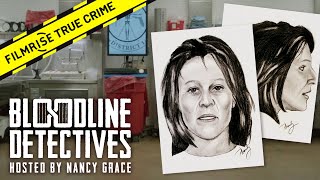
was able to create a sketch of
the individual who had attacked
00:12:13
her and was really
able to put pen
00:12:15
to paper on how
this person looked
00:12:18
like from her perspective.
00:12:20
She was able to describe
him as being a younger
00:12:24
gentleman, about 5 foot 7.
00:12:27
He was clean-shaven, didn't
have a beard or a mustache.
00:12:30
He had brown hair that seemed
to be sticking out of the hat
00:12:34
that he was wearing.
00:12:36
He also had brown eyes.
00:12:38
And she described him
as being athletic.
00:12:41
He seemed muscular, of
an athletic body type.
00:12:46
KYLE HARSTOCK:
That sketch became
00:12:47
such a key piece of evidence.
00:12:49
And I'll tell you, in my
20 years of doing this,
00:12:51
it's the only one I've ever had.
00:12:53
I have never had a victim
do their own sketch
00:12:56
of their offender.
00:12:58
A sketch which is not only
provided by the survivor,
00:13:02
but actually drawn by
her, is now a vital piece
00:13:05
of evidence for detectives.
00:13:07
They devise a plan to
catch her callous rapist.
00:13:13
RAUL TORREZ: They're
gona wanna canvass
00:13:14
the area to look for additional
either victims or witnesses.
00:13:19
They're gonna wanna examine
prior police reports,
00:13:22
unsolved reports about
other sexual assaults,
00:13:25
obviously upload the
data, the specimen
00:13:28
into CODIS to see
if there's a DNA
00:13:31
match through the
national database,
00:13:34
to see if there
are any leads that
00:13:35
could be generated that way.
00:13:39
[CURIOUS MUSIC]
00:13:40
KYLE HARSTOCK: CODIS is a
database that the FBI developed
00:13:44
decades ago, where law
enforcement, at the state
00:13:47
and federal levels, put profiles
of offenders into violent crimes
00:13:52
like murders, armed
robberies, domestic violence,
00:13:55
sexual assaults.
00:13:56
Crimes of this
nature get your DNA
00:14:00
put into CODIS once you're
convicted of the crime
00:14:03
by a court.
00:14:05
And if your DNA shows up on
a crime scene somewhere else,
00:14:10
it can be compared against
CODIS, which can easily
00:14:12
identify a possible offender.
00:14:15
The thing with CODIS is, it's
not everyone who's arrested.
00:14:19
That's not how it works.
00:14:20
You have to be convicted.
00:14:21
It has to be certain felony
crimes that you're convicted of.
00:14:25
And it only is going to look at
people who have been convicted.
00:14:29
So if you've never been arrested
or convicted of a serious felony
00:14:32
crime, you're not in CODIS.
00:14:34
So we might have
your DNA, but you
00:14:36
weren't in CODIS, so we
actually don't know who you are.
00:14:40
COURTNEY FRETWELL:
During the initial part
00:14:41
of the investigation,
the police worked
00:14:43
very hard at looking at those
that are closest to the victim.
00:14:48
So they were out there speaking
with all of her past boyfriends,
00:14:52
anyone she had been in
a relationship with,
00:14:54
speaking with any of her male
family members and friends,
00:14:59
all of which, ultimately,
were eliminated.
00:15:03
Another three months go by.
00:15:06
The investigation seems
to be slowing down.
00:15:09
Then, what every rape victim
fears seems to happen.
00:15:14
The survivor believes she
sees her rapist again.
00:15:19
COURTNEY FRETWELL: During
the summer of 2016,
00:15:21
this victim went into a
local sandwich shop in town.
00:15:26
And as soon as
she walked in, she
00:15:29
thought she encountered
the guy that had attacked
00:15:32
her several months earlier.
00:15:34
So as soon as she
saw this individual,
00:15:37
she ran out and contacted
law enforcement,
00:15:40
saying she might
have ran into him.
00:15:43
I was in my office.
00:15:44
She gave me a phone call.
00:15:45
She said, I think I
found the offender.
00:15:48
I said, OK.
00:15:49
So she gave me the information
of what was going on.
00:15:53
The person that she saw
fit the description,
00:15:56
was about 5' 8", 5, 9".
00:15:59
Went to our local university
here and was a prominent athlete
00:16:03
here, which matches
the colors of what
00:16:07
he would have been wearing.
00:16:08
We ended up doing a warrant
for him at his dorm.
00:16:11
So we ended up doing
a body warrant on him.
00:16:14
We ended up doing a warrant
of his dorm as well,
00:16:17
where we ended up
taking his cell phone.
00:16:19
Once we confiscated
his cell phone,
00:16:21
we ended up doing a
warrant on his cell phone
00:16:23
to extract the
information on there,
00:16:25
because we're looking
for pictures as well,
00:16:27
since in the initial
interviews, she said that there
00:16:29
was pictures taken of her.
00:16:31
We extracted his cell phone.
00:16:33
We didn't find any
pictures of her.
00:16:36
We ended up doing a
swab for him for DNA.
00:16:38
We got all that information,
sent it back up to Santa
00:16:42
Fe for them to do a test.
00:16:44
We got his DNA back.
00:16:46
Once we got his DNA
back, it was also
00:16:49
negative as well for the DNA
that was sent on the rape kit.
00:16:54
NANCY GRACE: It's a crushing
moment for a survivor
00:16:57
who thinks she's
identified her attacker.
00:17:01
NICK BALISTRERI: She
made a comment that
00:17:03
said, well, at least we tried.
00:17:07
And I know that I
can move on now,
00:17:10
knowing that we tried the best
we could to find this person.
00:17:13
And at that moment, it kind of
hit me to say, you know what?
00:17:16
I'm not satisfied
with what we're doing.
00:17:18
We have to do more because
we have to find this person.
00:17:22
It almost seemed to me like
she was happy with what
00:17:24
we did, that we tried
our best, almost
00:17:27
as if she was ready to move on.
00:17:29
But to me, it just--
00:17:31
I wasn't satisfied.
00:17:34
I went to the DA's office, and
that's when I talked to them
00:17:37
and I said, what can we do?
00:17:39
There's something we
need to do to help her.
00:17:41
What can we do?
00:17:43
And at that moment,
there was nothing.
00:17:46
But now I know that it
planted a seed, put something
00:17:51
in their mind to know
that if something came
00:17:53
up later on, that maybe there--
00:17:57
we would have a chance
to catch this individual.
00:18:00
NANCY GRACE: A
rape survivor seems
00:18:02
to be giving up hope her
attacker will ever be caught.
00:18:06
Her hopelessness inspires
police to work even harder.
00:18:11
They look to an emerging
forensic science
00:18:14
to help them catch a rapist.
00:18:17
That's next on
"Bloodline Detectives."
00:18:21
[AUDIO LOGO]
00:18:25
[AUDIO LOGO]
00:18:28
[PENSIVE MUSIC]
00:18:30
NANCY GRACE:
Albuquerque, New Mexico,
00:18:32
police determined to
catch a vicious rapist
00:18:36
who sex assaults a female
jogger Christmas Eve, 2015.
00:18:41
And the victim happens to
be an expert sketch artist.
00:18:46
She herself provides detectives
with a sketch of the assailant.
00:18:51
Now, investigators are hoping a
cutting-edge forensic technique
00:18:56
can actually
identify her rapist.
00:19:01
What we established was
something called the Crime
00:19:03
Strategies Unit that really
tried to not replicate
00:19:08
the same capacity that the
local police agencies had,
00:19:12
but to do special analytical
and data driven work that,
00:19:17
oftentimes, local
police agencies
00:19:19
just didn't have the time or
expertise to sort of invest in.
00:19:23
But I also wanted to make sure
that we were doing some novel
00:19:28
work on trying to solve some
of the unsolved cases, some
00:19:31
of the cases that had gone cold
over the years, both homicides
00:19:35
and sexual assaults.
00:19:36
And, you know, when
I first started
00:19:38
reading about how the case in
California involving the Golden
00:19:43
State Killer and
others was put together
00:19:46
and the work that was done
on forensic genealogy,
00:19:48
it seemed like an ideal fit for
this new team and this new unit.
00:19:53
And so I reached out to
the head of that unit, Kyle
00:19:57
Harstock, who's just a
tremendous, natural-born police
00:20:00
officer.
00:20:02
KYLE HARSTOCK:
First and foremost,
00:20:03
to do a forensic
genealogy case, you need
00:20:05
a sufficient amount of DNA.
00:20:07
You know, you can't just run it
off of any amount of DNA easily.
00:20:11
This case had it.
00:20:12
So it met that minimum
qualifying amount
00:20:15
of DNA that was left behind.
00:20:17
Two, our victim was still alive.
00:20:19
This wasn't a homicide case.
00:20:20
This victim was alive to give
her the best chance to tell her
00:20:26
who her offender
was, and let her
00:20:29
feel that little bit of safety.
00:20:30
That police were able
to solve that crime,
00:20:33
and possibly even get
justice in court, meant
00:20:36
a whole lot to the entire team,
from the original detective,
00:20:39
to me, to the
prosecutor's office.
00:20:41
And the area it happened in
was somewhat less populated.
00:20:46
One of the beliefs
I had early on
00:20:48
was our offender
probably lived nearby.
00:20:50
This was not a highly
popular running trail,
00:20:52
where hundreds of people
a day go running on it.
00:20:56
This has maybe 10
people a day at most,
00:20:59
with the perfect weather to run
on it, so that our offender was
00:21:03
probably very, very local to
the area and very familiar
00:21:07
with the area.
00:21:09
RAUL TORREZ: That's when we
really started to get things
00:21:11
going, and we
immediately started
00:21:15
trying to identify the
right genealogical experts,
00:21:18
the right laboratory to work
with to get this work done.
00:21:22
We did a lot of research, and
CSU did a lot of research,
00:21:25
on how the cases in California
and the Golden State Killer
00:21:29
was put together, and
sort of replicating
00:21:32
those sorts of things.
00:21:34
NANCY GRACE: So what exactly
is this forensic technique
00:21:37
that's been cracking even
the coldest of cold cases?
00:21:41
Investigative
genetic genealogy
00:21:44
is the process of taking unknown
DNA typically collected at crime
00:21:49
scenes, uploading the DNA to
DNA databases such as GEDmatch,
00:21:55
hoping to find a family member
who is related to the person
00:22:00
that they're ultimately
searching for,
00:22:02
the suspect in a crime.
00:22:04
This could be
this person, but it
00:22:05
could be their brother, right?
00:22:06
It could be a close first cousin
of theirs or a half sibling.
00:22:10
We still have to put our
detective shoes on and do
00:22:14
everything that we're used to
doing, which is good interviews,
00:22:17
right, surveillance,
collecting physical evidence,
00:22:21
tying this whole case together.
00:22:24
We need a beginning, a middle,
and an ending of a story
00:22:26
because one day, we're gonna
have to explain this to a jury.
00:22:29
The family tree is gonna
point us in the direction,
00:22:31
and then we do what
we normally do.
00:22:33
NANCY GRACE: Investigators
search on GEDmatch.
00:22:36
It's a commercial website built
for people who want to know
00:22:40
more about their ancestry.
00:22:42
KYLE HARSTOCK: We actually
had three college interns
00:22:45
for the summer assigned
to my investigative unit,
00:22:48
and they were young and hungry.
00:22:50
And they just thought,
anything we can do here
00:22:53
is going to be cool and helpful.
00:22:55
I said, we are gonna learn
investigative genealogy.
00:22:58
We are gonna learn how
to build family trees.
00:23:00
We are gonna buy, you know,
ancestry.com accounts,
00:23:04
and we're gonna do this.
00:23:05
Here's a YouTube video series
on how to build a family tree.
00:23:08
We're gonna go really hands-on
with this thing and get it done.
00:23:12
And they loved the challenge.
00:23:14
It was a lot of fun sleuthing,
social media profiles
00:23:17
and newspaper
clippings from decades
00:23:19
ago to build out these
family trees, knowing
00:23:23
that on any given
day, this could
00:23:25
be the day we get our bad guy.
00:23:27
NANCY GRACE: For investigators,
a match on a commercial website
00:23:31
like GEDmatch is great news.
00:23:34
There's another step,
however, they must take.
00:23:38
The people who use
the website must
00:23:41
give their consent before
police can use their data.
00:23:45
Just over three or four months
building out many family trees,
00:23:49
conducting interviews and
one day, a new profile
00:23:53
was uploaded that was opted
in for law enforcement.
00:23:56
And it was a second cousin.
00:23:58
And it stuck out
like a sore thumb
00:24:00
when you logged into GEDmatch,
and we would log in to GEDmatch
00:24:03
daily.
00:24:04
When I contacted the
person, because I wanted
00:24:06
to learn more about
their family tree,
00:24:08
I actually met Dr. Kemi Price.
00:24:10
She contacted me back
and said, I'm the one
00:24:14
who uploaded this profile.
00:24:16
I'm a genealogy
researcher on the side,
00:24:20
and I talked to my client,
told him that you reached out,
00:24:25
and he is willing to help you.
00:24:27
Let me help you guys
in the investigation,
00:24:29
considering I already know
a lot about his family.
00:24:31
So that is actually how we met.
00:24:33
It wasn't us looking
for a genealogist.
00:24:36
We stumbled upon one while
we were doing our search.
00:24:39
And she was amazing.
00:24:42
KEMI PRICE: About
an hour and a half
00:24:44
later after I'd sent the
email, I received a phone call
00:24:49
on my cellular, and
it was Commander
00:24:51
Harstock and some detectives.
00:24:54
And they asked me a
flurry of questions
00:24:56
to determine my experience.
00:24:59
And then they became very quiet
and asked me if I would consider
00:25:03
helping with the cold case.
00:25:05
Oh, heck, yeah.
00:25:07
I was thrilled to
be able to do that.
00:25:11
The match for the family
friend to the perp
00:25:14
was about 94
centimorgans, which,
00:25:17
ballpark, is third cousin.
00:25:19
The centimorgan is a
measure of how much DNA
00:25:22
is shared between individuals.
00:25:25
A parent-child will share
between 3,500 and 4,000
00:25:30
centimorgans;
brothers and sisters,
00:25:32
about 2,500 centimorgans;
first cousins,
00:25:36
around 1,000; aunts, uncles,
grandparents, about 1,600.
00:25:43
There are ranges that vary
for the relationship level.
00:25:48
Third cousins share
great-great-grandparents
00:25:52
in common.
00:25:54
And each individual
has eight sets
00:25:57
of great-great-grandparents.
00:26:00
In this case, on
the father's side,
00:26:02
there would be four sets of
great-great-grandparents.
00:26:05
And going back to
that time and place,
00:26:09
large families were the norm.
00:26:12
It wasn't unusual to see family
groups with 10 children apiece.
00:26:16
And so by the time I had
finished building out a family
00:26:20
tree for the father's
side of the family, I was
00:26:23
looking at 6,500 individuals.
00:26:25
It was a lot.
00:26:27
What I had to do once I
had finished with that was
00:26:30
try to find a way to
exclude parts of that tree
00:26:36
to narrow down possibilities.
00:26:38
So what I began looking
at was individuals who
00:26:42
matched the family
friend but of course,
00:26:45
had no match to the perp.
00:26:47
And by doing that, I was able to
whittle it down to a single set
00:26:52
of great-grandparents.
00:26:55
KYLE HARSTOCK: She filled us in
on what she had found on, you
00:26:59
know, his second cousin's family
up to that point, which included
00:27:03
roots that go back
to parts of New
00:27:05
Mexico and Southern Colorado.
00:27:07
So it was a true collaboration
on a near-daily basis,
00:27:12
going back and forth.
00:27:13
She did this all for
free, by the way.
00:27:15
She would work on this in her
off hours in the evenings.
00:27:19
On weekends, she would email
updates when she had them.
00:27:22
And we would do the same back
with her until Dr. Price found
00:27:27
an obituary for a two-year-old.
00:27:30
And that cracked
the case wide open.
00:27:33
Will the obituary
of a two-year-old
00:27:37
little child finally lead to
the arrest of a sex predator?
00:27:42
That's next on
"Bloodline Detectives."
00:27:45
[AUDIO LOGO]
00:27:49
[AUDIO LOGO]
00:27:52
[SUSPENSEFUL MUSIC]
00:27:54
NANCY GRACE: Albuquerque,
New Mexico, 2019,
00:27:56
police are getting
closer to identifying
00:27:59
a man who sex assaults a female
jogger Christmas Eve, 2015.
00:28:06
The combination of
groundbreaking forensic science
00:28:10
and a family tree built
from a commercial website
00:28:15
combined to help police.
00:28:17
The most important clues so
far emerged from the obituary
00:28:23
of a little child.
00:28:25
KYLE HARSTOCK: In this obituary
from a newspaper in Albuquerque
00:28:29
around 1996, 1997, it mentions
that a two-year-old had lost
00:28:35
their life, and it listed
the surviving family
00:28:38
members of the two-year-old.
00:28:40
The surviving family members
included people directly
00:28:43
in the family tree
of our offender.
00:28:45
That's how Dr. Price was
focused in on this obituary.
00:28:49
But it mentioned a
two-month-old younger
00:28:53
brother who had
survived, someone
00:28:55
by the name of Angel Duran.
00:28:58
Angel Duran, at two months
old in 1996 and 1997,
00:29:03
would have put
him at pretty much
00:29:04
an ideal age range
from our offender
00:29:07
and related to our offender.
00:29:10
When we searched the name
Angel Duran in all the systems
00:29:13
that we're able to search,
we could not find anyone
00:29:16
with a birth date close
to the one in the obituary
00:29:19
with that same name.
00:29:21
The obituary mentioned that
the two-year-old big brother
00:29:24
of Angel had actually
been murdered by his dad,
00:29:27
which was very sad and tragic.
00:29:29
Having worked crimes
against children
00:29:31
here in Albuquerque
for decades, we
00:29:34
know that siblings
of murdered children
00:29:36
are often put into foster care
and possibly even adopted.
00:29:39
And if they're adopted, they
might change their last name.
00:29:43
We went back into our databases,
and instead of searching
00:29:46
Angel Duran with the
birthday around 1996,
00:29:49
we just took the last name out.
00:29:51
We said, tell me about people
named Angel born in 1996
00:29:54
in the Albuquerque area,
and within seconds,
00:29:57
we found somebody who matched
that description, Angel Gurulé.
00:30:01
And when we looked
up his address,
00:30:03
he lived about less
than a quarter mile
00:30:06
from where the sexual assault
happened in this neighborhood.
00:30:09
Hair stood up on
our necks, and we
00:30:10
were so incredibly
excited that we think we
00:30:14
might have found our offender.
00:30:18
NANCY GRACE: Investigators are
thrilled by this brand new lead.
00:30:22
They set out to track
down their suspect.
00:30:25
RAUL TORREZ: We had to make
a point-to-point comparison.
00:30:27
We weren't going to build a case
simply on forensic genealogy.
00:30:32
We actually needed to
make a one-to-one match
00:30:35
on a freshly-collected
sample of DNA.
00:30:39
KYLE HARSTOCK: We
found out that his wife
00:30:41
was in the hospital for a
relatively routine procedure.
00:30:46
She posted about
it on social media.
00:30:48
When we saw the post,
we went to the hospital
00:30:51
really kind of in
the nick of time
00:30:53
because they were checking out.
00:30:54
They were leaving.
00:30:55
And they had been in one of the
hospital rooms by themselves.
00:30:59
Once they left, I told
my agents, make sure
00:31:02
that they leave the hospital.
00:31:04
Like, they're done.
00:31:05
They're not coming back.
00:31:06
This isn't just a walkaround.
00:31:07
It wasn't.
00:31:08
They got picked up
by a family member
00:31:10
and completely left
holding their belongings.
00:31:12
The prosecutor that was
helping with the case
00:31:14
said that is abandoned
property now,
00:31:16
anything they left in the room.
00:31:17
And we took two Styrofoam
cups, like the kind
00:31:21
of cups the hospitals have
to give you ice and water.
00:31:23
There was two cups in the room.
00:31:25
We took both carefully,
placed them in evidence bags,
00:31:28
and overnighted them
to our lab to get DNA
00:31:32
tested as quick as they could.
00:31:35
A genealogy website, the
obituary of a little child,
00:31:39
and now two Styrofoam
cups provide
00:31:43
the answers the
"Bloodline Detectives"
00:31:46
have been waiting for.
00:31:49
Got our man.
00:31:50
That's it.
00:31:51
[TENSE MUSIC]
00:31:53
NANCY GRACE: Police move
in to arrest Angel Gurule.
00:31:58
RAUL TORREZ: In January of
2020, the agents from our office
00:32:02
executed a search
warrant and looking
00:32:05
for evidence of the event
of the crime itself.
00:32:09
They actually took Mr.
Gurule into custody.
00:32:12
And after a short period of
time, he confessed to the crime.
00:32:16
KYLE HARSTOCK: Once I showed him
the test results pointing to him
00:32:19
as the offender, he finally
admitted in his own head--
00:32:24
he had no other choice
here but to admit he
00:32:27
was the one that did this crime.
00:34:04
[TENSE MUSIC]
00:34:10
Now, that's a twist.
00:34:12
A brutal rapist
now wants to write
00:34:14
an apology letter to his
victim this many years later?
00:34:20
As we see next on "Bloodline
Detectives," police learn
00:34:23
even more gruesome details.
00:34:26
[AUDIO LOGO]
00:34:30
[AUDIO LOGO]
00:34:33
[GRIM MUSIC]
00:34:35
NANCY GRACE: 2020,
Albuquerque, New Mexico,
00:34:38
police finally make an
arrest in the brutal sex
00:34:42
assault of a female jogger
Christmas Eve, 2015.
00:34:47
His name, Angel Gurule.
00:34:51
Now in custody, his confession
allows police to get a very
00:34:56
clear picture of his crime.
00:35:00
KYLE HARSTOCK: Only
two people knew
00:35:01
what happened that day, right?
00:35:03
One is the victim, but
she only saw parts of it.
00:35:07
The other one was our offender.
00:35:08
If he truly was our offender--
and I believed he was--
00:35:11
I wanted him to show
me exactly what he did.
00:35:14
I wanted to know his
thought process through it.
00:35:16
And I wanted to record
it on video in case
00:35:19
we had to have a
jury decide one day
00:35:22
if he was telling the
truth or not to the police
00:35:24
about this attack.
00:35:25
They can actually watch him
do it in the environment.
00:35:28
He walked me over to the
approximate area where
00:35:30
he tackled her to the ground and
committed the sexual assault.
00:35:33
And the entire time, I'm
asking him, you know, very--
00:35:37
almost news media type
interview with him.
00:35:40
Tell me what you
did next, right?
00:35:42
What did you think right here?
00:35:43
And he seemed to be very
credible and very forthright
00:35:46
with explaining
what he remembered
00:35:49
and where it happened.
00:35:50
And so I felt his statement was
incredibly credible and truthful
00:35:55
at that point.
00:35:57
NANCY GRACE: Now
police can finally see
00:36:00
into the mind of Angel Gurule.
00:36:03
KYLE HARSTOCK: Angel
Gurule did not have
00:36:05
a very checkered criminal past.
00:36:08
He did have a few police
reports in our system.
00:36:11
One was having an inappropriate
sexual relationship
00:36:14
with a minor, like
a teenage girl,
00:36:17
when he was 18 or 19, which was
actually within several months
00:36:22
of our attack.
00:36:24
The case wasn't followed
up on by the detectives,
00:36:28
and nothing happened.
00:36:30
There was actually a chance for
DNA to be tested in that case
00:36:33
that he left behind.
00:36:34
It wasn't tested.
00:36:36
Had it been tested, it
might have been in CODIS.
00:36:38
We might have
actually had a hit,
00:36:40
or the sheriff's department
would have had a hit
00:36:42
way back in 2016 right away.
00:36:45
But that opportunity was missed.
00:36:47
He had had a traumatic past,
which is very unfortunate.
00:36:52
And I know a lot of times,
people have mixed emotions
00:36:56
in situations where it's
a younger perpetrator,
00:36:59
and they have had trauma.
00:37:01
And the thing that
I always say is,
00:37:04
you know, when somebody
has been traumatized,
00:37:07
that's an explanation
for their behavior,
00:37:10
but it's not an excuse.
00:37:13
NANCY GRACE: Angel Gurule
openly confesses to his crime.
00:37:17
He enters a plea deal,
which significantly
00:37:20
reduces his sentence.
00:37:24
NICK BALISTRERI: He pled out.
00:37:26
He was looking at a
possible, I think, of--
00:37:29
I think they said 80 years.
00:37:31
He pled out to 12
years in prison.
00:37:33
Our victim has to live with
this the rest of her life.
00:37:37
She has a life
sentence because this
00:37:39
is something she has to live
with the rest of her life.
00:37:43
Do I think a life sentence
is what he deserves?
00:37:49
Part of me says yes.
00:37:51
NANCY GRACE: The brave
survivor addresses
00:37:54
her rapist during sentencing.
00:37:56
KYLE HARSTOCK: The
victim told Angel
00:37:58
the same things that
she'd been telling us ever
00:38:00
since he was identified.
00:38:02
While she doesn't
feel bad for him,
00:38:04
she wanted him to get help on
the things that had haunted him.
00:38:09
And she wanted no
more violence to occur
00:38:11
and hoped that
his time in prison
00:38:14
can help him find that path.
00:38:18
SHANNON LOWRY: I think that when
a victim sees the person who
00:38:23
hurt them sentenced,
sent to jail,
00:38:27
there is a large
sense of closure.
00:38:29
But that doesn't mean they're
not gonna wake up and deal
00:38:32
with the consequences
of that trauma
00:38:33
for the rest of their life.
00:38:34
Right?
00:38:35
Like I said, they're going
to-- they're gonna learn,
00:38:38
and they're gonna grow.
00:38:38
And they're gonna
heal, and they're
00:38:40
gonna become beautiful people.
00:38:42
But that doesn't mean they're
not gonna have to deal with it.
00:38:44
So but I think that that's a
really important step in being
00:38:47
able to close that and maybe
move on to the next chapter
00:38:50
of their life.
00:38:56
NANCY GRACE:
Investigators reflect
00:38:57
on the success of the
case and the future
00:39:01
of investigative
genetic genealogy.
00:39:04
This is the first
case in the state
00:39:06
of New Mexico that
used genetic testing
00:39:10
to solve a crime is huge.
00:39:13
And for me to be part of
it, it means a lot to me.
00:39:17
RAUL TORREZ: This
case would still
00:39:18
be cold without
forensic genealogy
00:39:20
playing a critical role.
00:39:22
I have no doubt that we would
still be sitting here today
00:39:26
with a victim who would
be struggling still
00:39:29
to put her life back in order,
and no sense of who this person
00:39:33
was or where this person was.
00:39:35
It was a proof of concept
for myself and for our agency
00:39:41
and for the investigators that
we had discovered an entirely
00:39:45
new tool to try and solve some
of the most difficult cases
00:39:51
that we have.
00:39:53
KEMI PRICE: People
should never give up.
00:39:55
People should never
give up on a case.
00:39:57
They should never give
up on an identity.
00:40:00
They should never
give up on a loved one
00:40:03
because there are people
like me out there,
00:40:06
and there are more coming.
00:40:09
And as the technology improves,
it's just gonna get better,
00:40:12
and more cases are
going to get solved.
00:40:15
KYLE HARSTOCK: I think if you
were a sexual assault survivor,
00:40:18
this spoke volumes.
00:40:20
This told you police
don't give up, right?
00:40:23
We're not gonna give up.
00:40:23
Prosecutors aren't
gonna give up.
00:40:25
We always wanna find who
committed this crime.
00:40:29
We need to unmask them.
00:40:30
We need to make what they did
transparent to the community.
00:40:34
And so I think this showed
a great bout of confidence
00:40:37
to our community that we are
very capable of doing this,
00:40:40
and we plan on doing it forever.
00:40:44
NANCY GRACE: In this case, one
incredibly brave rape victim
00:40:50
and amazing forensic
science combined
00:40:53
to deliver justice when
it looked like none
00:40:57
would ever be had.
00:40:59
I'm Nancy Grace.
00:41:00
Thank you for joining us here
on "Bloodline Detectives."
00:41:04
[AUDIO LOGO]
00:41:08
[AUDIO LOGO]
00:41:11
[THEME MUSIC]