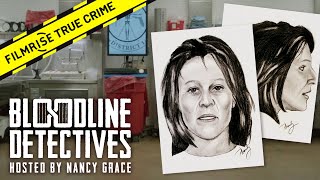


00:00:00
[DRAMATIC MUSIC]
00:00:12
NANCY GRACE: San Diego,
California, 1980,
00:00:15
police respond to
an emergency call
00:00:17
from an apartment in
the suburb of Santee.
00:00:21
The frightened caller says
her roommate Michelle Wyatt
00:00:25
is dead in the living room.
00:00:28
It was pretty gruesome because
there was a telephone cord
00:00:31
around her neck,
her gown was open,
00:00:34
the living room was
in disarray, and
00:00:36
somebody had dumped the contents
of her purse into the toilet.
00:00:40
NANCY GRACE: Michelle is
a beautiful and popular
00:00:43
young woman with a
large group of friends.
00:00:46
Everybody loved Michelle.
00:00:48
Men wanted to date her and
women wanted to be like her.
00:00:52
So in my mind, it could
have been anybody.
00:00:57
The initial investigation
fails to find her killer.
00:01:01
40 years later, new
forensic science
00:01:05
could be able to
identify the man who
00:01:08
sex-attacked and murdered this
beautiful, young woman Michelle
00:01:13
Wyatt.
00:01:14
I'm Nancy Grace.
00:01:15
This is "Bloodline Detectives."
00:01:18
[THEME MUSIC]
00:01:41
[SOFT MUSIC]
00:01:43
It's 1980, Michelle
Wyatt is a student
00:01:46
at Grossmont College, about
20 minutes outside San Diego.
00:01:52
So Michelle Wyatt
was a 20-year-old
00:01:55
young lady who had a lot of
different interests in life.
00:01:59
She was known to be very active.
00:02:02
She enjoyed things
like scuba diving.
00:02:05
She liked running.
00:02:07
She was a big reader.
00:02:10
She was very beautiful.
00:02:12
She had blonde hair, great
smile, very bubbly personality,
00:02:18
just the type of girl that
others might be jealous of.
00:02:23
Well, I met Michelle
when both of our families
00:02:26
moved into our neighborhood.
00:02:27
And we just lived a couple of
houses away from each other
00:02:31
and just became fast friends.
00:02:33
Michelle was a very
outgoing person.
00:02:37
She was very kind,
very friendly, made
00:02:39
friends very easily.
00:02:41
She really made a friend
with whoever she ran into.
00:02:46
She had aspirations.
00:02:48
She wanted to go
into something that
00:02:50
included her love for drawing.
00:02:53
She was an artist.
00:02:54
She was really
good at everything
00:02:56
she did, and loved doing it.
00:03:01
She was really
living her best life.
00:03:07
NANCY GRACE: October
8, Michelle makes
00:03:09
plans to hang out that
evening with her boyfriend.
00:03:13
COURTNEY FRETWELL:
Michelle and Pat
00:03:15
had worked together
at the Safeway store,
00:03:18
and Michelle caught
Pat's attention.
00:03:21
She's this beautiful,
young lady.
00:03:25
She's got this beautiful
hair, big, bright smile.
00:03:28
And Michelle and Pat seemed
to really hit it off.
00:03:32
It was almost love at
first sight for them.
00:03:36
THOMAS ARNOLD: I remember Mrs.
Wyatt telling me that Michelle
00:03:39
really liked Patrick.
00:03:40
And her mom even teased
her, "you're going
00:03:43
to get married sometime soon?"
00:03:44
And Michelle goes,
"Oh, come on mom.
00:03:47
But, uh, I think he's the one."
00:03:51
Around 9 o'clock
PM, Michelle and Pat
00:03:55
went back into Michelle's
condo where the two of them
00:03:59
watched TV, spent
some time together.
00:04:02
And then around 12:45
AM, Pat decided to leave.
00:04:08
He wasn't going to stay
the night at Michelle's.
00:04:12
He had an early day at work
the next day on October 9.
00:04:15
So around 12:45, Pat kisses
his girlfriend goodbye.
00:04:21
NANCY GRACE: The very next day,
Michelle Wyatt's roommate Rita
00:04:25
returns home in the afternoon.
00:04:28
The roommate opened the door
and immediately saw Michelle.
00:04:33
Michelle was right there
in the living room,
00:04:35
just past the door, and
she was clearly dead.
00:04:39
BRIAN PATTERSON: When
the detectives arrived,
00:04:41
they processed the crime scene.
00:04:43
They discovered a telephone
had been kind of pulled out
00:04:46
of the wall and the cord was
wrapped around Michelle's neck
00:04:51
along with a part of a towel.
00:04:53
That towel matched another
towel in the kitchen.
00:04:57
Her purse had been
dumped out on the floor.
00:05:00
And the purse was actually
thrown into the toilet
00:05:04
in the downstairs bathroom.
00:05:07
JEFFREY VANDERSIP: It was
clear that this was not
00:05:10
a planned event
because the things
00:05:14
that he used to kill her
were from the apartment.
00:05:18
He did not bring anything
into the apartment.
00:05:21
It's not clear that
he left with anything.
00:05:24
He used what he could find from
the apartment to strangle her.
00:05:28
It was a brutal murder for sure.
00:05:32
In the meantime,
Michelle's mother
00:05:34
had been notified, Louise,
who was just a lovely woman.
00:05:37
Police wouldn't let
anybody inside the condo.
00:05:40
She wanted to know
what was going on.
00:05:41
And the police just said,
"look, we're not going
00:05:43
to tell you anything right now.
00:05:44
Just, we're investigating
what's going on."
00:05:46
She goes, "well, I want
to see my daughter."
00:05:48
And they said, "you've
got to stay outside,
00:05:49
and we'll tell you."
00:05:51
And I believe at some
point, they did tell her
00:05:53
that her daughter was dead,
but she wasn't allowed
00:05:55
to go into the room
because they were
00:05:58
intent on preserving evidence.
00:06:00
That was their
number one priority.
00:06:02
It's a terrible way to find out.
00:06:04
About a quarter to 11, and my
mom called me into the living
00:06:07
room and said that she had seen
a blurb for the 11:00 news,
00:06:14
that a 20-year-old girl
was murdered in Santee.
00:06:19
And I did not even think of her.
00:06:24
So we all gathered
in the living room,
00:06:26
and they confirmed
that it was her.
00:06:29
And I just remember
looking at the TV,
00:06:31
thinking as they showed
video of her condo,
00:06:35
and thinking, if
it's not her condo,
00:06:37
then they have the wrong person.
00:06:41
And unfortunately, I
recognized the condo.
00:06:46
I remember my family
sitting in the living room
00:06:48
and I remember looking around
the room at everybody's face.
00:06:54
And I remember specifically
my brother's face because they
00:06:59
were all looking at me.
00:07:01
And the shock and fear--
00:07:06
I mean, I still
remember their faces.
00:07:09
So we went down, walked
down to the Wyatt's.
00:07:13
And all I could do is
tell them how sorry I was.
00:07:17
I didn't know in that moment--
00:07:20
broke me for a long time.
00:07:24
There was a lot of
shock and anger.
00:07:29
And my brain just couldn't wrap
around it, and it never could.
00:07:38
I ended up turning
to drugs and alcohol
00:07:45
to try to deal with the anguish.
00:07:51
And then it went at a point that
very shortly before my daughter
00:07:57
was born, that that had to stop,
that it had to stop, that I
00:08:01
had to live my life,
that that's what
00:08:03
she would have wanted for me.
00:08:07
NANCY GRACE: While Michelle
Wyatt's family and friends
00:08:09
cope with a devastating
loss, Michelle's
00:08:13
body taken for autopsy.
00:08:17
They did a sexual
assault exam.
00:08:19
They collected semen,
saliva, and biological fluids
00:08:26
that were on her.
00:08:27
It's clear from the
evidence, from what
00:08:30
was found at the
scene that she fought
00:08:32
this attack based on some
of the defensive wounds that
00:08:36
were found.
00:08:38
The autopsy also
revealed that, in addition
00:08:41
to being strangled,
Michelle had also
00:08:43
suffered blunt force
trauma, particularly
00:08:46
to the left side of her head.
00:08:48
She had significant bleeding
and bruising to the left
00:08:52
side as well as a
swollen left eye.
00:08:56
Based on the evidence
collected at the autopsy,
00:08:59
the medical examiner
theorized that Michelle
00:09:02
had been murdered sometime
between 1 o'clock AM
00:09:05
and 2 o'clock AM on October 9.
00:09:09
JEFFREY VANDERSIP:
She was murdered
00:09:10
in a condominium
complex that had
00:09:13
a lot of people living in it.
00:09:15
So very quickly,
they fanned out to
00:09:17
the complex to talk to the
residents to see if they saw
00:09:20
something.
00:09:21
Did they hear something?
00:09:22
Did they know who lived there?
00:09:24
Do they have some
relationship with Michelle
00:09:27
Wyatt and her roommate?
00:09:29
And then you get
bits of information
00:09:33
and then that takes
you somewhere else
00:09:34
potentially to figure
out who may have been
00:09:36
responsible for doing that.
00:09:39
The autopsy is complete.
00:09:41
Michelle Wyatt
was brutally raped
00:09:44
before she was strangled dead.
00:09:47
Now detectives from San
Diego Sheriff's Office
00:09:50
try to piece together
Michelle's last movements.
00:09:54
That's next on
"Bloodline Detectives."
00:09:57
[THEME MUSIC]
00:10:02
[THEME MUSIC]
00:10:04
[MUSIC PLAYING]
00:10:06
1980, Santee, California,
a suburb of San Diego,
00:10:11
the body of 20-year-old
college student
00:10:14
Michelle Wyatt discovered
by her female roommate.
00:10:18
Michelle, the victim of a
brutal sex attack and murder.
00:10:23
According to two different
neighbors of Michelle's, they
00:10:26
heard two of her
dog's barking as well
00:10:30
as some screaming coming
from the direction
00:10:33
of Michelle's condo.
00:10:35
But neither one of the
neighbors seemed to--
00:10:39
it didn't seem to raise that
much alarm in the neighbors'
00:10:42
minds that something was wrong.
00:10:45
And neither neighbor
decided to pick up the phone
00:10:48
and call the investigators.
00:10:50
They heard the dog's barking and
thought that nothing was wrong,
00:10:55
they maybe didn't
want to get involved.
00:10:57
And the neighbors went
went to sleep that night.
00:11:02
NANCY GRACE: Police
canvassed the area.
00:11:04
In doing so, they find
and interview a neighbor
00:11:08
who can place Michelle
Wyatt's boyfriend
00:11:10
at Michelle's apartment.
00:11:12
Teddy was a
neighbor of Michelle
00:11:15
and Rita's who lived across
the street from their condo.
00:11:19
And when police sat down
and spoke with Teddy,
00:11:24
he provided some
interesting information.
00:11:26
Teddy told investigators
that he had
00:11:30
seen Michelle's boyfriend's
car parked outside the condo
00:11:36
that night.
00:11:37
And when the police asked
him for any more details,
00:11:41
he really didn't provide
much more information.
00:11:44
He just said that Michelle's
boyfriend was there.
00:11:48
He saw the car parked out front.
00:11:50
And when he went
to bed that night,
00:11:53
Pat's car was still there.
00:11:56
I don't think anybody saw the
boyfriend's car leave, which
00:11:58
of course, made him appear even
more suspicious to everybody,
00:12:02
especially since the murder
happened so close to the time
00:12:05
that he did leave.
00:12:06
But he was pretty soon crossed
off the list as the number one
00:12:10
suspect based on his
reaction to Michelle's murder
00:12:14
and based on his
cooperation with the police.
00:12:17
He was an open book.
00:12:19
He was very, very open.
00:12:21
And veteran detectives always
have a bit of a feeling.
00:12:25
They can tell sometimes
if somebody is guilty
00:12:27
or if somebody is not.
00:12:29
And they're not always
right, but in this case,
00:12:33
everybody who interviewed
him and everybody
00:12:35
in the Sheriff's
Department had the feeling
00:12:38
that this is not our guy.
00:12:41
I never thought that
Michel's boyfriend
00:12:42
had anything to do with it.
00:12:44
And I know that they
did look at him,
00:12:46
but I don't think they
looked at him for very long.
00:12:49
And she was so
comfortable around him
00:12:52
and really thought that this
was going to be the one.
00:12:56
And there was never any anger.
00:12:59
She never talked about any--
00:13:02
there wasn't a reason.
00:13:04
There was no reason that
he would have done it.
00:13:09
[DRAMATIC MUSIC]
00:13:10
NANCY GRACE: Detectives
focus attention
00:13:12
on one of Michelle Wyatt's
coworkers there at the Safeway
00:13:16
where Michelle has
a part-time job.
00:13:19
COURTNEY FRETWELL: The
reason why this colleague
00:13:21
of Michelle's became a suspect
was because Michelle had shared
00:13:26
with several people that
this co-worker of hers
00:13:30
kind of gave her the creeps.
00:13:33
She was kind of freaked
out by this guy.
00:13:36
So when investigators
found this out,
00:13:39
they thought that he
might have had something
00:13:42
to do with her murder.
00:13:44
He really liked Michelle
and was trying to date her,
00:13:47
and she wasn't interested.
00:13:48
And during the investigation,
they discovered
00:13:51
he had driven by her
house a few times,
00:13:54
"just checking to see if
she was home," he said.
00:13:58
And so they kind
of focused on him.
00:14:02
COURTNEY FRETWELL: When
investigators asked him
00:14:03
about his alibi or where
he was on the night
00:14:07
of Michelle's murder,
he sort of came
00:14:09
up with two different stories.
00:14:12
Originally, Michelle's coworker
said that he was at home
00:14:15
with his dad that night.
00:14:17
But then his story seemed
to change a little bit,
00:14:20
and he wasn't at
home with his dad.
00:14:23
He then said that he was on
a date with another woman.
00:14:26
So investigators were a little
bit suspicious of Michelle's
00:14:31
coworker, but they really
didn't have any solid evidence
00:14:35
linking him to any crime.
00:14:38
A case like this is
very difficult because you
00:14:42
can kind of get tunnel vision.
00:14:43
You can sort of go down
a path because you're
00:14:46
convinced yourself that it
had to have been this person.
00:14:49
And so you end up spending a
lot of investigative time going
00:14:52
down certain rabbit
holes because, you know,
00:14:56
you've kind of convinced
yourself or others
00:14:58
have convinced you
that this person
00:15:00
had to have been responsible.
00:15:01
And at some point,
he was excluded.
00:15:04
Everybody loved Michele.
00:15:06
Men wanted to date her and
women wanted to be like her.
00:15:10
I mean, it just was.
00:15:12
And so everybody was
kind of a suspect.
00:15:15
So I gave them as much
information as I could.
00:15:20
I had my fingerprints
done just to exclude me
00:15:25
and her from fingerprints in
the condominium, you know,
00:15:29
talked about who I
had seen over there
00:15:32
and who she was the closest to.
00:15:35
I probably bothered them
quite a bit because somebody
00:15:40
somewhere knew something.
00:15:43
And we know, for
instance, in most
00:15:46
homicides, the victim and
the suspect know each other.
00:15:50
She was very popular.
00:15:52
And there were young
men at that time
00:15:55
who were interested in her,
interested in dating her,
00:15:59
people who didn't date her
but may have wanted to.
00:16:02
So all those people
were investigated.
00:16:05
Perhaps it was somebody who
was spurned by Michelle.
00:16:11
So all those things were
looked into in the early part
00:16:14
of the investigation.
00:16:15
But even as that
investigation got turned over
00:16:19
to other detectives, there was
still a look into excluding,
00:16:23
to the extent that we
could, all the individuals
00:16:26
that were connected
possibly with this case.
00:16:30
The family took things
into their own hands,
00:16:33
and Louise Wyatt had
flyers printed up,
00:16:37
thousands of flyers--
00:16:38
"who killed my daughter?"--
with Michelle's picture.
00:16:41
And they were plastered
all over Santee and all
00:16:44
over the surrounding
neighborhoods.
00:16:45
They hired a private
investigator.
00:16:48
Louise was very frustrated
with the lack of progress
00:16:50
that the police were making.
00:16:52
She and her husband
both felt that it should
00:16:55
be a number one priority.
00:16:57
But in all fairness,
the police, they didn't
00:17:00
have any more information.
00:17:03
COURTNEY FRETWELL:
In Michelle's case,
00:17:04
she had, originally,
five detectives
00:17:08
solely assigned to her case.
00:17:10
But as the weeks
and months went by,
00:17:15
several of these
full-time investigators
00:17:18
were moved off of
Michelle's case.
00:17:21
Unfortunately, there were
other crimes happening,
00:17:25
there were other murders
happening in Santee
00:17:27
and the surrounding areas.
00:17:29
And as these newer cases came
in, several of these detectives
00:17:34
were unfortunately moved
off Michelle's case
00:17:37
and they were assigned new ones.
00:17:41
NANCY GRACE: The
investigation is also
00:17:43
limited by the lack of
forensic science techniques
00:17:46
available at the time.
00:17:49
At the time of
Michelle's murder in 1980,
00:17:53
DNA testing and
forensic testing was
00:17:56
nowhere near where it is today.
00:17:59
But luckily, investigators
in Michelle's case,
00:18:02
they had the idea in their head
that DNA and forensic testing
00:18:07
was evolving.
00:18:09
And even if they might not
be able to test the evidence
00:18:12
today, they had the knowledge
to at least collect the evidence
00:18:18
and store it so
that future testing
00:18:21
could be done when DNA testing
was growing and was advancing.
00:18:27
So the original
investigators in 1980
00:18:30
collected valuable forensic
evidence from Michelle's body,
00:18:35
particularly from
her rape kit, where
00:18:38
investigators were
able to pull semen DNA
00:18:41
evidence from Michelle's body.
00:18:44
And in 1996, when Michelle's
case was reopened,
00:18:50
investigators sent the semen
evidence to a lab to be tested.
00:18:56
And from that
sample, investigators
00:19:00
generated a DNA profile.
00:19:04
They entered the
DNA into CODIS,
00:19:07
which is a national database,
and they got no match.
00:19:11
That doesn't mean that the
person who did it had never
00:19:17
done anything, but it did
mean that the person who
00:19:22
killed Michelle had
no criminal record.
00:19:26
So they were looking
at somebody who had
00:19:28
never been caught for anything.
00:19:31
Michele Wyatt's
rapist and killer
00:19:34
continues to evade justice.
00:19:37
His trail goes cold.
00:19:39
Next on "Bloodline
Detectives," a new decade,
00:19:43
new forensic science,
and new investigators
00:19:46
bring hope Michelle's
case could be solved.
00:19:50
[THEME MUSIC]
00:19:54
[THEME MUSIC]
00:19:57
[DRAMATIC MUSIC]
00:19:59
1996, San Diego suburbs,
Santee, California,
00:20:05
cold case detectives
investigating
00:20:07
the 1980 rape and murder
of a 20-year-old student,
00:20:12
Michelle Wyatt.
00:20:13
Now they're pinning
their hopes on DNA
00:20:16
technology which is
emerging as a very
00:20:19
powerful investigative tool.
00:20:23
After they search
through the CODIS database
00:20:26
turned up empty in
1996, the investigation
00:20:30
once again turned cold.
00:20:32
And the case didn't really pick
up again until four years later
00:20:37
in 2000.
00:20:39
They conducted a more advanced
DNA test on the semen sample
00:20:45
and as well as Michelle's
sexual assault kit.
00:20:50
And when they
tested the results,
00:20:53
investigators
discovered that there
00:20:56
were two male profiles within
Michelle's sexual assault kit.
00:21:02
One of the male DNA
profiles belonged
00:21:06
to Michelle's boyfriend Pat.
00:21:09
And this was key information
in the investigation
00:21:13
because this officially
ruled out Michelle's
00:21:15
boyfriend in the murder.
00:21:17
What was also interesting
was that investigators found
00:21:21
a second male DNA profile.
00:21:24
And this profile didn't
belong to Michelle's boyfriend
00:21:29
and it didn't belong
to anyone else
00:21:31
that the police had considered
in the investigation.
00:21:35
This testing in 2000 also
was able to officially
00:21:40
rule out Michelle's coworker.
00:21:42
He was officially excluded
as the contributor
00:21:47
of the unknown male DNA in 2000.
00:21:50
So this testing seemed to
really eliminate everyone
00:21:55
and left one unknown
male DNA profile that
00:21:59
still needed to be identified.
00:22:02
Detectives are getting
closer and closer
00:22:05
to identifying a killer,
but they still need to break
00:22:09
through to crack this case.
00:22:11
Their hopes are
raised when they learn
00:22:13
of a revolutionary
new technique--
00:22:15
forensic genetic genealogy.
00:22:19
We started hearing
a lot of buzz
00:22:21
that departments in the FBI were
using genealogy to solve cases
00:22:26
where there was DNA
evidence but no clear link
00:22:30
to any individual.
00:22:32
A lot of us in the unit kind
of said, well, we can do that.
00:22:36
We realized that when you're--
00:22:39
in trying to discover the
mysteries of your family,
00:22:43
really not much different
than trying to discover
00:22:46
the mysteries of a homicide.
00:22:49
And so we decided early on to
do the genealogy part in-house.
00:22:54
Most of the departments
that solve these cases
00:22:57
farm out through genealogy to
professional genealogists who
00:23:02
are tremendous at their jobs.
00:23:04
And we thought, who better
than the people who are
00:23:07
actually closest to the case?
00:23:10
And it got the attention
of the command staff.
00:23:13
And so they decided to fund us
a bit so that the money that we
00:23:17
would need to have DNA
profiles created the tools
00:23:22
that we would need
to do the genealogy,
00:23:24
they were willing to fund it.
00:23:25
And it was on that, it
was subsequent to that
00:23:28
that we took a look at
Michelle Wyatt's case.
00:23:31
And this case was assigned
to Detective Brian Patterson.
00:23:35
And Detective Patterson
is from Santee.
00:23:38
He's always taken a great
interest, a personal interest
00:23:41
in this case.
00:23:42
And this was his
first investigative
00:23:45
genetic genealogy case.
00:23:47
When genetic
genealogy came about,
00:23:49
our unit started reviewing
cases and trying to find cases
00:23:53
that were suitable for that.
00:23:55
One, you have to have DNA left.
00:23:57
You can't use the old profiles.
00:24:00
It's an entirely
different system
00:24:02
or way of obtaining a profile.
00:24:04
And Michelle Wyatt's
case was one of those
00:24:07
where there was still DNA.
00:24:09
And we were able
to get enough DNA
00:24:11
and send it off to a
company called Gene By Gene,
00:24:15
who gives us the snippet to
put into genetic genealogy.
00:24:19
And then we use GEDmatch to
kind of start our investigation.
00:24:25
The results they
received back from GEDmatch
00:24:28
generated over 1,000
potential relatives
00:24:32
related to Michelle's killer.
00:24:35
They got a lot of
hits from GEDmatch
00:24:38
on who their suspect might be.
00:24:41
As soon as investigators got
the list of potential matches,
00:24:46
they got to work on
creating family trees.
00:24:50
They wanted to identify
as many people as possible
00:24:53
who could be Michelle's killer.
00:24:56
And from these family
trees, investigators
00:25:00
were able to identify a female
relative of Michelle's killer
00:25:06
that, through genetic
genealogy, investigators
00:25:10
discovered was most
likely a first cousin
00:25:14
of Michelle's killer.
00:25:16
They find three brothers.
00:25:18
One of them kind of raised
their suspicions a little bit.
00:25:21
His name was Rusty.
00:25:22
His DNA is so close,
he's got to be the father
00:25:26
or the uncle of the killer.
00:25:29
How do we find out
what happened here?
00:25:33
And they go back
and they interview,
00:25:35
you know, the cousin
who had led them
00:25:37
through DNA to this person.
00:25:39
She goes, "yeah, I
remember him, but I
00:25:41
don't think he had any kids."
00:25:42
None of them have a male
offspring, at least,
00:25:45
that they know about
who's traceable.
00:25:48
NANCY GRACE: Forensic
genetic genealogy
00:25:51
is built around identifying
DNA found at a crime scene
00:25:55
and then linking that
DNA to a suspect.
00:25:58
Once they find that match,
"Bloodline Detectives"
00:26:02
must then go through
the tedious task
00:26:07
of eliminating innocent family
members to find the guilty one.
00:26:13
And that's what happens here.
00:26:14
Rusty Howard and
his male relatives
00:26:17
become people of interest
in a murder case.
00:26:22
Now the challenge is to
remove the innocent relatives
00:26:27
and identify one single suspect.
00:26:32
He's a genealogist nightmare
because he was a drifter.
00:26:36
He had a number of marriages.
00:26:39
But you know, being a
drifter, he just didn't have
00:26:42
a lot of solid information.
00:26:43
Other than the fact that we
learned a lot about his wives,
00:26:46
but we didn't think that he
had ever had any children
00:26:49
with any of his wives.
00:26:51
And we discovered an individual
that was related to Rusty.
00:26:57
We called this individual
up, and he was a retired law
00:27:00
enforcement officer from Texas.
00:27:03
And I'll never forget
when we were talking
00:27:05
to him about his family--
00:27:07
and he always knew that his
father that he was raised with
00:27:11
was not his his birth father,
but he didn't know anything
00:27:14
about his birth father.
00:27:15
But I remember one
thing he said to me,
00:27:18
he said, well,
every cotton patch
00:27:20
has at least one boll weevil.
00:27:22
But we discovered who his father
was, who his birth father was,
00:27:25
and his birth father was Rusty.
00:27:28
So because we now had
this individual identified
00:27:32
as had fathered this one person,
well, we knew that this person
00:27:36
was not our suspect.
00:27:38
But as we discovered he
was related to our suspect
00:27:42
through Rusty, we realized Rusty
is the father of our suspect,
00:27:49
who is the mother.
00:27:51
NANCY GRACE:
Investigators dig deeper
00:27:52
into the family's background.
00:27:54
They discover the suspect's
mother turns out to be
00:27:58
a woman named Betty White.
00:28:01
We were able to put together
how Betty and Rusty most likely
00:28:04
got together.
00:28:05
Rusty was a carpenter.
00:28:07
We discovered through
interviews with people
00:28:10
who knew him that he had
worked on some Hollywood sets.
00:28:14
We know that he was in Arizona
in the early '60s, that he
00:28:19
worked on the set
of the movie "How
00:28:21
the West Was Won," which
was a big movie back
00:28:23
in the early '60s, a Western.
00:28:25
And then we also discovered,
as we sort of learned
00:28:28
more about the maternal
side of the family,
00:28:30
that the suspect's mother was
on the set at that time also,
00:28:36
either as an extra, or one
of her kids at the time
00:28:40
was an extra in the movie.
00:28:41
Since both of those
individuals are deceased,
00:28:44
we can't go to them
for confirmation.
00:28:46
But that seemed a
likely place for them
00:28:49
to have potentially met up.
00:28:51
But Rusty being the
drifter was, to the extent
00:28:56
that we could tell, never
involved in the suspect's life.
00:28:59
And in fact, the
suspect was raised
00:29:01
with a different last name
than Rusty's, and was raised
00:29:05
as the child of this other man.
00:29:08
Whether that other man
knew that his son was not
00:29:12
his biologically, we don't know.
00:29:15
But he was raised as
the son of this man.
00:29:19
We discovered very
quickly that she had
00:29:22
a son named John Patrick Hogan.
00:29:27
As soon as we
learned his identity,
00:29:30
that was the individual
that we focused on.
00:29:34
You focus on until
there is a reason
00:29:37
not to focus on the individual.
00:29:39
And as we dove deeper into
John Patrick Hogan's life,
00:29:44
every element or almost
every element of his life
00:29:48
lined up with Michelle
Wyatt's murder.
00:29:53
Thousands of relatives
have been eliminated.
00:29:57
Now narrowing down the
search to one prime suspect.
00:30:02
His name, John Patrick Hogan.
00:30:05
Next on "Bloodline
Detectives," police now
00:30:09
need solid evidence to
secure a conviction.
00:30:13
[THEME MUSIC]
00:30:18
[THEME MUSIC]
00:30:21
[MUSIC PLAYING]
00:30:23
40 years after the 1980
sex attack and murder
00:30:28
of a young college
student, Michelle Wyatt,
00:30:31
San Diego detectives are so
close to cracking the case.
00:30:36
They identify a single suspect--
00:30:38
John Patrick Hogan-- by use
of forensic genetic genealogy.
00:30:44
But now, they've
got to find him.
00:30:48
We learned a
lot about his life
00:30:52
from about age 15 to age 20.
00:30:56
We also discovered at the time
that he was in high school,
00:31:00
he lived in the same
condominium complex
00:31:03
that Michelle lived in
when she was murdered.
00:31:07
THOMAS ARNOLD:
Teddy was a neighbor
00:31:08
who they had interviewed
early on in the first stage
00:31:11
of the investigation in 1980.
00:31:14
And when they talked to
him again 20 years later
00:31:16
and they mentioned John Patrick
Hogan, Teddy said, "Yeah,
00:31:19
I knew him.
00:31:20
In fact, he came over.
00:31:21
He was over.
00:31:22
He lived around here.
00:31:23
We were friends.
00:31:24
We pal'd around."
00:31:26
So the theory is that he
must have seen Michelle.
00:31:29
He might even have played
pool with her and her
00:31:31
boyfriend at some point.
00:31:32
But whatever happened, he
got Michelle in his head.
00:31:38
At the time that
Michelle was murdered,
00:31:40
he was an active
member of the US Air
00:31:44
Force, active duty
member of the Air Force,
00:31:46
and was stationed in New Mexico.
00:31:50
That gave us a bit of a red
flag because we're like, well,
00:31:55
how can we account for him
potentially doing this if he
00:31:59
was active duty in New Mexico?
00:32:02
But we were able to get
his service records.
00:32:04
And the service records gave
us an extraordinary amount
00:32:07
of detail regarding
his military life.
00:32:11
And one of the things that
we learned about Hogan
00:32:14
is that he was on leave the
week that Michelle was murdered.
00:32:21
NANCY GRACE:
Investigators believe
00:32:22
they are so close to
catching a killer,
00:32:26
Michelle Wyatt's killer.
00:32:28
As police zero in on the
whereabouts of John Patrick
00:32:32
Hogan, they make a discovery,
a discovery that threatens
00:32:36
to blow up the investigation.
00:32:39
Tracking John
Patrick Hogan down
00:32:42
was going to be difficult
for investigators
00:32:44
because they quickly learned
that, at the time they
00:32:47
discovered his name, he
was already deceased.
00:32:51
He was no longer living.
00:32:52
So investigators couldn't
reach out and speak with Hogan
00:32:55
directly to see
if he had anything
00:32:57
to do with Michelle's murder.
00:33:00
What was chilling about
learning about his death
00:33:06
was that he died
on the exact day
00:33:11
that he had killed Michelle
Wyatt 24 years earlier.
00:33:16
And you know, when we sort
of realized that, it gave all
00:33:20
of us serious goose bumps
because we realized,
00:33:24
OK, there are 365 potential
days in which you could die.
00:33:30
And for you to happen to
die on the death anniversary
00:33:35
of your victim was just--
00:33:38
it just stunned us.
00:33:41
We are fortunate though.
00:33:43
He had died either of a meth
overdose or a heart attack that
00:33:50
came as a result of Meth use.
00:33:52
An autopsy was done in Phoenix.
00:33:55
And the medical examiner's
office in Phoenix
00:33:58
still had the blood card
from John Patrick Hogan.
00:34:02
This was incredibly
significant because we didn't
00:34:05
have access to his remains.
00:34:07
I think he was
cremated, so we were
00:34:09
not able to to exhume
his body to make
00:34:12
a one-to-one comparison.
00:34:14
But the blood card would
tell us definitively
00:34:17
if the DNA from the
scene matched the DNA
00:34:22
from John Patrick Hogan
that was collected
00:34:24
at the scene of his death.
00:34:26
And it was a 100% match.
00:34:30
Even a dead suspect
may not be able to escape
00:34:34
"Bloodline" detectives and
their forensic weapons.
00:34:37
That's next.
00:34:38
[THEME MUSIC]
00:34:42
[THEME MUSIC]
00:34:47
It's been 40 years
since the brutal sex
00:34:50
assault and murder of
a beautiful college
00:34:53
coed, Michelle Wyatt.
00:34:56
"Bloodline" detectives using
forensic genetic genealogy
00:35:00
to give a name to her
killer John Patrick Hogan.
00:35:06
As they close in
on finding Hogan,
00:35:09
the investigation falls
flat, deflated when police
00:35:14
discover the suspect is dead.
00:35:19
So once we find out that
John Hogan was deceased,
00:35:23
it's kind of a letdown.
00:35:25
I mean, you really want to
make this person pay for what
00:35:28
they did, and knowing
they had gotten
00:35:30
away with it all these years.
00:35:32
But it's also nice
to know that we
00:35:34
finally give the family some
closure and give them answers.
00:35:38
They've gone years and years
without knowing what happened.
00:35:42
We never really get to
know exactly what happened.
00:35:45
The only way that
would have been done,
00:35:48
have been able to be found
out is if he was alive
00:35:50
and he told us.
00:35:52
Fortunately, they don't
generally tell us everything,
00:35:55
suspects, they kind of lie.
00:35:56
But we can put it together,
the pieces as best
00:35:59
as we can, and then at
least explain to the family
00:36:04
that we found who
killed your daughter.
00:36:07
I called her mom, I
called her best friend
00:36:10
and I said, "OK, we need
to meet at your house."
00:36:13
And they brought
relatives and friends.
00:36:16
"And I have some
news to tell you."
00:36:18
And we just sat down
in the living room
00:36:19
and told them what
we had discovered.
00:36:22
Again, they really wanted to
face the person that killed
00:36:28
their daughter, but that
wasn't going to happen,
00:36:30
unfortunately, for them.
00:36:32
And we just tell them,
and they're happy.
00:36:34
But come to find out
it doesn't give you
00:36:36
the closure you're really
hoping for because, again, we
00:36:41
can't explain to them
exactly what happened.
00:36:44
I can tell you what
the evidence says.
00:36:46
I can show you why we
determined it was Hogan,
00:36:52
and that's all I can do because
I don't have the ability
00:36:55
to talk to him, obviously.
00:36:59
For a very long time,
John Patrick Hogan
00:37:03
might have thought
that he had gotten
00:37:05
away with the perfect murder.
00:37:07
This was back in 1980 Hogan
was only 18 years old,
00:37:13
and for many years, for decades,
he might have thought that he
00:37:17
was going to get away
with sexually assaulting
00:37:20
and murdering Michelle.
00:37:22
And for many years,
he was right.
00:37:25
He was able to evade law
enforcement for decades
00:37:31
until advancements
in DNA testing
00:37:34
and the use of
genetic genealogy was
00:37:36
used to ultimately catch him.
00:37:40
And I think without
genetic genealogy,
00:37:44
he might have
gotten away with it.
00:37:47
Without the advancements
in DNA testing,
00:37:49
we might not ever
know the name John
00:37:52
Patrick Hogan in connection
with Michelle's murder.
00:37:56
So it's really all thanks
to genetic genealogy
00:38:00
and the advancements that
we have that can ultimately
00:38:05
solve these
decades-old cold cases
00:38:08
and eventually bring these
perpetrators to justice.
00:38:14
Especially the larger
police departments,
00:38:16
may be in a position to
do this work themselves.
00:38:19
And even though our unit
is at least a little
00:38:24
unique in that we do all
of this IGG work in-house,
00:38:27
our hope is that other
police departments might
00:38:30
be able to do the same thing.
00:38:32
We are not interested
in you per se,
00:38:35
only interested in learning
the identity of suspects.
00:38:39
And the more people
that are willing to do
00:38:42
that, the more cases that we're
going to be able to close.
00:38:45
For people who have committed
terrible crimes and nobody has
00:38:49
paid any attention to
them, my message to them
00:38:52
is your time is coming
and your time may be up.
00:38:56
I think that the use
of genetic genealogy
00:38:59
was our only hope
in having Michelle's
00:39:03
murder solved because he
was not on anybody's radar.
00:39:08
Nobody would have ever known.
00:39:11
And I think it brings
hope to all the families
00:39:14
out there who still don't know.
00:39:20
I feel like I have a purpose
to keep her memory alive.
00:39:23
I love to talk about her.
00:39:24
I love to share stories of times
that her and I spent together.
00:39:28
I've named my
daughter after her.
00:39:31
I like to come down to the beach
on anniversaries and stuff,
00:39:35
and just sit and look
out at the ocean.
00:39:38
It was one of her favorite
places, so I feel close to her
00:39:41
there.
00:39:42
I know that Michelle had a
tradition of giving her mom
00:39:45
flowers every Mother's Day,
and I have kept that tradition
00:39:48
alive over the years.
00:39:50
And I have also become an
advocate for our local rape
00:39:55
crisis center.
00:39:57
And one of the first
things I tell the victims
00:39:59
when they come in is if
they're doubting what they--
00:40:04
their part--
00:40:05
I should have screamed--
00:40:07
I say, you know what?
00:40:08
You're here and you're alive,
so you did everything right.
00:40:14
In a bizarre twist,
John Patrick Hogan dies
00:40:19
of a drug overdose exactly
24 years to the day he
00:40:25
raped and murdered
Michelle Wyatt.
00:40:27
His identity as
her killer proves
00:40:29
that today, not
even dead suspects
00:40:33
can escape their crimes.
00:40:36
That's because of
incredible work
00:40:38
of investigators
and scientists who
00:40:42
are the "Bloodline" detectives.
00:40:45
Their incredible
achievements are redefining
00:40:49
the phrase "justice is served."
00:40:53
I'm Nancy Grace.
00:40:55
Thanks for joining us here
on "Bloodline Detectives."
00:41:03
[THEME MUSIC]