Some Dumb Financial Moves (That I'm Fine With) - E128
- Jan 27, 2026
- 41:28
- Full Episode
In this candid solo episode, Jesse walks through a series of financial decisions that look "wrong" on paper but make complete sense when viewed through the lens of real life, values, and tradeoffs. Using personal examples, he challenges the idea that optimal spreadsheets should always dictate behavior, arguing instead that financial planning exists to support a life well lived—not to win theoretical efficiency contests. Jesse explains why holding excess cash even when expected returns favor investing, and prioritizing flexibility and simplicity over marginal tax optimization. Throughout the episode, he dismantles the myth that good planning means eliminating all inefficiency, emphasizing that peace of mind, optionality, and behavioral alignment often outweigh incremental gains. By reframing "dumb" financial moves as intentional choices made with eyes wide open, Jesse encourages listeners to separate true financial mistakes from decisions that are simply mismatched to someone else's values or risk tolerance—and to give themselves permission to choose what actually works for their lives.
Key Takeaways: • Not all financially "inefficient" decisions are mistakes. Optimization often ignores behavioral and emotional realities. • Taking care of a low interest loan can offer peace of mind—despit better returns often being found in investments. • Leasing a car or renting a home may be the right move—depending on the situation. • Using an HSA early may seem like a bad idea, but it could help reduce stress elsewhere in our financial lives. • Being a "lazy investor" is often better than being a complicated investor. • Spreadsheets cannot fully capture human behavior. A "good" decision can look bad to outsiders and still be right.
Key Timestamps: (00:46) – Sandbox Investing Accounts (04:48) – Paying Off Low-Interest Loans (09:37) – Leasing a Car: Pros and Cons (13:05) – Emergency Funds and Cash Allocation (19:56) – Balancing Emotions and Math in Social Security Decisions (22:17) – Owning Company Stock: Risks and Rewards (23:33) – Taxable Brokerage Accounts vs. Qualified Retirement Accounts (27:55) – Using HSA Accounts for Medical Expenses (29:51) – Renting vs. Buying: A Balanced Perspective (34:52) – The Concept of Lazy Investing (39:59) – Continuous Learning in Personal Finance
Key Topics Discussed:The Best Interest, Jesse Cramer, Wealth Management Rochester NY, Financial Planning for Families, Fiduciary Financial Advisor, Comprehensive Financial Planning, Retirement Planning Advice, Tax-Efficient Investing, Risk Management for Investors, Generational Wealth Transfer Planning, Financial Strategies for High Earners, Personal Finance for Entrepreneurs, Behavioral Finance Insights, Asset Allocation Strategies, Advanced Estate Planning Techniques
More of The Best Interest: Check out the Best Interest Blog at https://bestinterest.blog/ Contact me at [email protected] (mailto:[email protected]) Consider working with me at https://bestinterest.blog/work/
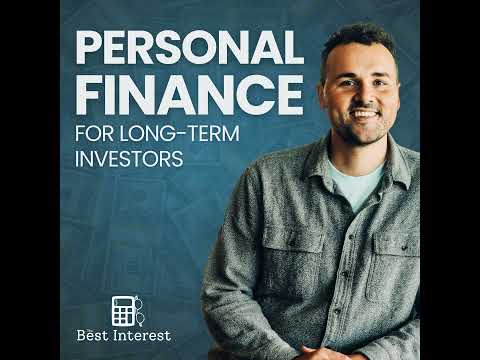
Personal Finance for Long-Term Investors is a personal podcast meant for education and entertainment. It should not be taken as financial advice, and is not prescriptive of your financial situation.
Brief Summary
Jesse Kramer discusses suboptimal financial moves that can still be beneficial for long-term investors.
Key points
- Welcome to Personal Finance for Long-Term Investors. Join Jesse Kramer as he simplifies personal finance and investing for busy professionals.
- Dumb Moves in Financial Planning. Exploring suboptimal financial decisions that might not be as bad as they seem.
- The Cowboy Account. Consider a small portion of your investments for fun, risky bets.
- Paying Off Low-Interest Loans. Discussing the nuances of prioritizing debt repayment versus investing.
- The COVID Crash. In March 2020, investors watched their portfolios drop, erasing six years of gains.
- Bob's Social Security Dilemma. Bob decides to claim social security early despite financial advice suggesting otherwise.
Episode highlights
- Dumb Moves in Financial PlanningExploring suboptimal financial decisions that might not be as bad as they seem.“It's not nearly as bad as people say.”1:03Jan 27, 2026
- The Cowboy AccountConsider a small portion of your investments for fun, risky bets.“I say giddy up!”3:42Jan 27, 2026
- Paying Off Low-Interest LoansDiscussing the nuances of prioritizing debt repayment versus investing.“How much sleep are you losing over your mortgage?”7:13Jan 27, 2026
- The COVID CrashIn March 2020, investors watched their portfolios drop, erasing six years of gains.“You would have logged into your account to realize that every single dollar of gains was gone.”16:56Jan 27, 2026
- Bob's Social Security DilemmaBob decides to claim social security early despite financial advice suggesting otherwise.“Did Bob just totally ruin his retirement? The answer is probably not.”21:02Jan 27, 2026
- Using HSA for Medical ExpensesThe speaker advocates for using HSA funds for immediate medical expenses despite traditional advice.“I’m a big proponent of using your HSA early to pay for run-of-the-mill medical expenses.”29:41Jan 27, 2026
- The Concept of MispricingMispricing in markets can be corrected by consumer demand, leading to price adjustments.“Efficient markets naturally eliminate any mispricing.”34:15Jan 27, 2026
- True Lazy Investing ExplainedLazy investing involves minimal effort and simple asset allocation, but can leave money on the table.“Super simple, hands off.”35:55Jan 27, 2026