Jeremy Siegel on Inflation, Labor Markets, and Fiscal Policy
Ask about Knowledge at Wharton
Episode Description
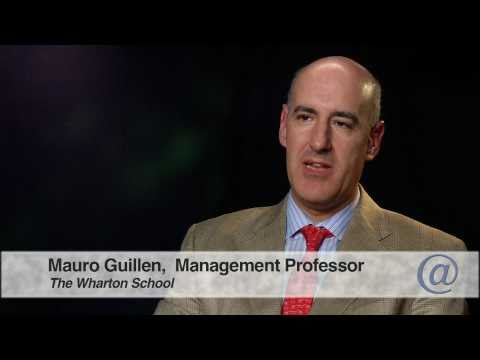
ABOUT THE EPISODE Jeremy Siegel, Russell E. Palmer Professor Emeritus of Finance at the Wharton School, discusses key insights on the current state of the U.S. economy—covering the Federal Reserve and fiscal policy, inflation trends, fourth-quarter forecasts, labor market conditions, and the evolving role of U.S. trade policy.
Hosted on Acast. See acast.com/privacy for more information.
ABOUT THE PODCAST This Week in Business features interviews with Wharton faculty about the latest news, fascinating trends, and issues impacting both consumers and the business world. Episodes are recorded at the Wharton School and published twice per week.
#federalreserve #fiscalpolicy #tarrifs #inflation #jobmarket ----- The Wharton School of the University of Pennsylvania is committed to sharing its intellectual capital through Knowledge at Wharton, the school’s online business analysis journal.
Launched in 1999, Knowledge at Wharton offers free access to:
- Articles, podcasts, and videos highlighting Wharton faculty research and analysis of current business trends - Interviews with book authors from Wharton School Press - In-depth series of curated content like Wharton Executive Education’s Nano Tools for Leaders - A searchable database of more than 10,000 articles covering all aspects of business - A weekly newsletter that delivers Knowledge at Wharton insights directly to your inbox
Visit the Knowledge at Wharton homepage: https://whr.tn/3qUpSBE Subscribe to the Knowledge at Wharton YouTube channel: https://whr.tn/3DEAgAU
Brief Summary
Jeremy Seagull discusses the economy, Fed policy, earnings reports, and U.S.-China relations.
Key points
- Lively December FOMC Meeting. The upcoming Fed meeting is expected to be highly dynamic due to uncertain data.
- Economic Uncertainty Looms. Current jobless claims indicate a mixed economic outlook as uncertainty prevails.
- AI's Market Influence. AI developments are significantly impacting market dynamics, especially competition among tech giants.
- Trump's Tariff Awareness. Trump is becoming more aware of the inflationary effects of his tariffs on the economy.
Episode highlights
- Lively December FOMC MeetingThe upcoming Fed meeting is expected to be highly dynamic due to uncertain data.“This is likely to be the liveliest meeting I can remember.”0:49Nov 28, 2025
- Economic Uncertainty LoomsCurrent jobless claims indicate a mixed economic outlook as uncertainty prevails.“There's so much uncertainty.”1:31Nov 28, 2025
- AI's Market InfluenceAI developments are significantly impacting market dynamics, especially competition among tech giants.“AI has been the major thing driving this market.”6:30Nov 28, 2025
- Trump's Tariff AwarenessTrump is becoming more aware of the inflationary effects of his tariffs on the economy.“Trump has been sensitized to the inflationary consequences of his tariffs.”7:19Nov 28, 2025
Transcript
As we come to the end of November, we are seeing questions about the state of the economy. But we're also seeing some earnings beating estimates with companies even pushing higher their fullear fiscal forecasts. We're seeing President Trump continuing to try and develop relations with China's President Xi. Plus, we have, of course, as always, questions about the path of rate cuts. Joining us to talk about all of it, pres professor Jeremy Seagull, professor emeritus of finance here at the Wharton School and also senior economist at Wisdomree. Hi Jeremy, great to chat again. >> Good to talk to you, Don. >> Let's start with the Fed and fiscal policy. Where do you think we kind of
stand right now? Obviously, there's still talk about the impact of inflation, how much ever there is out there, uh, and a lot of discussion about what we may or may not see in the December FOMC meeting. >> Yeah. And this is likely to be uh the liveest me liveiest meeting uh that I can remember because if you want to know the truth I don't it's it's not decided. It usually is kind of decided by now but because we haven't been getting data and by the way we're getting as we speak we're just getting a slew of catchup data and we will be getting more catch-up data uh into the future. Um but they don't tell uh they told us that the
employment report uh for the month of no uh November will not be ready by the time of the December 10th meeting which is a key report. So we have to rely on jobless claims and indirect reports. So there's so much uncertainty. Uh I think there's a big split right now and um um uh it you know it could be decided by the data that comes out in the next two weeks uh to push it uh one way or the other. Right now jobless claims are still it's it's a it's a the situation of no hire no fire. um uh jobless claims at 220 is right in that sweet spot, but continuing jobless claims, which means that, you know, people that have to keep on applying because they can't find a
job is at a uh you know, a four-year high uh post pandemic high keeps on climbing up. So, you know, if you don't have a job now, it's hard to find one, but firms are not at this point uh getting rid of a lot of uh of uh of uh people saying that the the uh the outlook is is is dire. So you mentioned about uh the data that we are getting that is coming in the September data obviously more delayed than what we are normally used to but how much value does that data still have when you think about that December Fed meeting I mean it's obviously you're talking about probably what a six week gap in terms of truly understanding is there still some
value or really not >> well you know I September data is an important even October I mean I data I I've been saying that uh if we're going to see a slowdown um if if tariff increases and you know we all know that that uh you know Trump is trying to walk a number of these back but if the tariff increases uh uh increases in place are going to have an effect. It's going to start now as holiday shopping ramps up. Um so uh you know really the data is is going to be some of it's an anecdotal how how well is Good Friday going to be. I think it's been watered down because you know everyone starting Good Friday earlier
the day that used to be so uh concentrated now may not be. Uh we're going to hear anecdotal evidence. How are people reacting to the increases in the stores? We're going to get credit card data, department some department store data. uh re retail sales we will not get uh you know until after the meeting. So it's going to rely on uh on that and u uh I think that if if if there's reports of weakness, they're not seeing the buying that they expect, um I think we're going to have a 25 basis point cut. However, if those anecdotal or or credit card reports or weekly uh uh department sales reports hold up, I think there is a good case for a hold and with a willingness to go in the
January meeting. >> What what's interesting for me and I've been following a lot of these earnings reports the last few weeks and I'll just use one for example as we're taping this. Dick Sporting Goods obviously a big presence in the United States. Not only did they have some promise for the quarter they just completed, but they upped their fiscal year forecast. And they're not the only one. So, there is some optimism, I think, out there that the that even the doom and gloom that's been kind of talked about like a slowing in the holiday shopping period, a lot of these retailers still feel like it's going to be a good quarter.
>> Yeah. And and and that's true. I mean, everyone talks about the record beats that we had or nearrecord beats. You have to remember that everyone was so pessimistic. I mean, actually, Goldman Sachs came into the third quarter thinking, you know, I mean, you know, after the tariffs that it might be a 1 and a.5% GDP, they're up to almost 4% uh GDP now. Uh, as well as Atlantic Fed was slightly over 4% for that third quarter. But third quarter is done. As I've always said, if we're going to have an effect of tariffs, we'll see it mostly in the fourth quarter. That's why those that are forecasting good are are you know that's very very very very
encouraging. Uh but a lot of these beats were because going into the third quarter looking from the you know the second quarter looked so bad that uh it was a it was basically a low bar. That being said, you know, AI, you know, we're get that this is quite interesting what's going on. uh as you know as we're talking Google's threat to Nvidia uh you know Alphabet's new um uh AI program Gemini 3 uh you know taking leaps and bounds over uh you know uh the uh open AI chat gpt wow I mean that competition there is is is this is heating and this is going to be really important because we all know AI has been the major thing driving this
market. >> So this is this is as we speak tremendously in flux and I think will be really quite maybe uh uh the topic of what really drives the market uh in in uh in this fourth quarter. Let me finish up by getting your thoughts. And obviously we see a lot of headlines of President Trump talking with President Xi about the importance of having a decent relationship, the US having a decent relationship with China as a trade partner, how important and how valuable that can be. >> Well, it's very important. I mean, I think he recognized it earlier and that's why we've already had a meeting with Shei that was was good.
There may be another meeting. Uh there's no question that Trump has been sensitized to the inflationary consequences of his tariffs and with the polls not looking very favorable towards his economic program and uh affordability uh uh uh you know topic uh which is on everyone's lips right now. uh he is uh he is obviously wants to make sure that uh we we don't have any further tariff induced uh increases in in in prices. I mean I I definitely see a reversal there and um you know that's clearly favorable to the market. Uh I don't you know no more threats. I'm not saying there won't be any because there'll be political
issues that might come up and he might threaten with terrorists. But nonetheless, there's there's a walk back here that actually started, I would say, last month with the meeting with with Chief >> Jeremy. Always great to talk with you and get your insight. We will catch up again next month. Thanks again. >> Thank you very much. Happy Thanksgiving. >> You too as well. Jeremy Seagull, professor ofmeritus and finance here at the Wharton School and senior economist at Wisdom Tree.