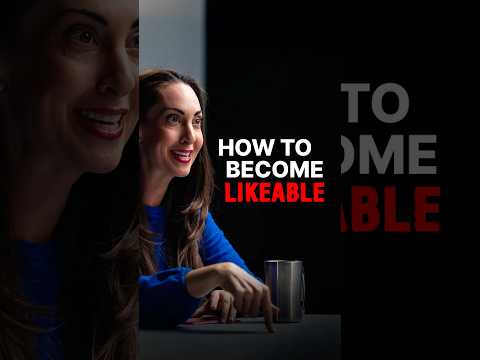
THIS IS THE SECRET TO BEING MORE LIKEABLE 👀
- Dec 15, 2025
- 1:31
- Short
Why do people often get the wrong impression of us?
Today’s guest believes it’s because most of us have no idea how we’re actually coming across.
Alison Wood Brooks is a professor at Harvard Business School who studies conversation and emotion.
Her research focuses on everyday communication and the subtle ways our words shape how people respond.
We spend a huge part of our lives talking to people, yet most of us never learn how conversation actually works, or why it so often goes wrong.
Alison’s work shows that there’s often a gap between what we intend to communicate and what people actually hear. That gap influences how confident we seem and how likeable we come across.
So I asked her:
- What actually makes someone enjoyable to talk to? - Does anxiety change how we sound to others? - What small habits are pushing people away? - Why do we underestimate how much people enjoy talking to us? - What makes some conversations feel easy while others feel forced?
Alison brought me through the “TALK” framework that anyone can use to structure a conversation, especially in moments that usually feel awkward or uncertain.
A lot of what Alison shares comes back to awareness - not changing who you are, but noticing what you’re already doing when you speak to people.
If you’ve ever walked away from a conversation unsure why it felt off, this episode will help you understand what was really going on.
Get access to exclusive Diary of a CEO content: https://bit.ly/circle-ytshorts
Brief Summary
Learn effective communication strategies to enhance likability and friendships, especially for men.
Key points
- The Science of Being Liked. Discover the scientifically rigorous framework for improving communication and likability.
- Reframing Social Anxiety. Learn how to turn social anxiety into excitement for better interactions.
- Navigating Digital Communication. Explore strategies for enhancing text-based communication in the digital age.
Episode highlights
- The Science of Being LikedDiscover the scientifically rigorous framework for improving communication and likability.“It's the most teachable, practical, scientifically rigorous framework in the world for communication.”0:22Dec 15, 2025
- Reframing Social AnxietyLearn how to turn social anxiety into excitement for better interactions.“One of my biggest findings was how we reframe social anxiety as excitement.”0:53Dec 15, 2025
- Navigating Digital CommunicationExplore strategies for enhancing text-based communication in the digital age.“There's clear things that we should do to make our text-based communication better.”1:16Dec 15, 2025