What's Behind VPS Healthcare's Explosive Growth
Ask about Knowledge at Wharton
Episode Description
📂 Leadership;Health Care Management
Brief Summary
Dr. Shamshi Vil discusses his transition to healthcare entrepreneurship and innovative strategies for VPS Healthcare's rapid growth.
Key points
- Transition to Healthcare Entrepreneur. Dr. Shamshi Vil shares his journey from radiologist to managing a billion-dollar healthcare business.
- Innovative Healthcare Solutions. Dr. Shamshi discusses unique strategies like opening clinics in malls to improve patient access.
- Advice for Aspiring Entrepreneurs. Dr. Shamshi encourages young people to follow their passion in healthcare for societal good.
- Global Expansion Plans. The enterprise aims to expand into more markets and provide advanced care globally.
- Integrated Healthcare Ecosystem. Plans to build a comprehensive healthcare delivery system covering all aspects.
Episode highlights
- Transition to Healthcare EntrepreneurDr. Shamshi Vil shares his journey from radiologist to managing a billion-dollar healthcare business.“I decided that my life should be used for the larger good of public.”1:19Oct 19, 2015
- Innovative Healthcare SolutionsDr. Shamshi discusses unique strategies like opening clinics in malls to improve patient access.“The best thing is they don’t come in for an X-ray at all.”10:25Oct 19, 2015
- Advice for Aspiring EntrepreneursDr. Shamshi encourages young people to follow their passion in healthcare for societal good.“I think the world needs a lot more healthcare than what it is right now.”15:44Oct 19, 2015
- Global Expansion PlansThe enterprise aims to expand into more markets and provide advanced care globally.“We want to go global.”19:41Oct 19, 2015
- Integrated Healthcare EcosystemPlans to build a comprehensive healthcare delivery system covering all aspects.“We feel that that's where we need to go.”20:09Oct 19, 2015
Transcript
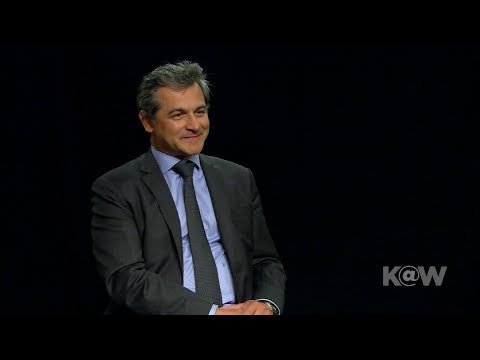
Our guest today is Dr. Shamshi Vil, founder and managing director of VPS Healthcare, a rapidly growing company in the UAE. Uh Dr. Shamir, thank you very much for joining us today on Knowledge at Wharton. Thank you, Mul. Thank you for having me here. Uh Mike, uh and my co-host today is Dr. Mike Yusim, uh director of the leadership center. Uh Mike, would you like to get started? I will jump in and Shamsir, welcome to the program here. Thank you, Mike. And a couple years back, you were a practicing radiologist. You practice medicine and now you deliver medicine and you deliver it to a lot of people. The last time I checked, some two million people patients a year come into one of your
facilities. So, just thinking about the transition from a practicing a person who practice medicine to a person now who delivers medicine to a lot of others. What did it take to make that transition? uh I'm I'm trained as a radiologist. I spend almost uh 10 years of my life in medical training. then another two years for the the masters and then uh I realized that uh as a radiologist my life would be uh more or less contained in the basement of the buildings of hospitals because all the radiology departments are in the basement and you don't see the sunlight and I decided that my life uh should be used for the larger good of public and uh and being
in a business family you know you always have that blood of uh doing something by yourself and uh I worked for an here in the government hospital uh in Abu Dhabi. Then I retire resigned from the job and didn't know what to do. So at that time didn't have any formal training uh in business. But uh I knew I had a a strong desire to do something to to build a healthcare uh system which could clearly bring out the change for for the patients. So with that dream I started and uh here I am with some good number of hospitals, good doctors, good team all around. So it's been a tremendous journey. You know, Shamshshire, I think
many people have the dream of one day becoming an entrepreneur themselves. And from your experience, you you opened your first hospital, I think it was in ' 07. Um, what did it take to finally make that decision? And then once you made it, what are some of the steps you took to begin to learn all the business skills you have to have to run an enterprise like a hospital? Uh, it's always a learning u day. every day you learn something new and uh as somebody who didn't know how to run a business or had no previous experience of running hospitals. It was it was a completely new challenge and I was enjoying that uh journey to to be there every day uh talk
to the mechanics, talk to the the contracting people, talk to them about construction, learn how the electro mechanics work inside an operating room uh how the uh the waste water should be ejected out of the hospitals. So everything was different. Everything was learning and I was very keen to learn. So I I would be there early in the morning spend 18 20 hours without any problems fully charged uh don't get sleep because of the excitement and which is still the case uh on on on sometimes when when you have some interesting projects. So uh ability to learn was something which helped me a lot. I was I was a good listener. I I would listen to people and I I would
accept that I didn't have any experience. So I hired the best people on the job. Yeah. You know, it's a very interesting point and that is to become a leader of a hospital, your chief executive of the system which includes medical centers, pharmaceutical delivery. It's not just hospitals in three different continents. Um, you've had to become a general manager. You've had to do everything. You have to know everything. I say I'm the owner and the cleaner. You know, that's very my uh my main focus is uh I don't involve in operations. My important task every day is I have a team of 15 to 20 people who are all across uh in different areas that we operate who gives feedback after
talking to the patients and I get all the uh most of them the the the the impulse from from the response from the patients. So I take it very seriously and then I work backwards to the systems. If it's more waiting time, I need to talk to the CEO to to see what can be done to reduce the times of waiting inside the emergency or in the pharmacy or if it is an out of stock pharmacy situation, what to do to tackle it. So, uh pretty interesting. So, you've built a very fast growing business. I believe you started in 2007 and you are now as I understand it close to a billion dollars worth of revenues. uh what was your strategy in building a business so rapidly uh in the UAE? Uh
what were some of the steps you took? For me it was all about uh building the capacity you know uh I wanted to go where there were no facilities available. So for me I didn't want to build a hospital and expect everyone to come to this particular to this particular building. I would uh rather look at areas which were devoid of healthcare and go build capacity improve the the capacity efficiency comes then then gives you that uh ability to negotiate with your vendors it brings down your operating expenses you have uh service line optimizations where you want to retain the best talent you need to have certain volume so that comes with capacity so for me I was more on uh
I was not focused on the revenues at all I knew if I focus on the quality and and get good doctors because that would bring me the revenue. So we went in for the accredititations. We we got the US accredititations to start with and that time it was not uh really required by uh any legal standards but we went and got all these things and it started teaching us how to do things in a more systematic way. Even though we have lot of anarchy which comes with the growth that we have but we have teams who are only focused on certain activities and they're not
concerned about what's going around the group. So we have some people who are on the ground uh firefighting things every day but some people who are on the top who goes around building new centers like me I'm I'm more into uh building capacity I'm more into projects you would see me at any point of time in one of those projects the sleeves rolled up I still love to do it and I think speed is of essence we take decisions very fast you know we appreciate your courage in getting everything going back in ' 07 and we also appreciate your courage in moving out of Abu Dhabi you're still there of course But in addition, you
have operations now in Oman, not too far away. London, that's pretty far away. India, culturally, quite a gap there. And you're here now in the US to think about partnering with a couple of US hospitals as well. Looking back on on your movement out of your home territory, what of what's one of the more difficult cultural chasms you had to cross to make things work? See, it's always uh the comfort zone that you leave when you go into a a new territory or a new market, but you adapt very fast. You know the local cultural sensitivities. You know uh what ticks you need to know the the the the you know the demand of the people and I think if you can be Omani when you reach
Oman or or being in London, you have to behave the way that what they want to see and what they want to hear from you. So once we can adapt to the local requirements of the market regardless of the market and keeping the patient uh need in the center it it works and and it's so good to uh uh of a time to exploit and and and to grow fast because technology has grown. You could reach uh any part of the world. Tomorrow morning I'm having some meetings in London. I fly back to Abu Dhabi the same night. The next day I have something else. So you can't be in a better position than uh what you can dream about. So just use the time and take decisions. So if you
were to look back on your journey uh and I assume that in the past seven or eight years it's just barely begun. What have been some of the most testing challenges that you have faced? How did you overcome those challenges and what did you learn from them? We started at a time when uh the insurance law was introduced in 2007 in UAE. At the same time there was uh the financial world crisis which was going on. So there was kind of a lot of mixed responses to our beginning of the hospital during that time. But I was very confident that uh whatever the crisis is going around healthcare is going to be the last one
which is going to be affected. In fact, we saw increase in the number of patients visiting the hospitals during those periods because you know they that leads to headaches that leads to you know psychiatric consultations. Uh you know jokes apart it's again uh the the testing times which gives us that opportunity to uh be what the market needs but you need to be realistic. You need to set uh the goals which are achievable and then uh go all out. You know, going back a little bit in our conversation here, one of the great aggravations that many patients complain about is weight time. And you referenced waiting time and trying to get that down. In your own experience, what are a
couple of the tactics, the management tactics to cut weight time? And just to go back to another phrase, make the hospital that much more patient centered. I think the the concept was to uh to make a network of clinics all across going to the communities because we don't want patients to come inside the hospitals when they really don't have to come in because it's unnecessary cost. It's a lot of headache when people should not be in the hospitals coming inside is again something that we don't want to have in our group. So we have started up opening clinics all across the communities where we educate the patients that if it's something that
they need on an urgent basis that's the place to be but if they are terribly sick then then come to the hospital. So there's a there's a difficult situation where you educate the the public and everyone wants to see the doctor when they when they are sick and they want to be the first to see the doctor. So again it's improving the accessibility point of view. You know, it's really interesting because uh hospitals are there to bring patients in and render services, but from what you've said, one of your tactics here, one of your strategies really is to keep patients out of the hospital, clinics, wellness programs, better diet, exercise, and all
the above. And I think in that sense, you're delivering health services fully. It's not just what happens when somebody comes in and needs an X-ray. The best thing is they don't come in for an X-ray at all. That's right. And uh what we have done is we wanted the hospital to do cardiac surgeries, neurosurgery, knee replacements and uh let the patients who needs uh the wellness programs to go inside the malls uh do their shopping, get into these clinics, get themselves checked on a continuous basis because we have launched programs for the disease management of people suffering with diabetes so that they don't uh miss their medicines that leads into complications and end up spending a lot
of money and time on recovering. So these kind of in you know in initiatives have been liked by people initially they are kind of hesitant to go to outreach programs but once they find value that is when we can see there's a successful program launched. So what are some of the most surprising innovative things that you have tried out? I heard something about a dental clinic that was done quite uh innovatively. Can you tell us that story? So there was a zoo on the uh the outskirts of Abu Dhabi where a lot of childrens used to go and I took my uh children as well and uh I had my one of my clinic managers who was just passing by and we had a a good
discussion and he came up to with a with an interesting idea of uh you know why don't we start a a dental clinic inside the inside the zoo for the children who comes in so that they walk in they get a a routine checkup done we identify the carries and you know let them know that there's a carry happening. And now at that time I thought it's it's a crazy idea and I I I had to give him his you know uh due credit that I finally yielded into his compulsion of opening up the clinic and now we got requests from parents to have some facilities even for the parents to be in the inside the clinic when they when they come with the children. So I think
this innovative ideas of reaching out to the masses especially inside the malls inside the hypermarkets that you see here as well uh healthcare is going to take a lot of change in the years to come. You know if you think about the years to come digital delivery of uh appraisals of diagnostics I I think it's out there still slow to develop but if we were to sit down in five years my guess is digital medicine is going to be a big piece of what you're doing. Digital is already there. we have uh diagnostic imaging which is connected right across the group and can be reported from any any facility or even from home. So that again uh reduces the need for a lot of radiologists on on the
on the ground and that has really helped in faster decision-m process. So it's all about taking the right decision at the right time using the right technology and that saves life. You have something called as the golden hour where you need to be connected. You can't expect when that golden hour is going to happen. It could be on a Sunday, it could be on a holiday and you don't have people on the facility and then if you have a digital platform where people can log in, see the films, report the uh the clinical needs that could save lot of hassle for the patients. So uh just last week uh India's prime minister Narendra Modi was in the US and he was in Silicon Valley
talking to a lot of uh uh CEOs there about something called digital India. M uh and I think as as far as I understand it, the plan is to connect more than 600,000 Indian villages through a fiber uh network. Uh what kind of opportunities would this provide do you think for health care uh providers especially to people at the bottom of the pyramid who traditionally don't have access to healthcare? I think this could lead to a lot of two-way communications when it comes to healthcare delivery and uh to reach out to these areas are very difficult. You know they have their own logistic problems to reach out to to
take the best of doctors to those rural areas. It's it's like next to impossible. So if you have the connectivity then you have things like teley medicine which could be used uh we could have lot of information uh passed out to these public in their own languages. So I think you could have lot of two-way communications. You don't have to wait essentially for a complication to happen before uh they could talk to help. They could talk to somebody who can give them the help to to overcome the situation. Uh for a person like yourself going back to let's say 06 and 07 you were a professional radiologist but inside you there was the entrepreneur and and and
the business person. And for our listeners and our readers who got that entrepreneurial bug somewhere that one day may be more out and more recognized, what what advice would you have from your own experience on that kind of a transition? Yeah, I think it's all about that uh the the listening to your heart, your your your gut feeling and what you like to do. And I think that's what's very important. And I remember when I was doing my training, I always used to think of a day when you know I could have a hospital treat lot of people that was always inside the heart and and there was a time when it came and I have to break the the the the mold and come
out of it and and follow my heart and and there's no regret because for me at that point of time the decision was there was no point of return and I I can't go back and do practice. So uh you know I think I I I would advise a lot of youngsters to come forward uh to be in healthcare especially because the world needs a lot more healthcare than what it is right now and and there are a lot of good things that you can that you can do to to make money to to do good for the people. There's lot of corporate social responsibilities that you can do and and the world needs a lot of people uh from here. Give it a try. Yes, why not? Okay.
So, one one of the key attributes of any good entrepreneur and I think you referred to it somewhat in your previous answer uh is the ability to pick the right team. Uh and and uh I was listening to Mark Zuckerberg from Facebook talking about how he selects people uh who are his direct reports and he said what I look for is if I am willing to work for that person then I hire that person to work for me. What do you look for in your team? Uh you know for me uh it's about uh people with the right attitude. The people uh who don't feel that they have done it all. They have seen it all who would still have uh the fire in their belly something to prove and uh you know uh
treat people with a lot of respect and and for us we always had an issue with job descriptions when when I remember the first CEOs that I hired and they asked me for a job description and I said that you tell me what you can do for us. So that was an approach that I've taken and I still follow that and uh I used to call a lot of the the top directors when they join I used to call them personally on a disguise name so that I get a good firsthand experience of how they are with people at a lower level. So uh kind of freestyling when when it comes to recruiting senior people uh they need to uh be people oriented people driven yet taking decisions and not afraid of the
eventualities. And looking back over the eight years since you uh founded the hospital itself, could you pick out an incident or a decision or a time that seemed exceptionally challenging and just walk us through what happened and what decision you reached? because we keep taking these tough decisions on a on on a daily basis. But some of the decisions were we have to build a a tertiary care hospital and we were given a real estate uh building uh and the and and we were only given 10 15 days to decide whether we need the building or not and it was a commercial building at that time. So we we uh you know brought some consultants
from us they came and said it's not going to be possible and uh that was a very difficult moment and then uh I remember one of the local architects on the site he gave me a solution for cutting across the vertical transportation and that was a challenge and I have to completely trust Honum to take that building which was something like a 200 million project and uh looking back uh uh that's something of a feather in our in our cap and and it has done extremely as well the the hospital which looked like a hotel feel like a different environment altogether. We have gourmet kitchens inside. We have uh the music playing all the time. People come in to have a cup of coffee. So
that's the building. You know just a quick observation of what you've said with a question to it. A lot of learning what you do now you've learned by doing it. You've got out you went out you made a decision. Should we open up a clinic at a zoo? I don't know but let's try it and see what happens. You call it paid experience you know some of it works some of it works some some failed we had closures but we learn from every mistake we try hard not to repeat the mistakes but eventually you know keep doing the same mistakes but again it's the 8020 rule you know the 20% of those things which clicks very well compensates everything. Yeah. We have uh I think
about a minute or so left and for the uh I wonder if I can ask you to do a little bit of crystal ball gazing. Where do you see you and the enterprise going versus the next seven or eight years? You've already come a long way during the past seven or eight years. What's next? We want to go global. We want to uh be in lot of more markets than what we are right now. We want to provide a lot more advanced care for the less privileged across the world. Uh we have manufacturing activities. We uh we u are getting very strong into the manufacturing activities as well. So what we feel is that we have to build a
a healthcare ecosystem where uh we have an integrated uh healthcare delivery approach where we control the various aspects of healthcare delivery right from patient care, the logistics, supply chain, the the pharmaceuticals, the back end, the IT, the home care. So we we feel that that's where we need to go. It's a long journey. Right. Well, uh Shashir, thank you so much for joining us today. Mike, yeah, thank you. We appreciate you're coming from Abu Dhabi for joining us. A great experience. Thank you so much. Thank you so much for being on the knowledge at Wharton show. Thank you. Thank you. [Music]