What Behavioral Science Says About Changing Habits Around the New Year
Ask about Knowledge at Wharton
Episode Description
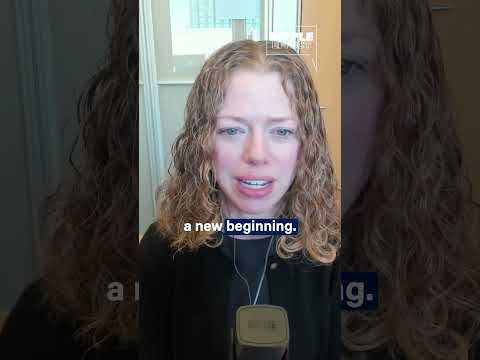
EPISODE OVERVIEW Wharton professor Katy Milkman explains the “fresh start effect,” a behavioral science finding showing that moments like New Year’s Day, Mondays, and major life changes increase motivation to pursue long-term goals. She discusses why this motivation fades, how present bias affects decisions, and why tools like automation, defaults, and planning are more effective than willpower alone. She also talks about how organizations can use timing to encourage positive behavior change and how AI may support goal follow-through.
PODCAST OVERVIEW Every day, business scholars answer pressing questions in their research - but what do their insights mean for you? In this podcast, Wharton faculty dive into what inspired their studies and how their findings resonate with the world today. Learn how research insights translate into knowledge you can use, with host Dan Loney.
#Behavioralscience #HabitFormation #BehaviorChange #PsychologyOfSuccess #NewYearsResolution ----- The Wharton School of the University of Pennsylvania is committed to sharing its intellectual capital through Knowledge at Wharton, the school’s online business analysis journal.
Launched in 1999, Knowledge at Wharton offers free access to:
- Articles, podcasts, and videos highlighting Wharton faculty research and analysis of current business trends - Interviews with book authors from Wharton School Press - In-depth series of curated content like Wharton Executive Education’s Nano Tools for Leaders - A searchable database of more than 10,000 articles covering all aspects of business - A weekly newsletter that delivers Knowledge at Wharton insights directly to your inbox
Visit the Knowledge at Wharton homepage: https://whr.tn/3qUpSBE Subscribe to the Knowledge at Wharton YouTube channel: https://whr.tn/3DEAgAU
Brief Summary
Katie Milkman discusses fresh starts and behavioral economics, emphasizing their role in personal and professional decision-making.
Key points
- The Fresh Start Effect. New Year's is a prime time for personal change, driven by our perception of chapter breaks in life.
- Behavior Change Insights. Katie Milkman discusses how behavioral science can help individuals and companies make effective changes.
Episode highlights
- The Fresh Start EffectNew Year's is a prime time for personal change, driven by our perception of chapter breaks in life.“New Year's is the biggest of the dates that signals a fresh start.”3:06Jan 6, 2026
- Behavior Change InsightsKatie Milkman discusses how behavioral science can help individuals and companies make effective changes.“We should seize the fresh start when it arises.”3:36Jan 6, 2026
Transcript
From the economics perspective, there are many things that we have in our lives, whether it be our retirement savings, whether it be, you know, [music] uh the investments that we want to make, whatever it is that come up over the course of the year and probably align with some of these dates where it's probably a good thing to kind [music] of do a rethink on some aspect of our financial life. [music] >> Absolutely. So um there are many decisions that we make where it would be great if we were more focused on the long run. In fact, there's a very well-known behavioral bias called present bias that leads us to focus [music] too much on now. Welcome to the
ripple effect, the podcast that takes you on a journey through the minds of Wharton faculty. I'm your host Dan Looney and in each episode we'll be diving deep into the inspiration behind the groundbreaking research that [music] Wharton professors have conducted and exploring how their findings resonate with [music] the world today. Well, we certainly know that the new year is a time for people to think about change, what they can do to either improve [music] themselves and their lives or potentially even improve their professional lives. When you think about it though, it's a very important time for [music] individuals at this time of the year, but it could also be an
important time for companies when they're thinking [music] about the change that they want to make and involve their employees as well. Katie Milkman is a professor of operations, information, and decisions here at the Wharton School. She's also co-founder and co-director of the behavior change for good initiative and she has studied a lot of this for a long period of time and a pleasure to have her joining us once again. Katie, great to talk to you. How are you? >> I'm great. Thanks for having me. Glad to be here. >> It is amazing and the work that you and Angela Duckworth and your teams have done about looking at behavior change. But for those people that haven't
thought it about a lot, why do you think it is? Is it just the calendar? Is it the flipping from one year to the next that people start to think about making change in their lives? >> Yeah, it's a great question. Um, a little over a decade ago, I studied this with a former student uh at Wharton, UCLA's Hang Chen Dai. She and I along with Jason Reese started digging into what it is about certain moments that makes them particularly attractive to us as times to make a change. Um, what we found in our research is that when there is what we perceive as a chapter break in our life story and and we really actually see our lives as if we're characters in a novel with these
chapters. If you think about, you know, the college years, the years working at company X, the years living in Boston, whatever it is, we put these brackets around time and we don't experience it continuously as a result. And whenever there is a chapter break and we enter a new era that feels like a new beginning to us, we're more motivated to pursue our goals. We feel disconnected from our past self. We can say that was the old me. This is the new me. The new me will be different. And those chapter breaks arise at predictable moments on the calendar as well as at times when we make uh meaningful change like a move to a new job or becoming a parent. Um New Year's is the biggest of the dates that
signals a fresh start and a new beginning, but it actually happens every Monday uh at the start of a new month. It happens when we celebrate birthdays. So these come up a lot and the psychology behind them is around this uh thing we do it's called mental accounting um in the words of Nobel laurate Richard Thaylor um where we don't perceive time and other resources as fungeible across boundaries but instead we bracket them and so uh fresh starts arise a lot but the new year's is a really big one and we should seize it uh when when when it arises. So even you mentioned even it'll occur on Mondays. Just having that weekend break is
something that can can make people kind of do somewhat of a reset. >> It's not even the break, which is an interesting point because that doesn't hurt, right? Having some disruption to your routine. Your intuition is right that that also can create a sense of a fresh start, but it's it's not a necessary condition. In fact, there's a really clever study that was done following our work on the fresh start effect by some researchers at UVA showing that um if you change the calendar someone's looking at and you make it look like the week starts on Sunday, which it by the way does in some religions and some cultures, um if you if you randomly assign some people to
see calendars where the first day of the week is a Sunday and others see a calendar where the first day of the week is marked as a Monday, it shifts when people feel it's most appropriate to start pursuing a new goal to Sunday. So you don't it's not necessarily about the break and the refresh so much as it is um giving ourselves a sense of when a cycle begins. And so from the economics perspective, there are many things that we have in our lives, whether it be our retirement savings, whether it be, you know, uh the investments that we want to make, whatever it is that come up over the course of the year and probably align with some of these dates where it's probably a good thing to kind of do
a rethink on some aspect of our financial life. >> Absolutely. So um there are many decisions that we make where it would be great if we were more focused on the long run. In fact, there's a very well-known behavioral bias called present bias that leads us to focus too much on now and not enough on a long-term outcomes and it leads to all sorts of problems for us like undersaving for retirement. It it contributes to that. I should say policy decisions contribute too, but uh it contributes to undersaving for retirement. Uh and and PS also not having enough money contributes to undersaving for retirement. But but
present bias as part of it contributes to, you know, bad decisions we make about exercise, eating, smoking, you name it. Um if we're too focused on the here and now and how good things feel right in this moment, we won't make those long-term oriented decisions. The fresh start effect though gives us at least temporarily a little extra motivation to focus on the future and our future goals. And what we want to do with that extra motivation is ideally um put in front of people and put in front of ourselves opportunities to make small changes in the moment that will have big long-term effects. And one of those would be, for instance, saving um for
retirement, starting to set up um automatic deductions to a 401k, for instance, if you work for an employer that offers one of these tax advantaged savings plans. And we did some research a number of years ago looking at whether or not inviting people to start saving for retirement by contributing to a 401k plan at their employer um on a moment when it felt like a fresh start would increase savings in the long run. And what we found is that relative to inviting people to save at some other future date that felt more arbitrary. You know, you could put it off and procrastinate two months, three months, whatever you prefer, uh it was better to
tag that opportunity to a fresh start like the start of spring or someone's birthday. Um, and so that's one item that people might have on their mind. Is there something where you can make a one-time change when you have that momentary because it is temporary. That's a big problem with fresh starts, right? By by Wednesday, it's not a fresh start anymore. So, you want to seize that feeling that you have at the beginning of a new year that this is a good time to make a change and try to think of what's something consequential I can change once that will have big benefits. Savings decisions are often such a a a choice. You could think about um you know signing up for life
insurance if that would really be a good decision for your family. You could think about you know if there's an important screening test that could have a big impact on the in the long run whether it's you know a colonoscopy. I know that's a weird thing to talk about at New Year's but yeah they're important or a mamogram you've been putting off. Yeah. Some of these like big one time you don't have to do it that frequently but if you use that motivation to make a big one-time change that can be particularly helpful. How frequently then as people do make some of these changes, whatever they might be, is it important for them to review the change
and potentially make an adjustment on the change that maybe they made a year ago? >> Yeah, that's a great question. I mean, you know, in an optimal decision-making model, you'd kind of be constantly reviewing, oh, you know, I got a I got a raise or, you know, I lost my job or I I got married. Like, all of these things are constant. There's flows, inflows, outflows. In an optimal world, you'd be constantly re-evaluating and making sure all of the choices you've made remain perfect at this moment. But realistically, we don't have the cognitive capacity to do that. So, thinking about, you know, what is the
right, you know, this could be one of your New Year's resolutions. Thinking about making a plan for the right frequency at which you do want to re-evaluate all the big decisions you've made in your life. Maybe it's monthly in the beginning of each month could be that uh little kick in the pants you need to say, "Okay, this is the moment." But maybe you don't feel like you need to do it even that frequently. Maybe it's quarterly or maybe it's even once a year at the new year that that's when you're going to sit down and re-evaluate. You know, do I have all my beneficiaries defined for all of my accounts and am I happy with them? You know, is my um is my will set up the way
I want it to be? Have I gotten all my doctor's appointments and checkups in? So, whatever. Um I you know I don't think there's a one right answer but we should acknowledge that we don't do this continuously and these fresh starts can be a good opportunity to set up a plan and um for the valuation frequency that that feels right in our life. >> So when you think about fresh starts then from a business perspective and how companies may have to mix that in. >> Yeah. Is it easier for a company, especially one that might be publicly traded to do this because they kind of already have part of this schedule built into their year-by-year process?
>> Absolutely. So, companies tend not to be the target of the research on the fresh start effect in so much as uh companies have a lot of procedures and planning in place both for legal reasons and reporting reasons. So, so I don't think of a company as the place where uh you know there might be major mistakes made so much as I think within the individual working in a company who makes choices both for themselves, the people they manage and their own advancement. Um that's where I think about fresh arts as being particularly useful. And actually
this research initi it it came from uh making a visit to Google's headquarters out in Mountain View, California about 15 years ago for a big retreat that um where I was invited to present some research on how we could help employees make changes that would be beneficial for themselves and for their employer. So HR professionals at at Google are called um people analysts and the people analytics team was trying to figure out, you know, how do we get more employees to opt in to benefits we've offered that are beneficial for them and for us. Things like taking advantage of educational programs that they offer, taking advantage of their 401k match,
taking advantage of their wellness programming. And I got this great question. The question was um from a senior leader there uh named Prasad um Si. He said, you know, when should we be putting these opportunities in front of people? I get that we should be sort of nudging them to adopt these things and using behavioral science insights when we present them, but are there opportune moments? And that's where the work really actually came from was the idea that for managers who are trying to figure out how, you know, when are the right moments to set up a goal setting meeting with an employee who's underperforming, when can I best nudge someone on my team to take advantage of
an educational program we're offering so they could level up their software development skills? You know, when are those times? And that's what this research tried to answer. There are actually moments when your employees are going to be more open to making a change. And by the way, I should say it's not just at these calendar moments, but also at these um cycle ends within a company. And so they use it at Google now. They have a moments engine that triggers uh nudges and encouragement for people to take advantage of these kinds of programs at moments that they know are fresh starts. A >> and isn't it to a degree how that nudge
is kind of delivered as well? I I mean you for the from the company's perspective, you probably don't want it to seem a little bit like bullying. You want it to be viewed as, hey, we're trying to help you out. We're trying to, you know, see if your life, your professional life, your personal life can be better. The the the messaging is very important here as well. >> 100%. That's true. Whether we're talking about a fresh start moment or any other moment to be um persuasive and to change behavior requires understanding that uh you know, people will react against anything that feels coercive and designed to extract value from them
without creating value for them. And so in general we uh especially when it really is aligned and and that's what we study at the behavior change for good initiative. I don't work on projects where there isn't actually an alignment between the employee and the company or the customer and the company's best interest. When when that's the case, um we absolutely want to make sure that the communication is con conveying that that these are benefits everyone is better off, right? The employee is better off if they build their human capital by taking advantage of the educational programming that the employer is better off because they now have a better
trained employee. Same is true for wellness programming. You're lengthening your life. Um but the employer is also getting more benefit from you because when you're healthier, you actually perform better at work. And so the idea is that um you want to make it clear you're not coercing. >> I know one of the things you have talked with me in the past about as well is not only making the promise, especially if it's a person making the promise to themselves. I'm going to do this. I'm going to improve this with my life is following through on it and and not breaking the promise and and the cost that can actually, you know, can be incurred by somebody when they don't
follow through on a promise. >> Yeah. No, that's a great question. Um, we often fail to follow through. Follow- through failure is a major challenge. In fact, if you look at data on the fraction of people who follow through on an important health goal that they say they're going to execute on, or even something like, you know, turning out at the polls in an election, it ranges, but it's never, you know, in in in the data, it's somewhere like 50 to 80%. It's almost never higher than than 80% of people following through on a commitment to their future selves. um unless right we do a bunch of intervention work to try to really make it easy and really um
support planning. So a lot of the work we do at the behavior change for good initiative is to identify what are the tools that we can give people and companies to help increase follow-th through on everyone's best intentions. Um some of the most powerful tools are just making it insanely easy, right? like how do I set you up for success by making it so that for instance if you do literally nothing you don't lift a finger the best outcome ensues right so there's this um wonderful research on defaults um which means you know the option that happens even if you take no action if you are defaulted into having a day on your calendar blocked for uh educational training or you're defaulted
into automatically having a portion of every paycheck set aside and sent to a 401k um these are the kinds of things that lead to really particularly big benefits. But if you can't eliminate friction, just removing friction so it's as easy as possible for people to do the things that are in their best interest is really important. And short of that, you know, we can help people make clear plans about when they're going to do it, where they're going to do it, how they're going to follow through, and that also really increases success. >> Let me finish up with this because I I'm always interested, especially with the
work that you've done, kind of what's next. And we always look at whether it be generationally or professionally, whatever it is, kind of the changes that occur as we move forward. What are some of the areas that you're most interested in kind of looking at right now in and around behavior change and and how we either accept it or push it to the side? >> I mean, that's a great question. So, I I would be remiss if I didn't mention the the buzzword that's in every hallway at the Wharton School, which is AI, right? So, we're thinking a lot about how LLMs can be supportive in this journey. How can they best be harnessed to help people achieve their goals? Like, what
are the what are the ways, you know, that we can design LLMs that help people set up plans that help people um follow through on all the best behavioral science advice that that we know can create greater success rates when it comes to goal pursuit. So, that's absolutely one of the areas that's actively being pursued by our team. Um but you know we're interested in so many questions about habits um you know and can machine learning be used in other ways not just as a tool to help support people but also as an analysis tool to understand what are the strategies that people are using successfully um you know over the course of their lives that that we could then study and and help
others adopt. So, uh, we have a lot of work underway using a wide range of different tools, but with the new, um, availability of of LLMs, there's a lot of potential there. [music] >> Katie, always great to talk with you. Look forward to chatting again throughout the course of the year. All the best. >> All the best to you, too. Thanks so much for having me. >> Thank you. Katie Milkman, who's professor of operations, information, and decisions here at the Wharton School [music] and co-founder and co-director of the Behavior Change for Good initiative. Thank you for listening to the Ripple Effect. We hope you found this episode informative and engaging.
Don't forget to subscribe and leave us a review so that we can continue to bring you the best [music] insight from the Wharton School.