Ideas 4 Action
Ask about Knowledge at Wharton
Episode Description
📂 ESG
Brief Summary
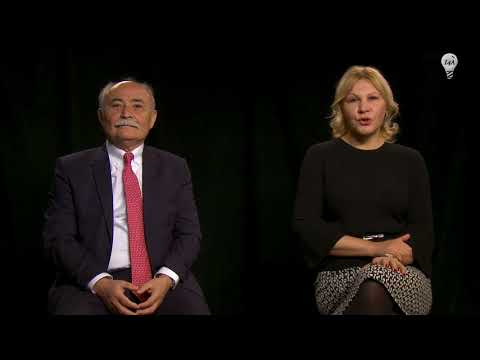
Mahmood Mohideen and Georgia Petrowski discuss SDG implementation, youth engagement through Ideas for Action, and the role of innovation in sustainable development.
Key points
- Global Participation in SDGs. Over 110 countries are committed to presenting their plans for the 2030 agenda at the UN.
- Local Level Impact of SDGs. The discussion emphasizes the importance of local-level improvements in people's lives.
- Engaging Young Minds for SDGs. The Ideas for Action program inspires youth to contribute actionable solutions for sustainable development.
- Gender Imbalance in Development. Addressing gender inequality is crucial for achieving SDGs, particularly in developing countries.
- Empowering Women Entrepreneurs. Focusing on women as entrepreneurs can help solve poverty in their communities.
- Future of Ideas for Action. Looking ahead, the initiative aims for broader impact and local recognition.
Episode highlights
- Global Participation in SDGsOver 110 countries are committed to presenting their plans for the 2030 agenda at the UN.“You can really see that there is some sort of official commitment.”1:18Mar 21, 2018
- Local Level Impact of SDGsThe discussion emphasizes the importance of local-level improvements in people's lives.“You can see every Development Agency happy with the progress.”5:01Mar 21, 2018
- Engaging Young Minds for SDGsThe Ideas for Action program inspires youth to contribute actionable solutions for sustainable development.“This year we tripled the proposals, demonstrating tremendous interest from young people.”5:43Mar 21, 2018
- Gender Imbalance in DevelopmentAddressing gender inequality is crucial for achieving SDGs, particularly in developing countries.“Women suffer from the same problems as men but have their own unique challenges.”20:53Mar 21, 2018
- Empowering Women EntrepreneursFocusing on women as entrepreneurs can help solve poverty in their communities.“It's about encouraging their own daughters to get in this space.”24:16Mar 21, 2018
- Future of Ideas for ActionLooking ahead, the initiative aims for broader impact and local recognition.“We hope for more progress and workable solutions.”24:58Mar 21, 2018
Transcript
our guests today are Mahmood Mohideen of the senior vice president at the World Bank Group in charge of partnerships and also Georgia Petrowski who is a senior fellow at the zipline Center member Georgia thank you so much for joining us today on knowledge at Wharton thank you so much thank you very much but maybe to begin with you when we met in Washington DC last year we were talking about the sustainable development goals and I was wondering if we could begin by talking about where are things today where do things stand in terms of deemed of implementation of those goals right there are many ways in looking at the progress on the SDGs one
of them in the official way of handling the progress so if you measure it by the number of presentations and submissions to the UN system through ministers of finance and development it is going to be on the increase because many more countries have committed to present their plans for the 2030 agenda and they are all going to be doing that in July this year at the UN headquarters in New York so you can really see that there is some sort of official commitment demonstrated by the number of ministers and governments participating this year that will bring the total of submissions and presentations to more than 110 countries so this is more than half of
the membership of the UN which is 193 countries then you take it into the more practical level at the national level how many countries have done better in terms of designing their own national plans design their own budgets to deal with the SDGs I would say that not all of those who submitted have done that there is always a difference between what's happening a reality the official presentations and the measure of that is basically how many countries that you can logo and their websites and see the SDGs in their budgets and you'll will be surprised to see that there are only very small number of countries which have done that so far
the justification could be that still the third years and the launching of the SDGs that some of the lines of business are continuing but without really naming or renaming them under the new s disease but coming from a finance institution we take matters more seriously when you see the government plans are reflected in their budget priorities the third level which is more important than the two is basically the local level to what extent you have seen improvements in people's lives or the policies and institutions addressing their issues of concern since the launching of these disease in 2015 as we know the SDGs or the sustainable
development goals are about more inclusive growth better social development and better consideration for environment and climate change issues again not all countries have done that at the local level there are some good bright cases I was in Colombia recently I've seen some good progress I I know that there are other Latin American countries including Mexico and others who are taken this issue seriously there are countries in the East like China and Vietnam and Korea and Japan who have the good investments in in the connection between the central level and the local level India have done well in that front as well in Africa I think there are many
issues that are constraining governments but again you can really see countries like Rwanda doing very well in this front this doesn't mean that others are not doing but basically I'm trying to give examples of exceptional progress in terms of the commitment of the leadership and translating this commitment into some sort of localized solutions so you happy with the progress so far or using things that are running a little bit later than you'd like yeah well it's very much related to the performance at the country level so it it's not my happiness of the people's happiness that matter here if you are seeing this kind
of improvement at the local level and people are more engaged and seeing some sort of better impact on reduction of poverty improvement and on health and education services and the rest of the 17 goals you can see every Development Agency and it stopped like me happy with the progress Georgia turning to you one of the initiatives that you in the cyclin Center have been collaborating on with the World Bank Group and other partners is the ideas for action which is a way to inspire young people to get involved in coming up with ideas to make the sustainable development goals a reality how is that program coming along based on what Mahmood just said in terms
of countries that are not perhaps doing as much as they could be doing as quickly as they should be so I mean this year we are really surprised I mean last year we were surprised because we double the proposals but this year we triple the proposals which clearly demonstrate tremendous interest from young people to be part of this process to own the process and at the same time to come with actionable actionable ideas of implementation so what mood was referring that the government is signaling commitment to these issues now the question is because the implementation at the end of the day will not happen just because the
government engage you have to engage the private sector you have to engage young entrepreneurs and this is something where we would like to interfere I mean engage with and the fact that we in addition to students we have young entrepreneurs and young professionals that means that they are also making kite of not just pressure but making the CEOs of the companies more comfortable that they have already young people working for who can commit innovative ideas so basically if we travel the triple the proposals we have over 2100 the number of teams was four times higher than that we have examples of business association
like the German Brazilian Chamber of Commerce which utilized the network of companies to engage them in young profession to generate ideas in Eastern Europe a pharmaceutical company Hema far use this as a platform not only to generate ideas to make their company more sustainable or engagement in sustainability but at the same time really to communicate to the government that corporations can get engaged with additional and critical knowledge of how to deal with these issues so that's really very encouraging to know that the amount of participation has increased so much what are some of the reasons that drove this increase I think the
philosophy of this program that is not just about competition but is a platform for learning platform for exchanging knowledge and critical critically local partnership I mean we made some major breakthroughs for example in Egypt and that was driven by idea for action Egypt club major breakthrough in Nigeria but idea for action African club I already mentioned there Hema Fonda the company in Eastern Europe I measure the Chamber of Commerce so basically I think the collaboration between the signaling center and the World Bank is more or creating that platform and facilitating so that the local initiatives are better designed and also supported so that they
can generate better ideas coming back to you how does the idea for ideas for action programme fit in more broadly with what you and the World Bank are trying to achieve with the sustainable development goals one of the main things that came out from the UN discussions of this disease and one of the that we are pushing at the bank is the issue of partnerships it's one of the goals of the sustainable development agenda and in our case it's basically about how to rely on on our own comparative advantage when it comes to finance or knowledge but realizing as well that others would have their own comparative advantages in some particular fields the advantage of doing
this kind of partnership with the Wharton has a place of excellence when it comes to knowledge and academia the partnerships with the business sector and the partnership with young minds and young people with their own ideas and their own ways of challenging the status quo and and actually the whole thing came out from here I was invited by Georgia four years ago to one of his classes and based on an exchange and of ideas and discussion and my way back to Washington DC I called him from the Train I said well why don't we start having all of these ideas institutionalized rather than having them coming out from a seminar or a lecture so let's have that and let not
limit not limited to Wharton and make it a kind of a big platform and the idea developed and this is the fourth year we have thousands of participants from around the world from more than 120 countries coming with their own proposals of tough competition because and actually the difficulty now is not for those who wrote the proposals and finishing them the difficulty as it happened last year and the year before for those who are going to be assessing such high quality of good ideas mixing very good understanding in a positive way good understanding of the problems in their neighborhoods and their villages in their townships and their urban areas as well with whatever they
learned in school and university with their exposure of different ideas coming through the open space of ideas around the world and getting there all in a way to convince very tough assessors of what could be really a good workable scalable proposal on finance for for development you mentioned 120 countries involved in this exercise is it your sense that it is primarily the developing countries that should be focusing on the SDGs or is this also something for the developed countries to focus on for example our STG is also important for the u.s. it is the main thing about the SDG is in comparison to its predecessor the MDGs nor the Millennium Development Goals in
the past which ended in 2015 that the previous goals were basically focusing on developing countries and human development and with particular areas of work only eight goals the new and more challenging aspect of the his disease its universal universality it is addressing the challenges in the poorest of the countries in the world and the challenges as well of progress and maintaining what what you have and improving on it in the most advanced of the economies and if we measure it again by the submissions you will be happy to see that there is this enthusiasm by developing countries but again many of the OECD countries the Nordics some of
the richest countries in the world we're in the forefront including the g20 and the g7 countries have been submitting earlier than others just to challenge themselves and their communities about what's going to be happening in the future would referred to the tremendous difficulty of taking all these thousands of wonderful ideas and trying to cherry-pick some of the most impactful ideas how do you do that well what's how do you select which are the best ideas that should be focused on and prioritized okay let me first mention that those who are making the selection are also very motivated to do that because for them that's exposing
themselves to the reality or the ground so it's a mutually learning process when we have people from IFC or the World Bank selecting these projects in a particular country for example they will get pretty clear idea what from young people perspectives are priorities for these countries and there are very different layers of selection so that in each layer they get more feedback on how to improve their proposals and of course the final proposals will end up in the book which is published by the World Bank which goes through very elaborate editing so the bottom line basically is yes it takes time but if you don't look
at that as a mechanical process of selection but there's a process of learning and providing feedback for those who are participating is very fulfilling I'm sure it is coming back to you these days there is a tremendous focus on science and technology and innovation as game changers in how how the world of business is evolving and a world of economic development is evolving how do you see the role of innovation and science and technology in the implementation of the SDGs overall but also in the kind of ideas that are proposed through initiatives like ideas for action there's a very good question the SDI or science technology and innovation were included in the
documents of Addis which are basically the documents related to the implementation of the sustainable development goals there is a full chapter on that but and as you know it has happened in July 2015 but because of the fast changes that are happening in the areas of science and innovation and technology and this big discussion about the implications of the fourth Industrial Revolution if you write this chapter today despite the fact there's only three years old you it would be a completely different chapter in terms of the ways of handling the matter in terms of the kind of partnerships you feel that and the address again that was more of the
responsibility of the government I want to do that and perhaps to partner with the Centers of Excellence and the private sector now in reality you can't really see who are driving the the changes in this area yes government is involved in different aspects it can incubate and support and give a good platform for the flourishing of new ideas and better technological solutions but the private sector business and academia that are basically behind all of these new ideas so I think the emphasis will be different and the kind of achievable outcomes from a focus on science technology and innovation rather than dealing with it as a kind of a separate sector it should be
mainstreamed and integrated in every aspect of work including how to get better data by using Big Data solutions and other means to get better evidence of what works and what doesn't work when we talk about financed what extent the use of technology mobile money clouding finance the new technologies including blockchain and some of its good and controversial outcomes as well how can we consider them when we talk about implementation how technology can enable a hospital or a clinic in a remote village to get the best ideas coming out say from the United States of America when it comes to good solutions to to medical problems and diseases so all of all of these kinds of new ideas
associated with STI needs to get us into a more dynamic version of considering it rather than just say well getting more from the government and ignoring the private sector and academic centers when it comes to the partnerships one of the most interesting things that you just mentioned Georgia is the role of academia in helping to come up with these ideas how do you see in from your perspective of the ideas for action program the rule of academic institutions and in making these kinds of initiatives successful I mean let me just step back before directly answering that question over the weekend the singly center organized
an event related to blockchain and there was an interesting presentation from Macaulay from MIT who basically said most of the disruptive innovations in that space come from people between 24 and 28 years old so I asked the question what kind of education they got before they got there so I think from academic perspective we have at least two challenges one is to go beyond the traditional boundaries because in this space of blockchains you see people from technology side and lawyers to make sure that they don't get in trouble but they are development experts business people are not there so I would argue that they
still a disconnect between what are the most exciting technological solutions and what are the real needs on the ground that needs to be addressed to this and I think that that hit Silicon Valley is already feeling there is no major new ideas coming from there because it's more kind of kind of a linear improvement on the technology side but not a major change of identifying the real problems that can be handled and make money by the way it's not just an absurd philanthropy or development issues now of course on the academia side one big benefit of this whole initiative is that we from one side we captured the reality on the ground but we also get understanding of
what are the gaps in terms of knowledge and skills the dis young people are coming and cannot utilize them because they are facing a little bit different reality than what is sometimes presented in the regular education and for academies I think identifying these gaps is a good reminder that in addition of publishing papers they also need to be a little bit more focused and careful how to that process we are preparing the next generation of leaders or at the preneur so that they really deal with these the fundamental issues looking to the future a little bit one of the biggest issues that the world faces today is that of gender imbalance and how even the resources
that exist are distributed so unequally between men and women if you think about the use of innovation and science and technology in not just empowering women but but bringing about greater gender parity around the world what are some of the new ideas that can be implemented to drive that sort of change you know maybe I wonder if you have any thoughts on new initiatives that could point in that direction yeah just over the horizon confirm what you said the problems related to inequality discrepancy and unfairness against women are all over not just in the developing countries but
in many of the advanced economies as well when it comes to pay opportunities furnace in in dealing but when it comes to developing countries women would be suffering from the same problems like like what men would suffer from but they have their own problems as well and one of the new initiatives that we are trying to develop and to launch during the spring meetings of the World Bank and the IMF in April this year is an initiative that would link the SDGs to women entrepreneurs recognizing that if you happen to be a woman in a rural area under the age of 25 so each one of what I said now being a woman in a rural area under 25 brings different aspects of these advantages and discrimination
when it comes to Financial Inclusion access to market and access to opportunities we can really see that technology and innovation especially in IT field could really bring many good solutions to these problems but you need to have the investments some of these investments could be related to the digital world but many of them could be analog investments who shouldn't really be undermining the importance of good education good access on the road better investment in nutrition and health for for women as well having said that we are the in partnership again with the second Center and Wharton Business School and with the UN system through the participation of the United Nation
the Development Programme with the UN women with variety of economic Commission's of the UN system and the business sector we are having an initiative we are calling it s disease an error so it's sustainable development goals and women in all ages but we are focusing on the role of women as entrepreneurs and through their own micro enterprises and whatever they are investing of their time and their efforts and their talents in order to bring some solutions to their poverty and the poverty of their families and the poverty of their neighborhood sounds like a very interesting initiative from the cycling centers point of view what is your perspective how would this fit
in with the work that you are already doing for ideas for action and where would you like to see this initiative go well from one side there is a tremendous complementarity in this because many proposal we receive are coming from young girls and women so the connections is already there and also we would like through this engagement to utilize this not as a competition for good ideas or recognizing a woman who've been successful so far but also utilizing the resources that Wharton and other academic institutions have to provide a platform where they can better equip themselves to take a leadership role because it's not a matter whether we
cannot just separate the fact that they are not equally paid we first to have another class at least in peril we have to address are they are equally equipped do they have opportunity to really get access to that knowledge that will make them more creative more productive and through that and what Matt would mention I think the critical question is their role as a heads of the families so it's not just about a woman it's about their family about encouraging their own daughters to get in this in this space so I think from our perspective definitely this is something where we would like to go you know stronger to sort of wrap this up with one final question for each of you if I were to
ask you to gaze into the crystal ball and and look at the future next you know 12 to 24 months where would you want to see ideas for action and this SDGs and her initiative go and and what contribution would you like to see it make to the sustainable development goals around the world men would start with you perhaps well three things for the ideas for action next year is going to be the fifth year so we hope for more progress and progress is measured by two things by the quantity and we are happy with the enormous progress and we hope to reach not just the 120 plus countries but the whole membership of the World
Bank and the UN system in terms of quality we were very much impressed by the the quality we need more in terms of having ideas that could be workable solutions and scalable and the third is related to the SDGs on her while it is following the good footsteps of the ideas for action but we need really to see a big start for this one initiative given the importance of the role of women especially young women and micro enterprises in the society and the economy and to have the impact shirt wonderful George I think you had the final word what would you be pressure I would say if first to go beyond what usually is a topic of conversation of heroic entrepreneurs people who will
change the world solved all these global we would like to see more progress at the local level more progress of initiatives which are driven at the local level solving the local problems because that will be a key contribution to solving these more broader current programs and that's what we've been particularly this year achieving so we also want to see more recognitions of these ideas at the local level because they solve specific problems and we will see in the coming months in fact that that is happening in Democratic Republic of Congo which is country with not that strong institutions at King Nigeria Colombia in the Balkans and that's what I'm really
after more in terms of implementation but through that implementation shaping the the ecosystem inside the country and even sub law a local level so that more ideas which are not necessarily generate with right years for action will have a chance to succeed Georgia thank you so much for speaking today with knowledge at Wharton thank you very much for more insight from knowledge at Wharton please visit knowledge Wharton UPenn edu [Music]