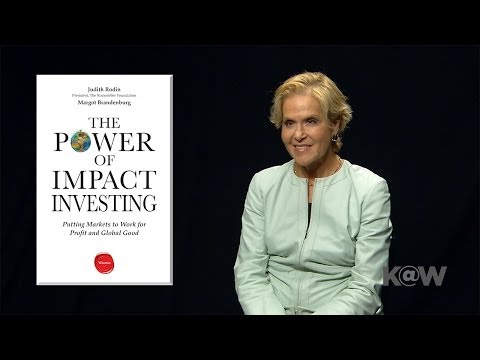
How Impact Investing Can Change the World
Ask about Knowledge at Wharton
Episode Description
📂 ESG
Brief Summary
Lisel Pritzker Simmons discusses impact investing strategies and the integration of social goals with financial returns at Blue Haven Initiative.
Key points
- Debunking the Tradeoff Myth. Lisel shares insights from the Wharton study, revealing that impact investors need not sacrifice financial returns for social impact.
- Investment Strategy at Blue Haven. Lisel discusses how Blue Haven Initiative selects investments based on social, environmental, and financial criteria.
- The Role of Philanthropy. Lisel reflects on how impact investing can free up philanthropic capital for more targeted uses.
- Exciting Trends in Impact Investing. Lisel expresses enthusiasm for the growing mainstream acceptance of impact investing among traditional firms.
Episode highlights
- Debunking the Tradeoff MythLisel shares insights from the Wharton study, revealing that impact investors need not sacrifice financial returns for social impact.“We found no evidence that supports the tradeoff.”0:53Mar 22, 2016
- Investment Strategy at Blue HavenLisel discusses how Blue Haven Initiative selects investments based on social, environmental, and financial criteria.“We really wanted to make sure that impact was a positive one.”2:47Mar 22, 2016
- The Role of PhilanthropyLisel reflects on how impact investing can free up philanthropic capital for more targeted uses.“Using business in this way helps to save that philanthropic money.”14:57Mar 22, 2016
- Exciting Trends in Impact InvestingLisel expresses enthusiasm for the growing mainstream acceptance of impact investing among traditional firms.“I get very excited about seeing this sort of going mainstream.”17:00Mar 22, 2016
Transcript
thank you for joining us my name is Stephanie Kim and I'm the associate director of community strategy at the Wharton social impact initiative and I'm very excited to welcome our guest today lisel pritzker Simmons whorton social impact initiative's 2015 nazarian social innovator and residence the Angela and David nerian social innovators and residence program host leaders who leverage business-based solutions to solve economic and social challenges in communities around the globe leel is a co-founder and principal of Blue Haven initiative a family office dedicated to investing for-profit and nonprofit Capital to advance solutions to social
environmental challenges leel thank you for being here thank you it's a pleasure so you supported wsi's impact investing research this year our report Great Expectations was released at socap last month and aimed to debunk the expectation that impact investors must always sacrifice Financial returns when seeking social returns we found no evidence that supports the tradeoff what was your reaction when you heard these results uh quite frankly I was not surprised I was very pleased to see um sort of the weight that Wharton can bring and the rigor that they can bring to the research but anecdotally from my own experience as an investor and um and
working with other investors we have not actually seen that tradeoff that I keep sort of hearing about from um more traditional investers and so um I was I was very pleased that my sort of anecdotal experience was now um had some some some academic rigor behind it um cuz I think that's one thing that's been um a real struggle in the impact investing space is uh traditional investors sort of uh believe this myth that there needs to be a tradeoff sometimes there can be but if you're seeking commercial returns or market rate returns chances are you can achieve those and also achieve your impact goals
as well awesome well let's talk about Blue Haven initiative with so many options for interventions and impact areas how did you decide upon your company's investment strategy and portfolio sure so Blue Haven initiative is the single family office um of me and my husband and um we sort of several years ago had a fairly traditionally invested um portfolio so was Diversified across asset classes according to a risk return profile that you know made sense for our family and our sort of capital preservation and growth um uh goals um but really didn't wasn't paying attention to what the social and environmental impact of those
Investments were and we decided that that was something that we cared a lot about um we care about what our what our investments are doing in the world uh I don't think that uh Investments are just neutral I think that um where you put your money and how you invest it makes a difference and so it has an impact and we really wanted to make sure that impact was a positive one on all three fronts social environmental and financial and so starting sort of with that premise the real challenge um for us and for our financial advisers is can we do that with all of the Assets in our portfolio not just to sliver but
actually with everything can we look across asset classes and um find best-in-class managers and strategies that meet our hurdles socially financially and environmentally um and so starting though with an asset allocation so again what makes sense for our family and then just finding managers that are also paying attention to their social and environmental strategies and so we started um we started with that approach and then populated the asset classes is uh once we found managers and strategies that that uh we felt proud of great so we have good managers that you can trust
and you know that they're thinking along the same wavelength as you what about the target areas there's poverty there's hunger there's Health there's you know a million different solar panels there's cook stoves how do you pick what to invest in so that's a great question and um different investors will give you all different kinds of answers and and they're all right it all depends on what your approach is for us we decided to really start with the financial asset classes and be impact agnostic as to what the sector was that that manager was working in um because for us I think it's very difficult with the size of portfolio that we were dealing with to
say we're going to solve water or we're going to fix women or um or to even set a certain geographic area it would be very limiting um to really try to find Best in Class managers um so with the majority of our portfolio we really said we're going to be geographically and uh sector agnostic and really look for diversity um across the financial instruments and strategies that they're playing with so you end up with you know you know Green real estate that has a steady yield we've got you know um uh private Equity Funds that you know obviously have a longer lockup but are focused on financial inclusion um there are some areas that are focused on
health um a lot of uh uh project Finance into renewable energy projects I would say the environment is probably one theme climate change and environment that um we have a pretty heavy exposure to Across the entire portfolio um so with the sort of the majority of of of the portfolio we really we want the managers to pick the area and strategy from the impact standpoint so exposure to impact um really was more opportunistic than strategic however in our direct Investment Portfolio where we look at um sort of early and growth stage uh companies and make debt and Equity Investments directly into them there we have a very sort of focused strategy
around Financial inclusion uh and renewable energy in in East Africa particularly so what does it mean to have a very focused strategy is it just finding a lot of different companies that are doing similar things are you taking a more systems holistic approach what does it look like what we what we've done with our direct investment strategy is we started sort of with a premise um we were very interested in um in East Africa as a geography it's growing pretty quickly and there's a very high penetration of mobile money there which allows a lot of really interesting technology platforms to be built off of that high penetration
of not just mobile money but mobile phones in general um and the the fact that you've got a pretty large consumer base um that is extremely comfortable transacting over mobile money the highest penetration in the world you get lots of interesting companies that are popping up and and using that as a base for different kinds of financial services platforms um I personally have a background working in micro finance and so really good financial services for consumers that are um underserved with Good Financial products I have seen firsthand what kind of a difference that makes being able to have insurance products to cover a funeral of a loved
one can keep a family above the poverty line um in a pretty significant way um being able to access savings accounts being able to access loans that are appropriate for your business and appropriate for your own cash flow needs um are uh make a very very big difference in somebody's life and so for me naturally I'm inclined to look at financial services and then the technology platforms that can help to disintermediate and lower costs for those consumers um that's an area I have deep passion around and as a financial investor makes a lot of sense you know I'm not coming into this with a deep background in how to develop wind turbines sure you know but financial
services and products I get I understand um I understand those business models and so um as an investor it makes sense for me to play there and I think it's an area of sort of Deep Impact so East Africa um is good geography again with the mobile money um there's very high demand and um we we have seen a lot of innovation happening there right so you have the asset managers you have the different strategies that they're all choosing to take based on what they see makes sense for the asset class that they're managing you have a really focused uh F you have a strong focus on certain interventions that you see working and proven to work and that makes sense based on your interests and
competencies rolling it all back up again to this idea of financial return and desired impact how do you make sure that happens well we do our very best um to measure and to monitor um and a lot of it is based on intentions so if we're invested in a certain fund manager that says well we would like to have this kind of mix of Muni bonds that are working and underserved communities or this kind of mix of corporate bonds that are um uh you know lending to corporations that have very high ESG standards um then did they meet those targets really um on the on the social and environmental side and then of course what's happening with the benchmarks that they're that they're um
tracking against and so really did you do what you say you were going to do and for me as an investor did my money participate in what you said it would participate in um and you know hopefully the answer is yes and so we track against against those things and it's the same thing with with our with our companies directly as well um one of the wonderful things about the direct investing and with the companies that we're targeting um we look for companies where the impact is embedded in their business model so the more they scale the more they grow the deeper our impact is um and so we tend with those companies to be even less Hands-On on the impact side
because really what those companies need are to be you know operationally totally streamlined and efficient and grow as sort of as quickly and as rapidly as they can and then you know by default our impact is is deeper and we're there though if there are if there are decisions that companies make to Pivot away from the impact we're there to try to help keep them on track but um so far we haven't found a lot of that and you know at Wharton we love seeing those types of companies where the impact is baked into the business model it's not a campaign it's not something on the side
and you know the slogan that we've used many times is that business for good is good for business it is and actually with the um Great Expectations with the Wharton study that came out a lot of that was around preservation of mission on exit um for those companies and and did managers and and did underlying portfolio companies think that their mission was compromised upon exit and the answer is no really because if they were to Pivot away from from the impact piece their Core Business would probably change right and their consumers wouldn't want that right and so it's that's the thing is that really you really can have those things in alignment um and that's what I think is
so exciting about the space and why I think it's it's growing as quickly as it is so at the end of the day we're all working towards a similar vision of a world you know without poverty without hunger preventable diseases Etc impact investing is a growing vehicle to address that but we're still working in a world with a lot of traditional philanthropic models traditional philanthropy charity how do you think that practice of philanthropy will evolve as impact investing continues to grow well I think that that I mean as you said there are there are lots of different kinds of tools um that that people have in their tool belt to try to attack some of these problems and impact
investing is one of them and at Blue Haven so we engage in you know commercial rate return market rate um impact investing there are foundations that are happy to take concessionary returns um and that's wonderful and that's needed and then of course there's straight grant money um that you know is not seeking any kind of financial return but hoping to you know uh expand the environmental and social return of that capital and I think that all of these tools can play well together um but for me what I think is exciting about people looking at business models and um sort of financial tools to try to advance some of these
social and environmental goals is it frees up some of that philanthropic Capital to do actual Grant work so sometimes I think that and and over the years particularly you look at um some of the development Aid models you've had philanthropic dollars or development dollars that are um being used for something a business would be better to solve um and it would be more scalable it would be more sustainable and also it would be something that people actually want people aren't going to buy something that they don't want um and so you've seen a lot of different kinds of weird products and widgets out there in the market Market that have been developed in you know some Lab in
Cambridge Massachusetts and shipped over to Uganda and actually nobody really wants it or uses it after 6 months well if people actually have to buy something you know we try to make it as low cost as possible they're going to tell you really fast the market will tell you whether that is useful to them or not and so anyway I think that that using business in this way um helps to actually yes save that philanthropic money from being I think not so strategically dispersed and use it for things that only philanthropic Capital can be good for and I think things like that are you know disaster relief um Refugee crisis I think a lot of Education hate to I hate to denounce all
of my edtech investor friends but I think I know I think that um a lot of education is still really needs to be Subs ized um and I mean there's a myriad Arts things that the market way undervalues um Arts music uh are I think are always going to need that philanthropic capital and hopefully it can impact investors can help to free up some of that so that it really goes where it needs to go what's next in the impact investing space What are you excited about what does it need I think what I'm really excited about is starting to see um more and more more um sort of traditional investment firms and larger Banks um instead of doing impact
investing sort of out of their CSR or marketing departments actually it's sort of moving into products and services and they are starting to devote internal resources uh to their staff to try to get them up to speed it's not sort of that cute thing that's happening over in the corner in philanthropy y it's it's starting to move um into the more mainstream parts of the bank um I think a lot of that has to do with sort of this kind of big Millennial push for it um you're starting to see more mbas get incredibly excited about it and I think the banks know that and if they're going to recruit the best talent this generation really wants to see both sort of profit and purpose happening at the
same time their standards are higher um and so uh I get I get very excited about seeing this sort of going mainstream um and I get really excited about um particularly with family offices uh not having such a bifurcated approach not having your investment vehicle over here making money and then you move it over here and you give it away um that seems very inefficient to me so I like having those two sides of the balance sheet start to come closer together um and that I think is really exciting that is exciting weel thank you for for being here thank you this was wonderful [Music]