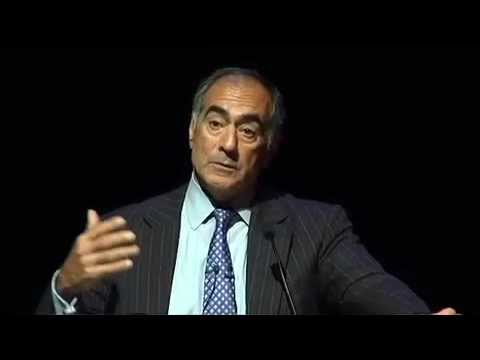
Franklin Allen on Lessons from the Subprime Crisis
Ask about Knowledge at Wharton
Episode Description
Wharton Professor Franklin Allen takes a long view of the subprime crisis, drawing on an international perspective of financial services.
Brief Summary
The episode analyzes the property bubble's causes and the financial crisis implications, focusing on the Federal Reserve's role and global bank risks.
Key points
- The Property Bubble. Experts agree there was a significant property bubble fueled by low interest rates.
- Global Financial Risks. Concerns arise over the stability of banks in Europe and their potential impact on the US.
Episode highlights
- The Property BubbleExperts agree there was a significant property bubble fueled by low interest rates.“There was a bubble in property prices.”0:26Sep 17, 2008
- Global Financial RisksConcerns arise over the stability of banks in Europe and their potential impact on the US.“If they go down, the sequence of events can happen in real time.”11:20Sep 17, 2008
Transcript
so what's the cause of all this well the major cause as as both of them have already said is the property bubble I think there there's little doubt now that there was a bubble in property prices and I I would put that to a large extent at the door of the Federal Reserve when they reacted to the recession following the collapse of the tech bubble and then the 9/11 events they kept interest rates low for a long time and I think that's what sparked the bubble and helped fuel it now one interesting question is what point should we have realized that there was a bubble now Jeremy gave this data that if you look back in the US you find that there's no year that the
average across the entire country has fallen since the Great Depression so there was about 70 75 years of data suggesting that house prices on average couldn't fall and that's the data that was used by the rating agencies and many others now the interesting thing is that about the same same kind of time 2004 2005 2006 if you'd gone to the new stand and bought a copy of the economist what you would have found is many articles suggesting that house prices were getting too high and there might be a bubble and by the time 2006 came they were definitely saying that and they used a number of very simple metrics of course if you look outside the US it's quite clear that there were a lot of
property bubbles Jeremy mentioned briefly Japan I'll talk about that in a minute but property prices in Japan fell 75% roughly speaking over 15 years there were also these huge bubbles in Hong Kong and Singapore and many other places in Asia so there were a lot of places where property prices had fallen but not in the US and one of the big problems is how do we extrapolate evidence from other countries to our own situation so in any case we we had the bubble it it started to burst what happened then well property prices started to go down and default rates started to go up on
the subprime now that's a problem but you know relative to Assets in the US it's not such a huge problem in terms of of um dollar amounts now back in July of 2007 people suddenly realized that these amounts that were falling these subprime they were much riskier than people had realized and so they started to rebalance their portfolios now there was a period of a few days in July when prices of AAA tranches of subprime securitizations fell dramatically and that that when things started to go B bad because these were assets which were thought to be extremely safe not much different than treasury Securities and
people had had relied on that in the AAA tranches now they fell dramatically and the question is what was happening then was that because we were learning about default rates or what now my own view is that something somewhat different was happening there was some learning about default rates but in fact what I think happened was that the liquidity capacity of these markets which were fairly thin and IL liquid was overwhelmed and the prices fell when it was overwhelmed now normally you say it' be like Finance 601 today well the prices fall to L too low people should go in and Arbitrage that and hold them and then they'll make a profit now the problem with this was
that the link between fundamentals and prices had been broken and it was broken for long enough that it became a risky Arbitrage now Jeremy was describing how the investment Banks were doubling down they thought that this these assets were underpriced so they bought more of them now of course what happened was the price went down further and caused a lot more problems now the reason that I I think that this was a problem with the Arbitrage pricing going wrong was it wasn't just subprime AAA securitizations that had problems within that period of a few days in July many other securitizations with completely different fundamentals also had problems so commercial backed
securitizations the AAA tranches of those also started to fall and credit default swap securitizations on the riskiness of firms they also started fall and the co- movements spiked dramatically so the problem was the prices got out of line and they have stayed in my view out of line because it is a very risky Arbitrage and that's exacerbated the problems considerably now as we saw there have been these effects so first of all the interbank markets froze and so the the central banks started to try and unfreeze them they cut interest rates they did a lot of things now it wasn't really until this March that
things really got serious in the sense that we started to see failures and be Sterns was a very interesting case I think the FED probably did the right thing there they didn't know much about their positions and they were faced with a weekend to try and find out it's not enough so what they did was play it safe what they were worried about was contagion risk that the notion that if be Sterns had failed a lot of other places who had claims on be Stern would have suffered a a problem they might have started to sell assets to try and deal with some of those problems that would have caused asset prices to fall further and we get into this meltdown and things go bad with a whole chain of
bankruptcies now after they rescued best ears they gave access to the other investment Banks and as uh as is well known I think the quidd pro quo for that access was that the New York fed got to put examiners in there and they were allowed to look at all the books so when Leman came along they knew pretty much what their positions were and what the effects of allowing them to go bankrupt would be so this time they were able to let them go without too much risk of systemic risk of this contagion that we're talking about now Fanny and Freddy Joe talked a lot about that my own viewers they had to act there that is such a major player
in the property markets they needed to stabilize that and what they did there was appropriate I think one of the things that I learned is that uh th is a very smart man and on Sunday when he realized that uh there may or may not be a deal done with Leman what he should do is to prevent meril Lynch being on the Block this week is to just go and see if anybody wanted to buy them and they did and he got a very good price for Merill so this week is AIG now I haven't kept I've been teaching all day so I don't know exactly what happened uh Jeremy seems to be more informed I I don't think they've done a deal from what he said and from what I understand
but he hasn't been final it hasn't been finalized so we'll see what what happens with that again the feds are going to be worried about this contagion risk I'm not sure they know enough about uh aig's positions to make a snap decision and usually in those positions they do the risk averse thing which is to uh to bail them out or to make sure that there's no spread now is this the end well I don't think so I think that we will have problems going forward forward in in the US so if you look at uh credit default swaps on City Group they're beginning to rise dramatically and they may be next there may also be some of the smaller
Banks like Washington Mutual and maybe wacovia and some of these other ones that have problems but I think the real risk is overseas and particularly in Europe so if we have a problem here even if City Group which is a massive Bank goes down the treasury can step in and arrange a bailout make sure that the systemic risk isn't realized now the big problem in the world today though is Big banks in small countries and in Europe there are many of them so in particular if you think about Belgium and the Netherlands first of all they have massive Banks and the one which has lots of problems at the moment is Fortis so Fortis will come
come under scrutiny fairly soon in the next few weeks now you say but isn't Belgium part of the EU the answer is yes and they have a a memorandum of understanding about how things will be done but they don't specify exactly how burdens will be spread out and what that means is that if Fortis gets into trouble for example there's going to be a delay and that's going to lead to this kind of contagion risk that we've been talking about but the real country that is problematic in my view is Switzerland they have two massive Banks which are UBS and credit Swiss and they have assets which are six times the GDP of Switzerland UBS has lots of problems you
know if you followed the problems about the tax avoidance and so on they have a lot of ethical issues there they've also had iner trading scandals in various countries and so on they've had a lot of problems with subprime loans and a lot of problems with their Risk Management Systems now if they have a big problem the Swiss government cannot afford to bail them out and that is where the problem comes because if they go down the kind of sequence of events that the FED talks about when it justifies rescuing bare Sterns that can happen in real time in Europe and then spread to the US and to other parts of the world and I think that's the real danger now hopefully it
won't happen hopefully Jeremy's right everything will now calm down but I think that's that's the worrying thing what Joe was talking about is also very worrying property prices have got a ways to go in my view if it spills over into commercial property that's a big problem and then we get into the other major problem facing us which is the feedback effect all this is assuming that things don't go too bad in the real economy things haven't gone too bad yet but they may well do if people start losing their jobs if we have a lot of dis more disruption in the financial system and that's the real worry now Jeremy
mentioned Japan my own view is Japan actually didn't do too badly you know if you want to look at the way not to deal with this the ultimately bad example is the Great Depression when unemployment went to 25% or so and it lasted for many years now if you look at some other instances if you look at Asian crisis again or you look at the Scandinavian crisis they got into deep recessions Japan didn't it stopped growing it had the last decade but it didn't have ordinary people suffer great pain now you know the the interesting question is what are the in feedback effects how far is this going to spread
and where are we going to be 5 to 10 years from now