AI in Finance: How to Approach Financial Regulation
Episode Description
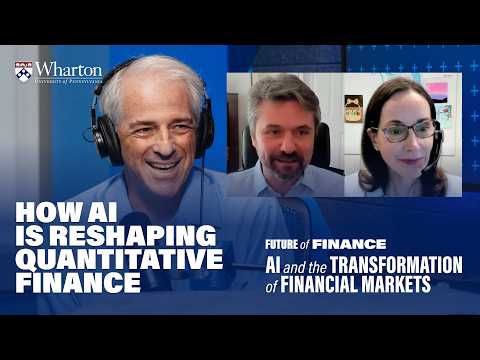
"The Regulatory Challenges of AI in Finance": Episode 3 of 4 in our "Future of Finance" series, hosted by Wharton School finance professor Itay Goldstein
Artificial intelligence is transforming the world of investing. Financial leaders are looking to AI technology to identify and create new sources of value – but at what risk?
In this episode, host Itay Goldstein discusses the benefits of AI in the investment industry – and the ways AI might lead to unintentional collusion. Goldstein is joined by Tobias Adrian, Financial Counsellor and Director of the Monetary and Capital Markets Department of the International Monetary Fund).
----- The Wharton School of the University of Pennsylvania is committed to sharing its intellectual capital through Knowledge at Wharton, the school’s online business analysis journal.
Launched in 1999, Knowledge at Wharton offers free access to:
- Articles, podcasts, and videos highlighting Wharton faculty research and analysis of current business trends - Interviews with book authors from Wharton School Press - In-depth series of curated content like Wharton Executive Education’s Nano Tools for Leaders - A searchable database of more than 10,000 articles covering all aspects of business - A weekly newsletter that delivers Knowledge at Wharton insights directly to your inbox
Visit the Knowledge at Wharton homepage: https://whr.tn/3qUpSBE Subscribe to the Knowledge at Wharton YouTube channel: https://whr.tn/3DEAgAU 📂 Finance & Accounting;Fintech;AI 🏷️ Future of Finance;PTW Related Articles
Brief Summary
Itay Goldstein and Tobias Adrian discuss AI's impact on finance, focusing on opportunities, risks, and regulatory challenges.
Key points
- AI's Impact on Finance. AI is reshaping finance through algorithmic trading and generative models, but risks remain.
- The Black Box of AI. Generative AI presents challenges in understanding decision-making processes and accountability.
- Regulatory Challenges Ahead. Regulators face difficulties in defining and quantifying the risks posed by AI in finance.
- AI Regulation in Finance. Exploring the need for explainability in AI-driven decision making in finance.
- Fairness and Ethics in AI. Singapore's principles focus on responsible AI usage to combat bias.
- GDPR and AI. The adaptation of GDPR to AI practices enhances data protection.
Ask about Knowledge at Wharton
Episode highlights
- AI's Impact on FinanceAI is reshaping finance through algorithmic trading and generative models, but risks remain.“AI is promising to change the way that the financial industry works.”0:26Nov 25, 2024
- The Black Box of AIGenerative AI presents challenges in understanding decision-making processes and accountability.“Generative AI is a bit of a black box.”15:18Nov 25, 2024
- Regulatory Challenges AheadRegulators face difficulties in defining and quantifying the risks posed by AI in finance.“The risk management around using generative AI is certainly a key priority.”15:41Nov 25, 2024
- AI Regulation in FinanceExploring the need for explainability in AI-driven decision making in finance.“AI in finance must be explainable to mitigate risks.”28:00Nov 25, 2024
- Fairness and Ethics in AISingapore's principles focus on responsible AI usage to combat bias.“Responsible usage of AI systems is crucial to avoid bias and discrimination.”28:31Nov 25, 2024
- GDPR and AIThe adaptation of GDPR to AI practices enhances data protection.“GDPR adapts to AI practices for data protection and privacy.”28:47Nov 25, 2024