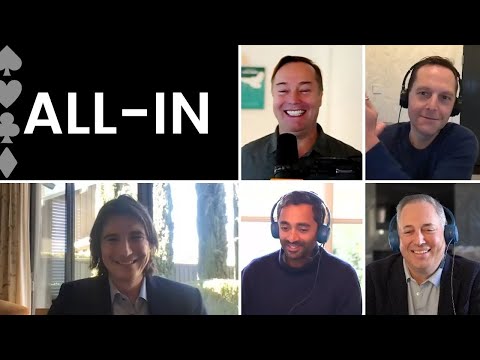
Tekedra Mawakana | All-In Summit 2024
Ask about All-In Podcast
Episode Description
(0:00) The Besties welcome Waymo Co-CEO Tekedra Mawakana (1:43) Joining Waymo, breaking down their approach vs competitors (9:57) Focus on reducing deaths, impact on Uber, creating an AV ecosystem (16:44) Thoughts on Cruise's issues in SF, operating at scale, unit economics (22:09) Selling to carmakers, US focus vs international (27:51) Hardest challenge while leading Waymo
Follow the Tekedra: https://x.com/TechTekedra
Follow the besties: https://x.com/chamath https://x.com/Jason https://x.com/DavidSacks https://x.com/friedberg
Follow on X: https://x.com/theallinpod
Follow on Instagram: https://www.instagram.com/theallinpod
Follow on TikTok: https://www.tiktok.com/@theallinpod
Follow on LinkedIn: https://www.linkedin.com/company/allinpod
Intro Music Credit: https://rb.gy/tppkzl https://x.com/yung_spielburg
Intro Video Credit: https://x.com/TheZachEffect
Referenced in the show:
Brief Summary
Teedra from Waymo discusses autonomous driving advancements, safety measures, and market expansion strategies in this episode.
Key points
- Driverless Taxi Revolution. Teedra discusses the launch of driverless taxis and their mission to enhance safety.
- Scaling Autonomous Rides. Over 100,000 paid trips per week demonstrate the rapid growth of their service.
- Unique Position in Industry. Teedra reveals their leadership in level four autonomous driving on public roads.
- Safety First Approach. Teedra emphasizes their rigorous safety culture and commitment to reducing road fatalities.
- Public Acceptance Challenge. Teedra addresses the need for public readiness in accepting autonomous technology.
- The Future of Autonomous Cars. Exploring the integration of self-driving technology into everyday life and its potential impact.
Episode highlights
- Driverless Taxi RevolutionTeedra discusses the launch of driverless taxis and their mission to enhance safety.“We're on a mission to build the world's most experienced driver.”0:20Sep 18, 2024
- Scaling Autonomous RidesOver 100,000 paid trips per week demonstrate the rapid growth of their service.“It's completely true, it's over 100,000 paid trips per week!”1:15Sep 18, 2024
- Unique Position in IndustryTeedra reveals their leadership in level four autonomous driving on public roads.“We are the only company doing level four driving on public roads 24 hours a day.”8:48Sep 18, 2024
- Safety First ApproachTeedra emphasizes their rigorous safety culture and commitment to reducing road fatalities.“We are obsessed with safety.”9:40Sep 18, 2024
- Public Acceptance ChallengeTeedra addresses the need for public readiness in accepting autonomous technology.“How prepared is the public to accept that this isn't going to be a Panacea?”11:10Sep 18, 2024
- The Future of Autonomous CarsExploring the integration of self-driving technology into everyday life and its potential impact.“We want people actually integrating this into their lives.”19:44Sep 18, 2024
- Unit Economics and ProfitabilityA deep dive into the financial viability of self-driving cars and their market potential.“What's the breaking point where the unit economics make sense?”20:52Sep 18, 2024
- Challenges of Weather ConditionsDiscussing the technological hurdles faced by autonomous vehicles in adverse weather.“We've tested in snow and ice; we don't have any deployments there yet.”27:16Sep 18, 2024
Transcript
hop in a driverless taxi with the Google owned self-driving company whmo opening up its Robo taxis to all users in that City the technology of course is hugely expensive alphabet's autonomous vehicle unit weo completing another major round of funding Teedra has served as co-ceo at whamos since 2021 we are on a mission to build the world's most experienced driver and make it safe and easy for people and things to get where they're going this is not a move fast and break things this is a move with great great iterative pace and focus on [Music] safety please uh join me in welcoming to kedra from weo to the stage hi thank you for thank you it's a
pleasure thanks for coming thank you so much Hi D thank you tea thanks so much for being here yeah thank you uh tequa has been co-ceo of weo since 2021 where she leads the company's business operations and expansion in autonomous driving recently weo has been reported to be completing I don't know if weo put this out or if it wasn't been used but over 100,000 pay trips per week now is that is that public is that like a true thing it's completely true it's over 100,000 over 100,000 week week per week yeah that's awesome and um we can now see wh Mo's autonomous ride haing Services in Phoenix La San Francisco in the Bay Area Austin and I think on X you
announced 5 billion an additional committed funding from alphabet I don't know if that was recent to support wh's expansion it was recent congratulations and um so thanks for joining us uh the weo story started a long time ago as a Google X Project when did you join and how did you kind of become coo yeah thank you um so weo started as the Google self-driving car project back in 2009 and uh actually my co-ceo was one of those founding team members Demitri doov and in 2016 at the end of 2016 we spun out and sort of became wh um and that's when I joined um at that point it had been determined that the technology was on a good enough path to start to think about commercialization and scale
um and so the funny the fun thing about joining a moonshot is you know I came from Big tech company so I'm like oh product Market fit like it's all there I'm going to join and we're going to scale and the reality is it was an opportunity to learn how much this is a process of discovery um how much this is a process of figuring out not only the technology roadmap but also the external environment and at that time I had been head of policy at a lot of companies and I joined under the idea that if the technology works the market opportunity would come from being able to open markets and so that was super terrifying to me because if you're at most large
tech companies doing policy work you're actually trying to avoid costs or you're trying to defeat legislation that's harmful but this was really the opportunity of like how do you Usher in this amazing technology and so that's when I joined and then I um was asked by my prior CEO to help launched the first Market which was Phoenix back then it was Chandler um and we launched that back in 2017 and we've been since 2018 a lot of people don't realize we've had a 247 ride hailing service um Around the Clock it was in 2020 during covid though that we removed the driver from behind the wheel so we have the weo driver uh that's driving
the vehicles at all time but there's no human behind the wheel and we've been offering that service now we're almost at four years 24/7 not only in Phoenix which was a 315 square m mile territory but also in San Francisco and now here in La so in that sort of ushering in from Market one to this role I moved through this coo role um and that's when we actually remov the driver and that's you know it was the we're the first company that's done that and um so it was daunting and I think that's one thing I love about wh we call our team wonuts is you just have to every time get to this point of determining what's good enough uh what's safe enough yeah and then make that leap and then learn
because you can't learn until you get to that next point and so of course we have rigorous safety culture um but it was in that time that I was coo and then in April of 21 I moved into the co-ceo role with Demitri so now now that it's scaling 100,000 paid rides a week maybe we can talk a little bit I mean Jason SP a lot maybe starting with security would be an interest safety rather would be a really good idea um you've done it seems like millions of rides now no fatalities correct that's right um but there have been accidents so when you look at the the accidents that have occurred how
often does an accident occur and in what percentage of the time is it just somebody running into the weo versus the wayo running into somebody else yeah so we've done 2 million sort of paid rides um so when we think about we just released this week our safety Hub so this you're sort of tapping into an issue that's really important what we've been able to determine as of June of this year with over 22 million what we refer to as Ro miles those are miles that are fully autonomous uh we've been able to have 83% fewer airbag deployments which of course is important because those are high impact um and 74 or 73% fewer injury causing crashes now that's what we're focused
over a human over a traditional traditional human meaning the counterfactual in that area at that same point in time exactly via insurance claims and other data ex we're not we're comparing in San Francisco not on highways there Apple Apple's comparison we're comparing in San Francisco or in Phoenix okay great because this is the next piece which is you're not yet on highways that's right we're testing on highways in Phoenix and San Francisco saf drivers with employees and a human behind the wheel at times and maybe you could explain to us when why you're taking that approach cuz in my experience driving a Tesla since the beginning with full self-driving and
autopilot before that um it seems like it's better on the highway than is on local streets where you have people jumping out and weird things that occur on the highway you very rarely have a run into a weird thing it's it's pretty ABC so I I would think it was the opposite but is it because speed kills what what's the thinking there so I think so just for everyone to orient um when you think about the levels of autonomy we are only focused on level four and above level four and above means you do not need a driver's license nor do you need to sit behind the wheel so when you're focused on tackling the hardest challenge first it's really important to for the driver the weo
driver to ingest dense Urban environments because that is where the driver is going to learn the most sitting on freeway seeing the same thing every day can be predictable it's not entirely predictable but it's not additive to what the machine learns that's a great answer so we're trying to learn as much as we can learn and we've always from the beginning been focused on freeways it's just that freeways isn't actually how the machine learns the fastest in the most sophisticated environments but because you brought up you know sort of a level three or two or one system I think it's also important that for systems where you need someone to sit behind the wheel you can have a
completely different approach to this technology but we're really when I don't know how many of you here have had the chance to take a away my ride here in La it actually includes this campus where we're sitting right now but we you don't you can't sit behind the wheel so there's no ambiguity you sit in the passenger seat or you sit in the back seat so let's talk about the lar versus camera bet elon's been pretty clear hey you don't need lar it's a waste of money the lar on Whos I believe is still in the $1 to $220,000 in incremental class am I ballpark correct I not sure oh okay um so with that as you scale costs go down yeah of course so who's who's right I mean are you
using the liar and is that a critical piece of this or do you think eventually hey the cameras are seeing 360° they have higher Fidelity than human eyes so and if humans do a great job and you just have to beat the humans at driving why even have the liar what do you think so obviously we have conviction that we need liar radar and cameras uh we have all three it's given us the opportunity to scale at this point we're the only company that's doing level four driving on public roads 24 hours a day it's very different to get to the place of a demo we learned that ourselves back in 2015 and 16 and 17 we had an autopilot Highway um product we allowed employees at the time
Google employees to ride in that product we told them to pay attention we told them you have to be alert and be prepared to take over what did they do they do we're human we want to do other staff when we're in the car like I want to be on the phone I want to get to that meeting I need to send that last email I need to check whether or not my son's doctor's appointment is tomorrow and next Thursday we're distracted and so what happens the thing's beeping at you it's telling you to re-engage and pay attention and what we learned is that that's not a way to improve road safety and so the question is what's the end goal is it to improve Road Safety or not
for us as a company we are obsessed our our culture is about safety this mission is about safety and we want to expand the number of people who have access to Mobility options if you need a driver's license then it's just like every other Mobility platform you have to be behind the wheel can I sorry go ahead I'm curious about when this flips from a technology problem and a go to market problem to one of Public Health um because that's a staggering fact and you know we all know people that have lost somebody close to them whether it's just a road accident or the dunk driving or to you know I don't know
if you guys saw anybody follows hockey but the you know Johnny hocky who was killed with his brother the day before his sister's wedding by a drunk drive this is like so avoidable so what does it take for a politician or a group of of politicians and I don't even know at which level this decision would get made where they say okay we've seen enough that should be the only solution and are you pushing for that so we are pushing to make sure people who put autonomous vehicles on the road have to demonstrate their safety case we think the worst thing that could happen is introducing a new technology that doesn't actually improve this problem because it'll kill
the whole industry because it'll kill the whole industry and the State of Affairs 4 ,000 Americans 1.35 globally dying annually from Road crashes is avoidable and so the challenge that we have to tackle with a lot of humility is how prepared is the public you know humans can kill other people how prepared is the public to accept that this isn't going to be a Panacea and it's not going to be perfect you didn't hear me say 100% 100% 100 right was 70 there'll be a small error R there's going to be a small and so that's the work that we're doing which is we have Community Partners Mothers Against Drunk Driving national Safety Council a host of organizations who've been trying to
tackle this issue who we partnered with early because it's it's actually in both of our interest to figure out how to tell the story that if this technology can reduce 60% of the uh fatalities then it's worth the exposure to the risk are you on any sort of internal shock clock meaning there must have been a moment where you convened a meeting or you guys had a meeting and you said all right we have enough data let's go we're going to pull the guy out of the car or hey this is it we're ready and then you show it to regulators and they say okay is there a set of these really important
Milestones that we're going to feel like goes to other cities like is it only grid cities where this works like so where do you go from here yeah I hope I hope that what over time you start to experience is one because we are you know super focused on safety you'll see us scaling um and because we're building a driver and not a car you'll see a scaling in a number of ways so we have Partnerships right now we have a partnership with Uber in Phoenix why are we doing that people are like oh my gosh I got my Uber Eats in AO like why are you all doing that it's because we're building a driver and so we're trying to figure out all of the ways in which this driver
could be applied to future use cases and so over time you're certainly going to see us announce new places but you're also going to see like in San Francisco we launched a 24-hour service in a limited territory and over time we've expanded that territory is a step functioning complexity to go to cities that are more how would I call it more chaotically City planned it is definitely an opportunity for the driver to learn more and so coming to Los Angeles for example was more like being in Phoenix going to Austin exactly exactly going to Manhattan we will certainly benefit from our work in San Francisco same thing with DC start with the GD cities and work your way into
more complex Series so can I follow up on the um on that that last point I I I have a friend who's the third or fourth investor in Uber and um and he he's uh he's very worried that once this product scales there's not really giv me a need for Uber anymore right why would you need Uber if you can just summon the robot car directly or the robot driver whatever you want to call it right driver car whatever I mean doesn't this logically disrupt Uber at you know once it's at scale I think um well they're a current part I said we have a partnership with right I mean I have we have a partnership your friend hasn't sold enough
share your friend's doing just fine we have the partnership with Uber because we think it's important for us to create an AV ecosystem around this technology like this isn't going to be we've created technology we're going to figure out everything ourselves like that would be foolish and very expensive and we'd never find ourselves profitable but having companies that are experts in integration having Automotive partner you know we have we're not building the car having network Partners having Fleet operating Partners public officials like there's a lot that is built around us and these are the early days the early Innings and so that's part of it is
learning in the I'd say five years ago people would say to me you know Network operators would say oh this is exactly like we know how to do this well this is a constrained Supply it's not a supply you just sege this is a driver that you need to understand actually how to operate with and so I think we're going through those steps to learn together and so what I would say is there's room for a lot of people under this is the is the insurance Lobby in the insurance industry a proponent or do they would they try to constrain your progress so one of the largest uh reinsurers in the world swisser is actually been doing our safety yeah they
would want to underwrite this yeah but I'm talking about more like the Geico of the world same I think they're very eager to get the data sets that we're releasing like we released set 20 uh safety papers last year they're all wanting to understand what the actual impact of this technology can be because you know one of the things I think that's hard for us to grasp as as humans or at least I'll say for me I don't like speaking for everybody the you know we drive in a week more than a human drives in a lifetime and you can say that as a company that runs fleets but we're the only company where it's one
driver and that's not like that's not the way the world is organized right now right FedEx has a lot of drivers all of you who have Teslas have a lot of drivers like everyone has a lot of drivers and all of those drivers have different capabilities this is one driver learning all the time in unison and so like what can we demonstrate that's possible and it really goes back to your other question of like what do what are policy makers 5 years from now really going to want to know and how will they be able to derive from what we're doing today where were you when you heard the news of Cruz dragging that woman in San Francisco 20 feet and then where were you and what
was your reaction internally to when you found out Cruz covered it up um I don't remember where I was uh when I learned but I um you know it's we're here to improve Road Safety so it was pretty um upsetting I think to me and the whole org I think as we learned about the lack of transparency like our view has just been be transparent it's not Perfection like it's technology yeah but you're considered they contemporary and you have a different approach you would never cover it up um they obviously had something dysfunctional did that set the industry back significantly how are Regulators talking to you before and after that if
differently if at all it definitely led to more scrutiny in San Francisco because there was already an active and continues to be a fairly active voice against technology in San Francisco and so we needed to continue to engage which we were already doing provide more data which which we're of course willing to do and I think over time what we'll see is you know we have to get to a place where the amount of data that we're providing actually advances the safety concerns I think at that point it was just providing a lot more engagement so if the mission is to reduce those debts and to really scale this technology Uber is doing a quarter billion rides a week
uh you just raised five billion it's a big number uh that gives you another 50,000 cars um which is a fraction of the rides in but one city it seems like you need a lot of Partners in the car space to build this so wouldn't the best strategy be to license this technology to every car maker and then allow the Ubers the lifts the door dashes um and Fleet managers to handle cleaning the puke in the back of the cars and putting the air in the tires because I don't think wao wants to be in the back of that car cleaning up the puke and the and doing the air Tire right there has to be somebody who manages all that so so maybe talk a little bit about that possibility of and
even a more beautiful thing would be for you to open source it so has there been a discussion internally about open sourcing this technology so I'll start at the beginning I think what you just described is exactly the AV ecosystem that I'm talking about and yes out of necessity and because we are the I mean whoever was first was going to need to create this it doesn't exist right so we're doing that um I think the second part of what you're talking let everyone do what they're good at like we're good at building this driver there's though a period where we have to become really good at what does it mean to operate at
scale and that's the that's where we are right now what does it mean to operate at scale what does it you know technology can work and not be delightful not be reusable not be repeatable and that you know we don't just want people having tourism rides we want people actually integrating this into their lives and we just did a a ux study and we found that a third of people use the service in San Francisco to go to their doctor appointments we're like that feels like real life and 36% uh we using the vehicles to go to local businesses which is also real life and so these are the kinds of signals that we're trying to get as far as like personally Owned Cars we've always said
as part of our strategy from the beginning that we would start with ride hailing and local delivery and that eventually we would make our technology available to um Automotive companies so that this you know at some point you'll find wayo cars sitting on showroom floors for sale oh wow so you you we could go buy one and then put it into whatever Fleet we want yes what does it cost to make one of these cars today and where do you see it in 5 years yeah and just I guess on that question where's the Tipping Point Unit economics so if you look at on the ride hailing business based on I know a lot of people drive during rush hour and then they don't
need rides the rest of the time so there's a lot of excess inventory sitting around so if you look at the utilization of a car over its lifetime and the cost of the car over the lifetime what's the the breaking point where the unit economics Mak sense yeah um so your question of cost of car we just don't break it out since we're not um reported separately for alphabet we're just bundled rumor is a buck 50 right now it's close Okay fck 25 not commenting on rumors not commenting on rumors wa wait if that's that's just the um the system for self-drive the car plus the system The Car Plus but what 125 to 150 is the rumor rumored cost for the car today
actually is like comment on the rumor well but but that's I mean that's obviously a lot more than a Tesla right so yeah t 40,000 50,000 yeah so do we do we know ballparks here what can we say keep on so fun we're just we're poker players so we're trying to read you and bait you and it's not working we didn't know you were a Jedi so so so sorry let me just ask is it about Reinventing the system or getting the next gen of the system before the unit economics break or is it about volume what's the breaking point of where the unit economics become profitable become positive um yeah not not going to get into that other than to say to you I is the thing I spend all of my time focus
on and we are on but there's a path there there's completely a path there well without getting into costs so is one of the plans here to sell this to you know all the car makers so that they can compete with Tesla because most of the car companies do not have the technical capabilities to develop their own self-driving it's just impossible so are you guys going to be like an oem to all the car makers so that they can provide self-driving yeah we've said sort of publicly and we've had Partnerships where we've made the technology available um it's a question of when you know when will a level four sort of product be available and interesting to Consumers at scale you
know that's part of the question but absolutely this is part of our strategy friend of mine can I that yeah of course I'm sorry friend of mine um who couldn't make it here um is an angel investor and Uber and um he uh was no uh if you look at the business outside of the United States actually if you look at Uber's business um there's a lot of opportunity in other markets and sometimes in other markets they will prove probably more able and open-minded to taking like the public health priority around these things so why such a heavy Reliance on America considering
the scale and the impr premature of Google could probably pull you into any number of markets anywhere around the world yeah so we really think about it as this sort of Learning Journey but it's also just where we started right I mean part part of the conversation we get to have now is what would if the driver was at this level of maturity where would we have started um that said we have Global aspirations we are always thinking about the does it just take one geography to prove this point or do do you view it the problem that way like it's like we're training we're training we're training and then at some point there'll be some City or yeah County
which point I just want to make sure I understand this idea where like you can prove that it's just so reliable and valuable and that you're saving just I I really care about that idea yeah to who who who would it prove the point to the people that would make the rules I guess yeah I think I hope I I don't know I think there's a lot of noise in the system there's a lot of confusion about full autonomy versus partial autonomy um there's not a lot of legislative activity that's informed by experts right so I don't know right like certainly It's My Hope and I think one of the things when you think about
certain countries around the world there is more of a nation state top- down approach to some uh regulations and so that could be easier Singapore yeah you prove it it's codified into law you launch um it had it that hasn't been the primary way we've thought about Market entri or opportunity but certainly one of the yeah are but as long as some markets adopt the rest of the markets will see and they'll fall behind and I mean you just have to penetrate some markets yeah from Google had amazing success with Android and open source so back to that open source question you must have had this discussion many times internally why not open source the technology and then provide you know the
premium Android to people who want want to pay and is that something on the road map because I hear there's a big discussion internally to car OEM just open sourcing the maps the software to make everybody contribute to it to just get this out quicker so where where are you at with those internal discussions that wayo give away the whole business yeah exactly no well I mean Android it's worked right I 20 billion in it's like let's just give it away well I mean but freedberg if you look at Android it's only gotten stronger right completely different I think that that was Defensive on search but not your answer no I like it when you guys answer each
other's questions cuz I get to learn what you actually want to see your answer we we fight a lot it's fine no it's fun it's actually fun for me um so feel free to keep so on the question of open sourcing that isn't something that we're spending a lot of time talking about right now let's talk about level six which I believe is inclimate weather and really heart yeah oh level five rather sorry um and I know when I'm in my Tesla it gives me a little warning hey in Clement weather and the FSD might be degraded you know extra attention time um how close are you you know to feeling comfortable with these things driving in snow ice rain or when that happens do fleets just pull over and
game over you know you have you can't use these this technology yeah we've uh been improving weather we've tested across 25 cities specifically for that so we had massive storms in San Francisco last year and we didn't take down the fleet like our fleet was able to handle all of the rain so rain and flooding pretty good rain May good because of like uh liar and radar maybe you said it okay fog snow ice um so we've tested in we've tested in snow and ice we don't have any deployments there but that's an area that we're learning fog we've been able to master that 280 no problem same thing with those
sandstorms in Phoenix that was an early like those are actually you know very challenging and then there swarms of birds in Phoenix like really and and heat right you have a machine brutal it's like it's like Revelation like there's a lot there's a lot and you know we're the only company that can pick you up autonomously at the airport right and so like is whole thing what has been the hardest um challenge for you as CEO I think we've heard I mean we've heard all these rumors about like cultural issues at Google or whatnot but you know I get the sense that you're much more separated in terms of building a much more Technical and specific culture but
what what have been the hardest challenges for you I think one of the hardest challenges was making we made such a big decision in going fully autonomous which is sort of the reason we're here during CO mean getting that person out the person from behind the wheel scaling this and so then bringing the culture back together to now scale so we just needed like we needed a minute to lock back in that's one of the things and the other one I would say is what you just said which is you know it's a brilliant team and the team works really hard but like bad things are going to happen in the real world with human drivers around our cars and the team takes that so seriously and so
that's it's it's like a it's like having worked at I mean I worked at a I know there too but like other kinds of tech companies I know every kind of company is stressful it's a different kind of stress When people's lives are completely and they personalize work yeah and so that's it's just a different level of stress and accountability responsibility differently because of that pressure or no you do when things happen in Industry you know we need people to sort of you know stay buckled in and believing that this is something that is worth it it's audacious it's hard but it's worth it and it and it's bigger most people come because they have lost someone like
they're very Mis can I be very honest with you it's it's an incredible framing you gave and I I totally missed it for so many years which is when you said we're building one driver I thought for whatever reason you were building an autonomous driving system which I I interpreted very technologically for a very long time but you're absolutely right you have one goal it's very clarifying actually the world's greatest driver one the world's greatest driver world's most trusted driver most trusted driver Teedra thank you forred yeah I mean incredible thank you so much yeah thank you it was awesome thank you so much