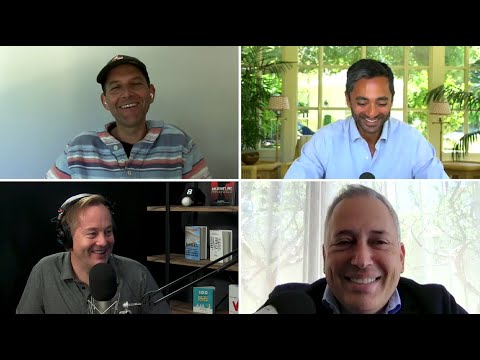
E7: California's collapse, how SPACs are opening the markets for growth stocks & more
Ask about All-In Podcast
Episode Description
Follow the crew: https://twitter.com/chamath https://linktr.ee/calacanis https://twitter.com/DavidSacks https://twitter.com/friedberg
Follow the pod: https://twitter.com/theallinpod https://bio.fm/theallinpod
Bestie recommendations: Chamath: https://www.amazon.com/Americana-400-Year-History-American-Capitalism/dp/0399563792 Sacks: https://taibbi.substack.com/ https://andrewsullivan.substack.com/ Friedberg: https://www.amazon.com/Godfather-Mario-Puzo/dp/0451205766 https://www.amazon.com/Titan-Life-John-Rockefeller-Sr/dp/1400077303/ref=sr_1_1?dchild=1&keywords=john+d+rockefeller+titan&qid=1599625893&s=books&sr=1-1 Jason: https://www.amazon.com/Fish-That-Ate-Whale-Americas/dp/1250033314/ref=sr_1_1?dchild=1&keywords=the+fish+that+ate+the+whale&qid=1599625909&s=books&sr=1-1 https://www.amazon.com/I-Love-Capitalism-American-Story/dp/073521624X/ref=sr_1_1?dchild=1&keywords=i+love+capitalism&qid=1599626013&sr=8-1
0:00 The gang recap their summers 6:43 Is California collapsing? Why or why not? Has the one-party system failed? 14:05 Understanding the bureaucratic side of California's problem 20:37 AB-5 & the working rights of freelancers 27:11 How would AB-5 passing impact Uber & Lyft's long-term profitability & consumer experience, could franchising fix this? 34:45 California lagging in police reform, what tactical steps could be taken to stop deadly policing 46:13 Chamath on the most important economic event of the last decade & why he is now bullish on the market 50:46 Why technology companies should be going public sooner, how SPACs are allowing retail investors access to growth stocks 1:01:23 Election talk - who is in the lead ahead of the first debate? 1:12:21 Bestie recommendations
Brief Summary
The episode discusses COVID-19's impact, homelessness in San Francisco, police reform, and the upcoming U.S. election dynamics.
Key points
- Bestie Summer Reflections. The hosts share their experiences during a chaotic summer, filled with personal challenges and reflections on society.
- California's Political Circus. A discussion on the incompetence in California's political landscape and its impact on residents.
- The Real Homeless Crisis. An exploration of the underlying issues behind homelessness in San Francisco, focusing on drug addiction.
- The Controversy of AB5 Legislation. AB5 legislation threatens to redefine gig work, impacting many professions.
- Police Reform Ideas. A discussion on necessary changes in policing practices, including training and oversight.
- The Gun Control Debate. A radical proposal: eliminate guns to reduce police threats. 'If there weren't any guns...'
Episode highlights
- Bestie Summer ReflectionsThe hosts share their experiences during a chaotic summer, filled with personal challenges and reflections on society.“It's been glorious.”3:11Sep 8, 2020
- California's Political CircusA discussion on the incompetence in California's political landscape and its impact on residents.“California is like a bunch of clowns in a clown car right now.”8:00Sep 8, 2020
- The Real Homeless CrisisAn exploration of the underlying issues behind homelessness in San Francisco, focusing on drug addiction.“It's a junkie problem, not a homeless problem.”10:11Sep 8, 2020
- The Controversy of AB5 LegislationAB5 legislation threatens to redefine gig work, impacting many professions.“This would be a tragedy for gig workers.”26:39Sep 8, 2020
- Police Reform IdeasA discussion on necessary changes in policing practices, including training and oversight.“We need to change the actual training.”37:57Sep 8, 2020
- The Gun Control DebateA radical proposal: eliminate guns to reduce police threats. 'If there weren't any guns...'“If there weren't any guns in the United States, I would not feel threatened.”43:30Sep 8, 2020
- Market PredictionsExpect no new gun control legislation for a generation amid rising gun sales. 'There's not going to be any new gun control legislation for a generation.'“There's not going to be any new gun control legislation for a generation.”44:30Sep 8, 2020
- SPACs Revolutionizing IPOsSPACs offer a new way for companies to go public, combining private rounds with direct listings. 'A SPAC is like a combination direct listing plus private round.'“A SPAC is like a combination direct listing plus private round.”59:17Sep 8, 2020
Transcript
hey everybody welcome back to the all in podcast besties i have reunited it's been a bestie summer chamoth how are you doing you're back in america yes i am back in america back in america uh feels great uh good summer yes i had uh seven weeks in italy it was really incredible what is the vibe in italy post-pandemic obviously they had the the roughest of any nation i think except for china and wuhan um with cover 19. how's the psyche there no it's incredible because they're i mean they're so resilient they basically decided that they don't ever want to go through it again so everybody wore a mask and um people
socially distanced there's lots of dinners outside no restaurants were really seating people indoors you'd walk into a store and you'd have to put some you know purell on your hands and wear a mask and there was like you know 40 50 cases a day and then i keep looking at the news when i was there 60 000 a day here i was it's it was just really it was sad and then on top of that to see the riots the fires i mean there's a you know it's been a disturbing summer here uh how are you doing david sachs you're back in san francisco and uh you got to
spend a little bit of time in an undisclosed location as we we know from the last couple episodes of the podcast how is san francisco right now how has your bestie summer been uh it's been great um yeah i was i guess i can now disclose that my disclosed location was uh was mexico specifically cabo and that was it was a great place to be for a couple of nobody cares yeah exactly um but actually um it it it was great it was a great place to be in the early stages of the pandemic because everyone was wearing masks you know they did take it really seriously
and there were very few cases and seemed like it was under control at least in the area i was and then um you know we came back to san francisco for for school for for the kids school which um you know i'm not sure we have to be here but um but that's that's yeah that's school actually open are they going to school or they keep pushing it out two weeks like my kids are yeah it's we don't they're not going in person yet but i think they keep trying to figure out when they're gonna be able to start doing that so it's all zoom based right now yeah which means no learning right i
mean do you think these kids are actually learning on zoom or do you think it's just glorious a little bit i mean a little bit i think it's it's it's difficult yeah we gave up on it and free burger are you there i'm here barry yeah how's your bestie summer been uh during this crazy time i've been in the bay area i've been um crossing all seven layers of uh dante's inferno here in california moving from the outer layer of covid to the middle layer of california's proposed wealth tax to the uh inner layers of extreme heat smoke and the absolute central layer of pain more recently my three-year-old daughter decided 34
nights ago to not sleep anymore so um yeah we've been living living the life it's been glorious and um you know i wear a mask now for kovid and then i wear another mask on top of that mask for the smoke so we're just living the california dream what my parents immigrated here for you know paradise well i guess that's a good place to start and um just if anybody cares i spent uh you know i've been lonely and i tweeted i'm lonely and i got about 50 phone calls from people who are like i can't imagine j-cal being sad but i actually had a talk with my wife and i said what
are the symptoms of depression because i i think i might have depression and i went through and i was like i don't have depression i'm just i have great empathy for all the people suffering and you know i just being isolated you guys know me very well better than anybody like i like to talk to people and it's been really difficult for me to be totally candid to be isolated like this and the podcast is is great and doing this podcast is great but man i miss people i just missed what are the what are the symptoms of your depression just before you were self-diagnosing i'm just curious
i was i i was feeling like um just sad about watching the riots and watch people shoot each other and then watching you know the the the wildfires watching people die unnecessarily and then watching the madness for the election it was just all becoming like i wouldn't say overwhelming but it just made me very sad that you know so many people can't go back to work and then the stock market's ripping and it's a very i don't know how you guys feel but it feels very surreal right because in our world and i don't know how your portfolios and investments are doing you
know a lot of the companies we've invested in as angel investors um are doing just wonderfully and we're investing more than ever but then you turn on the television it's like the doom scrolling is crazy so i had to just stop doom scrolling i think that was the key thing chamoth was just looking at twitter is that the trending topics is so depressing and just so overwhelming at times that i took three days off this weekend and went camping and i literally didn't pull up twitter and i felt much better so i think it's really twitter related like just opening up the trending topics
i don't know if you did that on your holiday in italy but it really is a quick way to get depressed the best thing is that i was using it in a different time zone and so i was basically out of the flow and it makes a huge difference because then you're not in the emotional turmoil of people's immediate reaction and so you can just kind of uh move on and then also i just had a really fun summer because i really tried to detach and not use my phone i had a you know i kept my meetings to a few hours a day and then otherwise i was doing things yeah you you want to know you
want to want to know my phone call to jaycal it's like hey jake al i i saw on twitter that you're you're sad and lonely it's like yeah yeah it's like are you suicidal it's like no okay goodbye but i do i do want to thank you david for having me down to cabo and we got to have some good times to watch some good movies uh gladiator extended cut was great uh some other movies that we watched could get us cancelled so we won't admit that we watched history of the world or any other mel brooks movies but we had a good time played a couple rounds of golf and that was good times uh but let's talk about california because i think
you know we're all residents currently of california but let me just put it out there how many people on the call are considering uh leaving california anybody is that going through anybody's mind right now because it's going through um for well it's not for me um but uh i think that california is sort of emblematic of what could happen if you actually have um you know the legislative bodies plus you know the the top sort of political leader up and down on one ticket i mean you know you you basically have like massive rife incompetence and it's been compounded you never i mean you know if people who are democrats would
have said oh the best thing that can happen for democrats is if you have you know local cities plus an assembly plus the state senate plus the governor as a democrat republicans would have said the same thing for republicans but as it turns out uh it basically creates the worst outcomes and so instead what you need is a little diversity of ideas and a little push and pull um but california is like a bunch of clowns in a clown car right now it's a joke but i'm not going to move now part of it i'm not going to move is i i've you know my taxes i've set up in such a
way where california can't get access to most of my assets anyway so you know they can pounce in definitely yeah david how are you uh sax how are you feeling about california right now um and just the craziness in san francisco the homelessness problem in san francisco has become acute during this it's it's really well it's it says on top of it and it's it's a disaster it's a disaster um i mean i'm not uh i'm not leaving or anything but it's certainly a topic of conversation that's come up a lot and i do know people who have left um i know a couple of people who you know
prominent people in the venture community who've recently moved to austin and it's a horrible time for the the city and state be proposing all these new taxes as just take one example because people are already realizing that because of covet and and this new sort of work from home and zoom uh business culture where you can kind of work from anywhere that people are realizing they don't need to be in san francisco or in silicon valley anymore to be you know in the technology industry and so at precisely the time that people were reevaluating where they wanted to be
realizing that that could be anywhere california is now you know proposing to massively increase the cost of being here um so it's it's horrible timing and then you know you do have this uh sort of seemingly chronic uh issue in san francisco particularly with with the sort of homeless problem uh just seems to keep getting worse um and there's there's sort of this um weird hostility to technology and tech workers um here that i think it somehow uses a scapegoat to prevent the city from dealing with its real problems and what do you perceive those real problems to be in
in the city um i mean you use the term homeless i think most people looking at the problem as one person candidly told me you know what we have is not and i wouldn't say who said this but it's a prominent person they said this you know jason the issue here is this isn't a homeless problem this is a junkie problem and the use specifically is that i'm using that term because that's the term to refer to people who are addicted to opioids methamphetamine fentanyl and that if you were to actually unpack what we're calling a homeless crisis it's actually
a crisis of drug addiction and specifically fentanyl and i don't know if you guys saw we're gonna hit something like 500 overdose deaths this year we're like going to double last year and it's all fentanyl which is a particularly you know deadly drug so i mean how much do you think that is the problem david huge i mean it's it's you're right that homelessness is not the the cause of the issue that homelessness is the consequence of long-term drug addiction and mental illness i mean this is the it's the end state and uh you're right the city is it's not really tackling the
underlying issues in fact it's kind of eating and abetting them i mean how many millions of needles does the city give away every year and that it only collects a small fraction of them with the remainder ending up on the streets um it's just it's bonkers and i think part of the problem is that we keep saying that until we uh it is that we can't demand any uh improvement in the situation in terms of homeless people you know we have this like poop squad in in san francisco that's literally cleaning poop off the sidewalks because um homeless people
are using our sidewalks as as like a latrine basically as a bathroom and and what you keep hearing is that well we can't do anything about that problem until we solve the homeless problem and that's a and certainly we should try to solve that problem but it's a very long term you know difficult and tractable problem in the meantime we can certainly do things like demand that homeless people not do that yeah and the policing seemed to there seems to be a distinct issue with policing right now i watched the san francisco tenderloin twitter account
david freeburg and they've arrested something like 260 meth meth and fentanyl dealers but we have a uh d.a chessa i believe his name is who doesn't believe in prosecuting any of those crimes uh related to drugs or petty crime freeberg what is the city turned into for you as somebody who's been a long-term investor in the bay area um well i moved here after i graduated college in 2001 and i loved san francisco it was it was a quieter city in a quainter city i honestly um over the years have found uh the traffic and the congestion and the buildup of the city to be frustrating i'm
a little bit of a anomaly in this sense because i think a lot of people you know think that the city should continue to grow and progress and build housing and so on those are all uh you know fine objectives but i think the quality of life has degraded for some time in the city as as infrastructure hasn't kept up with the uh the changing pace of uh companies growing here and as a result we've kind of got this ballooning inflating budget that's been poorly managed you've got um i forgot the statistic but there's um some number of thousand people plus that are
city government employees in san francisco earning over 300 000 a year um and so there there's a there's a chronic kind of bureaucratic issue um that is the cancer that has caused uh you know a lot of the follow-on crises that i think we're now experiencing acutely here in the city now in terms of leaving to your earlier question i you know um i was really like i've just been like everyone you know like that i caught kind of talk about the dante inferno layers it's also like for me growing up it's like a seven layer burrito it's like one layer of [ __ ] after another um
start with the beans and in the middle you got the sour cream and um you know this city's just gotten um kind of and the state has gotten more and more difficult to live in and i and i was certainly thinking and talking to my wife like we gotta leave her family's here so we're not gonna leave the state but then i did a call last week that uh that i think 18 of us were on with governor newsom and um you know he made a couple of really interesting points that really did honestly reset my perspective you know i've tried to take a step back and think a little bit more broadly about
the long-term opportunity in california the way this state operates uh right now it's the fifth largest economy in the world they ran a surplus their refinance their debt they've done a great job kind of managing kind of the fiscal gap that that's that's being created by the copic crisis um and you know governor newsome made a point like we have had the california exodus story that's percolated and cycled really for decades uh he pointed out an article which i've not been able to find but i've been looking forward from time magazine from 1959 that were like declared this
is the year everyone's going to exit us out of the state and we hear it every couple years there's some crisis that precipitates the mass exodus and it hasn't happened because it is a great place to work it's diversified industrial base it's not just tech tech is a lot of the growth but there's a lot of industry here largest ag producer largest um large military aerospace industry and on and on and on uh this is a it's a great um diversified economy it's a great diversified cultural base it's by the oceans it's by the mountains it's an incredible place to live and work and
i don't think any of us want to give that up and uh and the the media has done a great job kind of um magnifying these these small stories that aren't really a story governor and eusa made the case that this wealth tax proposal you know was one assembly member it didn't even get into committee it wasn't even really being considered but it kind of created this this press flourish and everyone got involved and everyone i know kind of freaked out about it and it became this kind of another catalyzing event but it wasn't really real so if we kind of broaden
our perspective a little bit both in terms of space and time i think we get a little more kind of comfortable with like of all the places to live and all the places to work this is the best and you can go see some taxes and move to austin but i mean then you got to go live in austin you know whatever well it's it's it's the best it's the best you're right that is the best in terms of climate geography natural beauty uh resources and the industries that have developed here and have you know strong network effects but it's not the best politically i mean it's among the worst
politically and it seems like the politicians are doing everything they can to mess it up i mean i almost wonder if there's like a resource curse issue particularly with san francisco where you know there's this thing in and um i mean this this observable thing with governments that um that sometimes you get a resource curse where if there's like a lot of oil in the country or something uh you end up with with a government that's not very good because people just spend all their time going to war to try and capture it and i kind of wonder if you
know san francisco has been the beneficiary of being proximate to silicon valley this enormous like wealth creation prosperity job creation um ecosystem that had nothing to do with creating and i would say two things to build on what you're saying um the first is i think that when the economies in an environment are really really good all the really really smart people want to go into those economies and that leaves generally dumber people to do things like politics so uh and that's less true in places that have shittier economies uh yeah faster and and i
actually think that that's that's practically true we may not want to think it and it may not may sound a little harsh but it's true and you know the the way that you reverse it is what singapore does which is you make the civil servants the highest paid people in the economy right and you treat them like knowledge workers and you say wow look i'm going to pay this person 250 300 000 a year you're shocked at the quality of the person you get that's the the first comment i want to make the second one though is is that unlike all these other times where i think people
have been um you know sort of uh prognosticating the doom and gloom of california the the thing that's different now is that because it is such a dominant political environment for the democrats it's much easier to judge if they actually know what they're doing and if they are going to do things that are aligned with the sort of like the moral code of the party that elected them and so like let's just talk for example about the fact that uh we are not going to have police reform of any kind in california which is where you'd think would be the first state where
people got their act together and said okay if we really believe that we need to reform police we can do it in our own backyards but that legislation is going to get blocked because uh californians have decided that they care more about the alignment to police unions than they do to the right of law into social justice for minorities and blacks that's crazy we should be the most progressive is your point on this chamath and the point is to say it explicitly is the politicians are in the pocket of the unions and because they're in the pocket of the police unions and the education unions we cannot make
forward progress even though we're supposed to be the most liberal of all locations correct that's in summary yeah exactly the we we actually if we believe that we have you know up and down the ticket the ability to implement justice right at least justice in the vein of the democratic party and what that platform represents or for example all of the people that were out protesting okay uh during black lives matter during that entire movement i suspect the overwhelming majority are democrats slash progressives or you know let's just say the majority or at a minimum
plurality okay but then the idea that then you have a state the most populous and the richest filled up and down the ticket with people who are theoretically aligned with those political values but then when push comes to shove and the legislation hits the floor it basically gets mothballed to me is inexcusable and disgusting yeah i mean look at the housing issue we just had a bill that was an incredibly simple bill i think it was 11 yeah sb 11 20. i know if you followed this one but i've been following it on the twitter and it was a very simple piece of legislation any single family home lot could have a duplex on
it so you could have two homes on a single lot and they couldn't even pass that in a city where you know a firefighter a teacher etc cannot live within 90 minutes of where they work and they couldn't even pass that um well also there's there's also ab5 right i mean jason as uber's third or fourth investor yeah sure you got something to say about that right i think third or fourth but uh here we go to the vc bragg's controversy can we just yeah could we just can we just pin down exactly which one it is so you could just say you're
the fourth investor or something like that it's so much better to say third or fourth and that was my obviously but um you know ab5 is another one look at all the careers in which you can be david sacks a freelancer and the high the more money you make the more you get to dictate your schedule but if you are poor and if you are in an entry-level job the california government will not let you even though 70 of drivers for these services want to be freelancers and the services themselves said they will put into a fund for healthcare like they literally
uber you know dar is like hey we're going to put money into this lift is going to put money into it they still will not let people decide for themselves what shift they want it makes no sense i mean and and it trickled into like journalists too i mean there's they said now journalists can write if you if you write 30 articles a year for a single outlet you're technically considered an employee even though you're writing the articles on your own time with your own research and you're getting paid for successful art for good articles that are accepted and then there
was this follow-on controversy about translators it's like well translators takes five minutes to translate an article so why would 30 articles apply to a translator and obviously when you have that degree of confusion and complexity something's off right yeah and it's such a it feels like virtue signaling yeah yeah well i think well i mean the reason why av5 happened is it was at the behest of the teamsters right they're trying to unionize the uber and lyft drivers and they can't do it unless they're employees and so you know the the author of the the bill
lorena gonzalez who's sort of in their back pocket um you know that's why she put forward the bill and then the absurdity of it was that you know they realized after introducing it that it would ensnare all these other occupations like the writers and journalists and photographers and translators and yeah even like people like manicurists and so on right and so what they've been doing is they've been now modifying the legislation to exclude all of these categories and in the process they're kind of laying bare what's really happening here which is this is all about
either basically shutting down or forcing uh uber and lift to comply with um with the will of the teamsters and it seems like the legislation blinked when uber and lyft said well we'll just shut the service down so what your thoughts on when that happens saks dude what do you think will happen who who will win this ab5 shutdown a showdown well that whatever they yeah they threatened to basically stop service and they got a stay i think from a judge uh yes so so 85 doesn't go into effect until november when and there's a ballot initiative that they're sponsoring to get 85 overturned so i think you know
i don't i don't try to predict whether it's going to win or not but that to me is like whether if ab5 were defeated by a ballot initiative in november that'd be a really positive sign for the state of california i'll say there was um on this call with governor newsom last week he did point out that ab5 was more of kind of a law of inevitability as a result of that whole dynamics uh state supreme court decision where the uh you know the supreme court basically said look here's the criteria that defines an employee versus an independent contractor um you know they
get to decide what work they do or what hours or whatever and there's like some set of criteria and they said look uber drivers and all these other kind of technically independent contractors don't meet those criteria fully therefore they are employees and as a result california assembly tried to and had to effectively codify what it means to be an employee versus an independent contractor and i'm not arguing for the case i'm just saying what was conveyed by the governor last week on why this ended up coming to bear now if they strike it down there's going to be some
other law that's going to pop up because this of the state supreme the dynamics decision and that's kind of you know something's going to have to get written down so sax don't you think it ultimately ends up just being some sort of negotiated point between all of these industry leaders and you know the state to kind of figure out okay what's everyone going to compromise on to get something written down that's law i mean possibly i mean dynamex is not like constitutional it's not a constitutional decision so the legislature can do whatever it wants here you know and so if you were
going to respond to dynamics you don't have to kind of enshrine it um so and i guess there there was certainly some question whether dynamex would apply to uber and lyft in in this way you know they could have made they could have made their arguments um in front of a court right okay look the problem is now and whatever applies to california applies to every state legislature how are these people supposed to figure this out i'm sorry but like you know who are we entrusting here to go and then all of a sudden understand the nuances of lift and uber
and really understand the job that they do versus the translators versus the this person versus the that person versus the dynamex decision again i think 20 years ago i kind of would have believed that politicians were generally some of the smartest people um you know frankly amongst us um and it really did attract a certain level of intellectual person who cared about legislating but you know now basically you just have like you know jerry falwell juniors running around i mean these these are they're all just running around until they get caught on instagram and
get fired i mean they're just uh they're not the smartest people that we're dealing with and so what was what was gavin newsom's answer to that that's really what i would you know the jerry falwell junior point didn't come up tomorrow but we can follow it does seem to me that if if they do become full-time this would be a tragedy for the people who are trying to just do 10 to 20 to 30 hours of gig work like what happens to those poor people who wanted to fill in between when they dropped their kids off of school and picked them up and just grabbed a couple hours here there as a second gig like if this actually does pass in
their full time honestly guys honestly you guys are such you you're you're you're honestly look it won't affect them it'll affect the long-term profitability in the margins of the companies that have to hire them as full-time employees and they'll have to like you know make a bunch of rules and blah blah blah but it has huge operational implications and it has really terrible op-ex implications for a company but for the person that wants to work 10 hours json they'll still be able to work 10 hours so i think i think the point is that on a specific shift like they're gonna have to come in at a certain shift time i think the
point is like the entire public markets who all of a sudden think that a business looks one way has to figure out that it's really a cost plus business and what it really means is you if you were comfortable with uh a 60 or 70 reduction in the market cap of some of these companies you'd be okay with ab5 and i think that's where the tension is where the people that made the law don't care about the market cap because they don't own the stock anyways and the people that are reacting to ab5 are the ones that own the stock and are really thinking about the market cap
well but the drivers the drivers are mostly on the stock and they're against it the driver's own eight shares david i mean come on no no that's what i'm saying is they're not shareholders for the most part but this really does reduce their flexibility to contract for their labor no but i think what you're saying will happen which is that they will create a you know ab5 prime which is a modification that's neither this nor what it was uh but it seems that the tailwinds are pretty clear which is that we're moving to a place where these companies have to get built in a very clever way and even if they are super clever
in capturing consumer demand the unit economics are going to be pretty shitty and i just think we have to own that and and probably what it means more than anything else is it's not a real venture kind of business and so you may be deficit financing it or building it in a very different way than we used to right but it doesn't have to be that way what you're saying is is i think that this law will have very adverse consequences for their business okay i mean i grant you that um but it's it's what why is the the state interfering in the relationship between uber and its drivers in this way when everyone's happy with it no but
it's not i think what actually is happening is the state is effectively capturing the excess return of uber and lyft meaning i think if you just take a pure unemotional economic view at this it's like any other market if there's a huge amount of margin available and there are not many competitors what happens is somebody comes in to take the excess margin so you think that's the government that wants to take it and the unions want to take it absolutely yeah absolutely should we let them then dictate what hours people work the thought exercise that i would ask guys
if there was in a market 90 different competitors for transportation would ab5 have been written past adopted and my answer to you would be that it would not have been so uber and lifts and doordash's success is what leads to people wanting to get cut and get a slice the oligopolist model of success where not enough other companies are pulled through got it well that gives us a good segue into by the way sorry last point on this yeah and the funny thing is the people who created the problem are the ones that hate it the most which are the investors because they pile in the incremental dollars into the winners
trying to king make a winner through capital and now what's happening is their rate of returns are basically getting taken away and i think that in in in a weird way that's also kind of fair well i i i would just disagree slightly in the sense that just because this has big distributional consequences like basically who who makes the the surplus uh doesn't mean it also doesn't have a huge deadweight loss associated with it and whenever you prohibit people from engaging in the type of economic contracts relationship that they want to engage in you're reducing um surplus and so i so i hear what you're saying but and i think there is i think
this is all about regulatory capture right this is the teamsters trying to capture a big piece of the value of uber through their politicians the legislature so you're right about that but i also think that we should care about it not just as uber shareholders but as consumers of the product because it's going to get worse well and also the products going to go away in certain jurisdictions i mean if freeburg wants to get an uber north of the golden gate bridge or in the east bay somewhere they're just not going to have the economics for some communities yeah to
even operate the service so just like ubereats and postmates stopped delivering to treasure island a lot of the drivers were in their local communities at home with uber turned on and when they or doordash and when they got a call they would leave their house and that was part of the magic of it is you could just be sitting there you know netflixing or hanging out with your kids and then a good call comes in and then you leave your house that's why you would have that like one minute pause if you ever saw it you know in an uber ride where it's
like why isn't the car moving it's because that person's at home and they were capturing the one ride every hour in their local you know suburban area but if you force them to be hourly uber's gonna say you know what it's not worth having an eight-hour shift in you know whatever suburb and and the service will go away and then guess who's gonna not have service and transportation i think sorry i was saying it was like sax's point like you know from a consumer perspective or chamat's point if you end up with 90 of these service providers and um i'm a consumer i'm less likely
to order a cab or order a ride share service or i'm less likely to order food for delivery i don't want to deal with 50 [ __ ] apps i don't want to have to like go find the one app that has the contract with the one restaurant then the natural market dynamics the the way that the market naturally evolves is i want simplicity as a consumer i want efficiency that's what makes me want to use it more and when you take that away because you're interfering from a regulatory perspective and how that market operates the product sucks for me and yeah the shareholders
ultimately suffer i i think to your point the way that that would probably get solved is you have people that are higher order in the consumer behavior that own these relationships that enforce basically uh a user experience for example facebook and google and apple essentially say we're abstracting all these services because there's 90 of you google says i'm going to put all of you guys on the map view um you know yelp says the same thing and essentially what opens what happens is there's some like open way where essentially a service provider can turn themselves
on and broadcast into a network that says i'm available to do a for b and it all gets fixed now that's a future state which was the original idea of uber by the way was to make a marketplace like that and now uber is talking about doing a franchise exactly what you're saying chamath is let some franchisee take the east bay and then provide their inventory network i think franchising is a really really smart business idea and i think that particularly in transportation um and a lot of these services that have this natural dynamic to be local um where there are
an infinite sum of many local markets i think it's it's like a burger king it's like a mcdonald's and the the company that moves to a franchising model and then figures it out i think will be a huge winner um and that will be in that will be a very asset light really operationally uh sophisticated very well run highly profitable business i think let's talk about the public markets um wait jason can we just talk about the police brutality thing in california i just want to get your choices it really it really bothers me that california like i bet you there's going to be states that
are um diverse in its democratic and republican composition and some republican states uh that passed comprehensive police reform and california will be one of the laggards what do you think if you could wave a magic wand chamoth what are the one two and three things take a minute to think it through and everybody in the call can what are the one two and three things you would do to change policing in the united states i have my own list but i'm curious what you guys think and i actually put a tweetstorm out about my number one thing um what are the specific tactical things let's get tactical first uh i mean the first one that i've always
been a big fan of as i've studied it at least from 10 000 feet is ending qualified immunity explain why and what that is you know qualified immunity is essentially that they're there there is this immunity that uh certain individuals have and that they uh that they're not subject to prosecution and so um you know they essentially have a carp launch to behave in ways that can be good in some cases very very bad in other cases gray in other cases yet there's no adjudication of their behavior and so you have to allow people with solid dispassionate detached judgment to be
able to enter and say hey listen you are way out of line here and there are consequences for it and people coming in doing those jobs need to understand those consequences versus you have a carte blanche to basically do whatever you want and i think let's talk specifically about the mer well the shooting involving i won't say murder right now um because i think all the facts are not in but jacob blake was shot in the back um he was obviously not listening to the police the police then followed him to his car there's a discussion of if there was a knife on the floorboard
and point blank they shot him in the back multiple times and i've heard both sides of this you know this person is not listening to the police this person is going into the car they're reaching potentially for a weapon and the cops had no choice it seemed to me that you know the training of a police officer might actually be that that was a legitimate tuning um but that means maybe they have to rethink policing because you could have easily taken that person down with it even the most modest of a chokehold or a tackle and when we see
that it feels like that's the raw shock test right there of like how you look at shootings um in police when you saw that shooting i take it chamoth of j blake and i i saw it and i i just like i i i can't see these anymore they they send me off the rails for days uh but yeah i did see it yeah and so i mean when you look at something like that that's clearly training has to change because i i believe that based on police training and qualified immunity this is going to be considered even though it's shocking to see it i think it's going to be considered um you know an allowed shooting or yeah and there's not going to the person person's not gonna
be prosecuted because the person was clearly not listening and there was a knife on the floor and he was going for it and you know it seems to me like we really need to change the actual training the average is six months of training so i think that's one of the top things that has to change is these these police officers have to be trained not to fire first but to to use other tactics so so for me the first one is that the second one for me which i'm a really big fan of is that there needs to be a new way to actually intercept 9-1-1 calls and instead of um deploying police officers
we have a separate branch of people that we you know massively pay and train that are effectively you know social workers plus plus and negotiators yeah and and they should be deployed in all kinds of situations um where i think that what what people want is a de-escalation and i think that sometimes the words de-escalation and police don't really sync up and in most a lot of people's minds they think of escalation so people who are trained to de-escalate i think uh and so for example like you know all of the mental health checks all of the mental health issues
could probably be domestic like this domestic disturbances would probably go into that category the the third one is i would very much rationalize uh drug use um just because i think the amount of low level offenses and arrests around drug use is antiquated for people's general views on drugs and i think that it needs to sort of correlate to how society views it and then um you know the the last two that i would give you is that there's a concept of no knock warrants that's how brianna taylor was killed insane it's kind of really scary the idea that we could all
be sitting in our houses right now as we are and literally the police can just charge in i mean totally unnecessarily i mean she was being for some like low-level drug idea they're going to knock the doors in and of course the person's going to try to protect themselves that's their house sacks they knocked the doors in and they were plain clothes wearing police officers so people are coming and they did it at like midnight when she was asleep so yeah people busting into her house at midnight screaming making noise and not dressed as cops that's
that's crazy yeah and then the last one i would give you is militarization of police um a lot of these ideas by the way are justin amash's ideas i i've retweeted and i followed but he was the one that put me onto these things um but you know like you have all this excess military equipment in the army that gets basically passed through and now directly sold into police departments especially post 911 we we basically militarized that so those are facts what are what are your ideas around policing and how we should change it you've heard shamans
i i don't have more detailed ideas than than chamoth i think he's given some good ones um for sure i mean i think we definitely need better training and i think better oversight over the use of force um the the body cam idea jason you you tweet about i think that's pretty interesting too um i think you're right explain that for a minute the body cam idea i had was i asked does anybody know and you know does black live matter or another organization track which police departments because we could get a list of every police department that exists in some database
somewhere do we actually know what percentage actually have body cams and what model they use and what percentage are working because one of the things that i think has happened this year is you know the live streaming and the live video and the number of smartphones out there has resulted in us being able to see what black and brown people have been telling us for decades which is they're murdered by cops and now we get to see it and you know when you see george floyd get murdered it's fairly obvious that's what happened we don't have a video they have the video of
rhianna taylor getting murdered so that's from a cop webcam i'm sorry body cam so i was thinking we should just start with that as a basic which is every single cop car should have a 360 camera in every cop it should be a federal mandate and i don't exactly know how federal mandates were at sacks but don't you think there should be a federal mandate for just cameras and car cameras i think i think it's a good idea i think the use of cameras is a good idea um i mean maybe not recording the police officers when they're sitting in their car but every time there's like a
clue you know like yeah they pull somebody over sort of you know like fourth amendment type search and caesar seizure type situation yeah i think it would make sense to have that on video why not yeah i mean you've got to think every police will behave better go ahead freeburg um there was a case the other day uh a young um guy i think he was 19 years old was shot in dc named dion k i don't know if any of you guys watch the body cam footage um and so he was a 19 year old black man he was shot he died um but in the body cam footage you can see that he pulls out
this gun and throws it and when he pulls out the gun and flings his hand around he's got the gun in his hand that's when the cop shot him and so there was about a hundred protesters that showed up but it's largely become a non-story as a result of the facts associated with the body cam footage but i just want to propose something else that's a little bit more radical maybe my libertarian ideals kind of cross with my socialist ideals and forming this this concept but perhaps um you're a socialist no yeah i don't know i've never been accused of that but um if we uh if we trace back you know the uh these systems are really chaotic everything you're talking about
is layers and layers of bureaucracy and ideas and [ __ ] we should do to manage the problem but there is kind of one common you know butterfly effect butterflies at the source of all of a lot of what we're talking about which is guns if there weren't any guns in the united states i would not feel threatened as a police officer i would never have any reason to feel threatened and i would never have any reason to pull a gun the reason i always make to pull a gun as a police officer is my life is threatened and in the absence of firearms i have no right
to pull a gun and that's the case in like the uk for example where there are like no police officer shootings of civilians because they're never under threat of being killed by a gun so there's a simple answer which is get rid of the guns but you know a little too controversial and um obviously many layers to that argument um especially from kind of both sides but i would say um you know much much of what's going to go on now and in the future it's just chaos theory it's going to be building more layers of complexity it's more entropy it's more kind of associated
complexity to try and resolve the underlying problem of all of this which is that we've got guns on the streets we've got guns in people's hands and therefore you know there's always this threat against every individual that their life might be taken by another well let me make a prediction right now there's not going to be any new gun control legislation for a generation um because of the the looting and writing that's going on uh gun sales are an all-time high i mean every single gun store that ammunition gets sold out you can't you can't get guns you can't
get ammo and there are more first-time gun buyers in the united states the last several months than there's ever been um i mean the the ranks of the nra must just be swelling right now um and so so this idea that you're going to get gun reform i don't think it's going to happen people aren't going to support it and you know i think you know use the word i think idealistic i mean i i think it's like a little bit naive um to assume that you're going to be able to get rid of all the guns in the hands of bad actors there are a lot of people in this country who feel the need to
have a gun to protect themselves um and you know the cops can't always get there quickly enough um and a lot of people feel the need to to have that for self-defense i also think the minimum amount of training for a police officer should not be six months i think they have to re i mean if we really want to have the society move forward and you know to solve our issue of race which is you know like the original sydney of america we're gonna really need to start thinking about making you know police go back to school for 18 months 12 months and rethink how we how we address
this situation because it's just tragically unfair that one group of people's children has to worry when they're driving in a car and you know other people on this call don't have to worry right and you know uh that is just crazy let's um take a hard uh shift to the economy and then we'll go into um the election what do you think trump you've been talking a little bit about the economy and the stock market ripping again and we seem to have hit a pause uh but we did have like a massive rip with tesla and amazon tesla and apple i guess doing a stock split
and we hit all-time records why are we hitting all-time records jimoth we have the most important thing that's happened i think in economics in the last 10 years um the federal reserve jerome powell gave this landmark speech and he basically said we are going to keep rates at zero for the next half decade uh basically and five years at zero yeah i mean quite honestly it could be a decade but they're gonna let inflation run before they basically match it with rates there's no path to any near-term inflation of any kind whatsoever um and so jason my honest perspective is you know you're basically going to get paid to be
long equities because uh your risk-free rate is zero and will soon be negative and what are you supposed to do if you're an asset manager what are you supposed to do with you know your take california back to using california let's just say your calpers you're the california pension system and you have hundreds of billions of dollars then you need to generate five or six percent a year to make sure that your pension isn't insolvent and the government is paying you zero okay so that eliminates that option no treasuries for you you're long equities um and when everybody is in that situation you're overwhelmingly long equities
and you know the you cannot fight the fed and so you cannot wait them out it's not like you can say oh don't worry they're going to change their mind uh they will change their mind but in reaction to market conditions that are out of your control so uh all of these opportunities in my opinion are generally buying opportunities and uh i'm generally bullish i'm more bullish now than i was before so you can't put your money into treasuries you can't put it into a savings account obviously you can't put it you you it doesn't seem like real estate or commercial real estate is a great bat right now uh so your options are
private companies or public companies correct jama um i think it really is just public companies and i don't even think it's private companies so meaning wherever capital is constrained the returns um again these excess returns are getting eaten up um and so the the most unimpeded market for gains right now is the public markets i mean like no offense but i think that if you're a very good stock picker in the public markets you're generating better returns then uh sequoia benchmark name your best venture fund you know i see all these people spouting
off uh on twitter about how good they are in the early stage markets it's all kind of small dollars and not that meaningful you know i'm on the call right i'm on the call i mean you're literally talking to the guys spouting off about hitting home runs saks what are your thoughts on this like private markets obviously is the op where we operate both david's free berg and sachs um and you're seeing great deals i think i i've invested in twice as many companies during the pandemic as i did before in the same six-month period what are you seeing in the private markets and what do you think what is your take on best cc's public markets exactly
you know we saw some of the best deals that we've seen uh during covid and um you know i'm i'm very bullish about the state of entrepreneurship in the u.s i mean just the the number of interesting companies doing interesting things and the the infrastructure that makes it so easy for founders to get started and create new companies it's so much easier now to create a to create a company that it was 10 years or 20 years ago and of course it's easy to point all the ones that don't work or that don't seem like good ideas but uh but there's so many more experiments that are happening and i
think it's gonna i'm you know i'm very bullish about that part of the the american economy and freeberg what are your thoughts on private markets and obviously you're building private companies you have unlimited capital to build them i take it given your track record i spend most of my time accepting rejections from my very close investor friends in my various projects so i wouldn't say that that ever becomes true i'll tell you the truth uh um still selling every day dialing for dollars but um no there are certainly more investors more capital
more risk risk-taking um more kind of valuation extending than i think as um it was the case uh pre-covered i think jamaat's point is right though uh there is uh so so much more liquidity available through access to retail and international market um participants um in in a public setting than there is in a private setting and it is because of this liquidity premium and the easy access to putting capital in um it's just extraordinary how much as i've watched close friends and companies and companies i've invested in i'm sure you guys have done the same
transition from private to public uh the valuation jump is extraordinary like on on a metrics basis right so whatever the metric might be you get public there is this flurry of of market participation as a result it drives up there's a multiplication you're be sorry can i just say something that's such a such an important smart thing that friedberg said so jason for example like all of us we're all still in the private markets and i'm not trying to take away from the private markets but what david said is so important if you used to look at a sas deal you'd price that sas deal 10 times ar right then there's a little bit of inflation you know uh
the rates go up um the prices that people pay go up now all of a sudden we're paying 12 times 15 times now it's 20 times if you're growing a hundred percent rate every year so what's happened the market has become more efficient and the excess return is getting eaten up and so you're like okay well that's still really good and you wait four five six years and you think you're going to get paid the crazy thing is like once that company transitions to the public markets i mean all of a sudden if you actually turn the investor base over and you actually create a float
so that public market guys can buy it they'll pay 30 times that's right 35 times 40 times so there's a massive multiple expansion so companies should be going public sooner if you think about this like if i'm trying to raise money for one of my companies i'm going to call on my 10 20 30 friends that i know that are investors in private markets and say hey guys do you want to look at this company and maybe i'll get two or three interested parties and maybe we'll kind of agree on what a fair valuation would be if i could take that same company and instantly make it available
to a million investors and all i need to do by the way is raise 10 million dollars all i need is some small number of them to write a couple hundred dollar check and i'm able to fill that that round out the valuation as a result of the liquidity available in that market is so much higher because there everyone's gonna there's gonna be much more participation in bidding and so you know what i think chamath has tapped into with the spat vehicle and um what robinhood is realizing and and i don't think that we all talk about this enough but there's this massive
massive massive market of international investors of small of international retail investors who are now rushing into u.s equities freeburg didn't we see that in the ico craze as well where you you i think if we took anything from the ico craze it was and the global appetite for risk and the dot-com boom before that and i think we have to give best ec a lot of credit here for leading the spak movement i mean what's your take on everybody copying you down this backpack champ at this point i had desktop metal as an early angel investment that just spacked
um i co-led the place thank you yeah and they told me that thank you for the markup um and i've been hearing like i'm get if i'm getting inbound as an angel investor from i literally got a cold email from some high profile people they're like hey can you do you have anything for us to spack i mean this is like the third or fourth time people are coming down to my [ __ ] level of angel investing saying can you introduce us to the com guys can you choose something to rob in it i'm like i think you can go direct to them but what is your take on how many spacks have been created since
you like literally single-handedly restarted the smack movement i think because i don't think you've ever got a record about this uh i'm really proud of what we did when we created this thing two years ago i said i want to basically create a new way of doing ipos i called it ipo 2.0 i reserved ipo a through z on the nyse i i hope um uh to fulfill that um and i think i will um but taking a step back for a second in the year 2000 there were 8 000 public companies in america on the american stock exchanges and in the year 2020 there are 4 000. so we've shrunk in half the
number of public companies while at the same time we've you know 10x the amount of comp uh the amount of capital and the number of people so we don't have a large enough surface area in the public markets that's why companies are better off going public because they're going to have a much more receptive audience of people that are dying to own growth of any kind what's the earliest and the media and that people should go public well so here's the thing so like if you're like one of 30 companies in a venture portfolio that's growing at 50 plus percent
you're one of 30. but when you go public you're one of one you know when you're growing 50 60 percent you you become very unique all of a sudden you're a sort of a one percent kind of a company you're an outlier and so you get treated you know incredibly well so that's the backdrop i think a company should be going public around year five year six um what revenue footprint uh about 50 million you know at 50 million and when they're doubling i think that they should be going up and you know it allows them to build capital slowly it allows them to basically contain control
it minimizes dilution um i think it's a really powerful model and then on on the number of spacks what i would say is i think it's really good that the market is getting diversified i think what's going to happen is like the the thing with smacks is it's going to be no different than in some ways the banks that preceded us which is that there's going to be a distribution you can go to goldman sachs and that'll mean some one thing you can go to merrill lynch or b of a or ubs or jeffries it'll mean other things you can go to allen and company it'll mean yet another
different set of things and i'm sure there's going to be a you know an organization that is all about cost some is going to be all about relationships um so i just think that's going to be the distribution my personal perspective it's probably us and maybe one or two other people who really dominate the space and i'll tell you the only reason why i say that i think it's going to be really important when these people try to get these facts done what they're going to realize is it's really hard and it's hard for a couple reasons number one is you have to marry
operational insight and public market sophistication and the founder will get really smart about being able to figure out whether this person is just a financial arbitrager or if the person has enough operational experience to deeply understand the business why you have to translate it to the public markets well that's one huge thing that i think that people will um will start to will start to hone in on um anyways there's a bunch of other things but um are you now competing with what i want to sacrifice agree with the 50 million yeah yeah sure um i'm i'm cool with that you know i invest well before that so i'd be i'd be happy for you
probably have a bigger portfolio 50 million dollar investment yeah it is it's great for for for me and jason and i you know i i think jamal deserves a ton of credit on this soul spac thing it is i don't know if all the listeners um are aware of this but this back thing's become a huge wave um there's a ton of people creating them kevin hart says a new one reed hoffman has a new one they're you know the east coast hedge fund guys pincus and um and then the east coast hedge funds like bill ackman whatever they're all creating them so tremoth has really started a wave here
and i think the appeal of a spac to a founder i'll put in a plug of why i think it's a good idea for a founder to consider this is because you essentially what what founders are used to is doing you know private rounds right you agree on a on an amount raise an evaluation and it's a percent dilution and you're done that's it and it's simple right and and when you ipo and need to raise money it's not like that you have to then work with an investment bank they'll put together a book you do like a road show you do this whole dog and pony thing you don't know
how much money you're gonna get at the end of that process or what the valuation is gonna be and then on top of that we know statistically bill gurley's published all the stats the investor banks are going to rip you off so you know so that what a spac does is it prices like a late stage private round you just agree with the spec promoter on a valuation and an amount raised and then on top of it you get kind of a direct listing along with it all of a sudden you start trading as a public company and so a spac is like a combination direct listing plus private round
and i think that's going to be appealing to a lot of founders as they start to discover this more and more sax in a way you're saying it's going to feel more like doing a series d than it does at roadshow and yeah i think that comfort level for somebody like robin hood or com or data stacks or thumbtack or any of these companies that you and i are every company in your portfolio i'm just saying listen i got two ipos and i've got two ipos in two years this is i think this is going to be the new thing for an early stage investors is we're not going to count unicorns anymore we're
going to count specs we're going to count public listings right and and i think that's the other thing by the way the other the other thing that i'll say to founders is one is i think you need to you need to think about do these people have the combination of operational and financial acumen in the public markets um and investing experience in the public markets and the operational credibility to describe the business and i think you can trade off one for the other if one is so deep meaning if warren buffett was doing us back you'd say well he has no operational experience but he's so credible
in the public markets then you know that's all that matters but you need to be super super deep in one or have a really brilliant and thoughtful level of credibility in the publics meaning an early stage investor who isn't married to somebody who can basically say i know how hedge funds work i've made them money and i'm gonna make them more money and mutual funds etc is troublesome the second thing is for founders you have to really make sure you understand what is in it for the person that's doing this back i mean in every deal i write a minimum of a hundred million dollars
personally and that's a lot and so i skipped in the game i feel very much at risk and so i take a lot of time to make sure these things go well and then the third is that for the spa person what i'll tell them is they're gonna find that there's a bunch of landmines um and i'm not gonna you know say it up front because i think it'll be fun for them to find out themselves along the way but these things are hard the first one took me two and a half years uh they're hard yeah they're hard they're hard hey let's uh swing to the election now um and uh talk a little bit about
the flip-flopping we're all doing because we've gone from trump's a lock to trump's not a lock uh you know and we've had many different theories but here we are uh are we 60 days out now how many days till the election is it exactly 60 and then the first debate is september 29th yeah yeah so we're we're at the 55 of 56 days mark the taping of this and the first debate i think is september 30th so we're we're about three weeks away from joe biden and trump going at it what's everybody's handicapping now the mark the markets seem to be saying even money or a slight edge to joe biden uh
what what are our thoughts i uh i think that uh i think biden's looked the crispest he's looked okay and so um is that actually encouraging or not encouraging i think it really is because i think he's a really good like i said he doesn't have to uh be better than donald trump he just has to not be donald trump for a lot of people and so you know he becomes a very good do no harm alternative because you know to support donald trump you have to have a view to support joe biden you can have no view um and i think that that in general that's a that's a demand maximizing thing to do so
i think he's relatively well positioned it's the crispest i've ever seen him on television there's less stuttering there's less not stuttering but like less like mental gaps yeah you know the what do you think of the vp choice kamala i think safe so i i agree with tremoth that that was kind of the the take or theory on biden like a month or two ago is that he could just run as a protest vote against trump um and um and and that's why the basement strategy appeared to make sense is that he would say nothing do nothing go nowhere and just and just try to run
as a protest vote against trump and i think that was working a couple of months ago when you know a covet seemed a lot worse uh b the economy seemed a lot worse we're now down to about eight percent unemployment we were at 13 or 14 um and uh c you know trump had seemed to kind of mishandle the the reaction to to floyd he seemed to be inciting it but now we have this this issue of the the looting and violence and predominantly democrat-run cities and i think you know trump has sort of found his sales pitch now um in opposing um the basically the the radical left um and these these mobs and and protests that seem to be uh you know causing uh tremendous uh
unrest and uh looting and violence in our cities and i think it's i think it's a in combination with the improving conditions of the economy and covet i think it's a winning pitch for him unless biden finds a more compelling way of responding which he has not to date um i think you know somebody like bill clinton would know exactly how to respond i think he would you know just better instincts yeah well i think you know he would pull a sister soldier to use a term from the the you know political dictionary where you know maybe he would take this crazy
new book in defense of looting and figure out you know and give a speech denouncing that i mean he would find somebody to his left who represents you know a fringe of the the left that he presumably doesn't support and find a way to distance themselves or denounce them like yeah maybe like antifa like you know the the anyone you know any of the leftovers in portland looting in portland i think there's a lot of targets nobody wants nobody wants to support that and so biden comes out and says hey we don't support that and it gives him that law and order vote
but and he hasn't done he hasn't really done that i mean so two of my favorite political pundits right now are andrew sullivan and matt uh taibi who are you know very uh they're strong supporters of biden they're very anti-trump but they think he's failing on sort of this these issues uh because he's not he's not figuring out the right way to uh to denounce what's happening i think a lot of this has to do with when kids go back to school and the death rate uh of kovid and as i was tweeting and i got i got a lot of people angry at me um about tweeting this
but i said i think this is a setup for trump to go into the first debate with you know well under you know six seven hundred deaths a day and then the next debate in october with you know call it three or four hundred that's a day and basically declare that he did solve kovid because we've been trending down for five weeks now and he started wearing a mask six weeks ago seven weeks ago july 11 was the first day he wore a mask a cynic would say he almost timed mask wearing which is obviously what we talked about in the first
episode or two of all in podcasts was our discussion about why is wearing a mess so difficult for him and it seems like he slowplayed it he's you know he set his he slow played he hit a set on the turn and here he is like he wore the mask on july 11 he wore it four months late but guess what as chamath was saying everybody wears a mask and every and these things go down in italy we're going to come into the first debate what if it's 400 deaths a day and then the second debate it's 200 that's the day and then our kids are back in school in october which seems to be the
case right all the schools are saying you know be ready for october to open and what if he actually does have a vaccine that has so much credibility or any of these high-speed testing machines come on i mean this could be a setup of all setups for him to just you know drop the microphone hey look the economy has had an all-time high and kova debts are at an all-time low well i mean yeah i think democrats are on fire that to me seems like the the trajectory i mean um we spent a long time on this pod talking about what a disaster uh san francisco and california
are those are one-party states and cities and i think you know we're not just electing a person as president we're also electing a party and a movement and a governing philosophy and however much uh trump is um you know disliked by a lot of people i think a lot of people are looking at you know i i think they they may like joe biden personally and and think that he personally is safe but they don't like the movement and the party and the governing philosophy that is now associated with biden so if you had to put your entire net worth on it chamath biden or trump
uh biden i think sacks entire net worth i i i would uh i predict trump at this moment wait you predict but you but you wouldn't put your entire net worth on if you had to i could see your hesitation you want trump trump to win oh sure but you would you wouldn't put you wouldn't put your entire net worth on him but yeah of course not you would put it this is this is about a 55 sort of thing so biden has a 55 chance of winning so even though you're voting for trump you are not going you would not put your fortune on fighting you you asked me who i predict right
now i'm predicting trump you'll remember on the last part i predicted biden so it moves depending on what i see yeah i mean yeah and i'm going to go with yeah but it just knows jason i think i think a better way to get a better answer is not to force somebody to put their entire net worth on the line it's just okay who do you think is going to win who do you think is going to win sex how many times have to answer this question you think trump's going to win you actually yes yes i do actually really that's fascinating and it's free remember that i remember it's the
first time i've seen it i think it's i think it's the same as it was last time for me and has been most of this process it's a coin flip and it still is a coin flip and uh there's a lot of noise between here and 60 days from here all right well then if we if we do think it's a coin flip freeberg what happens if trump is elected again some people think this is all institutions are broken forever america is broken forever hyperbolic that that's the perception on both sides right so the perception and the motivation on both sides is democracy is crumbling and the resultant action is to elect the the person you think will restore democracy the
reality is both candidates to some degree might move us a little bit further away from democracy and um some might argue that trump makes us feel a little bit more like an autocratic dictatorial regime and some might say that biden makes us feel a little bit more like an aoc socialist regime it's not all the way as if we had bernie in the seat but um you know the the reaction uh isn't necessarily let's go back to the middle let's become a centrist government let's uh let's have good political debate and a good by the way the one show i've been watching a lot of lately just
to nostalgia to chamoth's tweet earlier today make me feel better about life is west wing where you know jed bartlett is the president and he wants a great national debate we all want to have this intellectual exercise of coming to the truth and coming to the best decision for the nation and i don't think anyone feels like that's the case today nor will that be the case tomorrow with either of these guys in the seat and i think the the point then becomes well who's gonna better align with my values and you know um it is really a crumbling democracy kind of motivation i
would guess if you were to survey people as to how they're making their choice if trump is elected freeberg do you feel it is an acute you know existential crisis for america as a democracy you personally i don't i don't think democracies end um with a bang i think they end with a whimper and i think that's been the case historically and you know no democracy has uh has lasted our our democracy in the u.s has has lasted longer uh than many um but democracies i'll just tell you my point of view on this democracies ultimately enable uh freedom of operation and free markets
that um that result in greater progress than any other governing system the problem with progress is that progress is asymmetric you have some people who progress at a much greater rate um than than most and and it is that delta that motivates the end of that system ultimately while everyone in the united states or the average and even the bottom quartile of the population in the us is better off than they were 50 years ago in terms of income and health care and shelter and access to food and access to all these things they're the top one percent of the us is further
ahead than the median and it is that delta that motivates the end of democracy and it is that is which is then perceived to be unfair about this governing system and that ultimately results in fascism or socialism and then fascism results socialism ultimately restricts anyone from progression and that's why fascism and socialism ultimately end up in in some sort of you know democratic outcome and it is a cycle and you know we're kind of in this you know awkward phase of trying to figure out what the hell we're going to be next and i don't think that awkward phase is realized in the next presidential term but it is going to
be realized in our lifetime i think that that's a really good point i completely agree with that go biden go please win uh okay wrapping up here uh media selections uh of your bestie summer bestie book bestie tv show bestie binge what do you got you got a bestie book recommendation saks you got a bestie uh yeah my my recommendations will be a little different you know i've been i've been subscribing to a lot of newsletters on sub stack yeah and i found that to be pretty interesting and like i mentioned two of my favorite writers especially around um you know politics and
election time andrew sullivan and matt taibi so check it out windows open enough to get to those two who are super polarizing they actually kicked andrew sullivan out of new york magazine for making other writers at new york magazine feel unsafe with his words all my favorite writers seem to have been cancelled at some previous publication and now they've set themselves up on sub stack so it is amazing how the overton window has closed uh besties do you have a bestie binge a bestie book or a bestie newsletter or a bestie podcast you want to share with the besties i would
give a shout out to a book uh called americana which is about uh it's a history of american capitalism told in chapters for every call it like you know five to seven or ten year decade period it's really interesting for people into business it's written by a guy named boo srinivasan okay bestie freeberg what do you got best a queen of quinoa i took a week off and hung out at the beach and i've been to watched uh godfather one two and three as i've done several times in my past i also watched uh one of my favorite top five films of all time there will be blood by um
it's just such a beautiful film it got me down yeah it got me down this research path on the standard oil company and i ended up first off i ended up reading all mario pouta's godfather uh which is very graphic and interesting but if you've seen the movie i don't think you get much more from the book um but then um i started reading ron chernow's um biography of uh oh yes rockefeller yeah and so i don't know if anyone's made it through that 727 page two i got about 500 pages in it is detailed it's detailed so it's not you know it's not probably um you won't gain
as much from it as perhaps reading a wikipedia article but uh the standard oil the the era if you think about what technology is what we call technology in the us today in our world and and it's mostly software and now in increasingly biotech um you know there have been different eras of technology and different areas of monopoly uh and and just hearing the story of the railroads and standard oil and what took place in this country it's incredible and it's so analogous to what's gone on and and um the outrage and the dissent and the fake news that goes on about these
people as they've been successful um you know it really is uh history teaches us everything and it's uh so i just you know um i just in the era of standard oil just learning about um the stories of that time and the people of that time this is one vote that's that's been um you know an interesting part of the tale besties i gotta go i love you guys love you too i'll see you jason and fried burgers i'll see you on thursday yeah stake it up let's go outside uh i'll just give my closing the fish that ate the whale a book about sam zumari who was the banana king
and uh another uh interesting book you might like i love capitalism by ken langone who um you know built uh he built uh home depot and it's a pretty great story about both stories of capitalism and i think you all like them freeburg if you like the um yeah the books you were talking about yeah all right everybody we'll see you next time and uh don't forget to rate and subscribe and uh we'll be taping another episode in another five six seven or eight weeks hopefully earlier than that uh take care sacks take care free burger take care of chim off and we'll see you all next time on the all in pakist