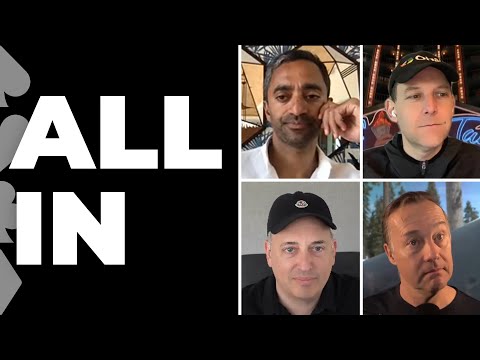
E3: Modern Cold War, politicizing the pandemic & more with David Sacks & David Friedberg
Ask about All-In Podcast
Episode Description
Modern Cold War between US & China, economic recovery, potential mass migration out of San Francisco, pandemic politicization & more with David Sacks & David Friedberg
0:01 Jason & Chamath intro David Sacks & David Friedberg 1:15 Everybody gives their quarantine update: Sacks is in Mexico while running Craft remote, Chamath got a new poker table & is excited for shelter-in-place to end, Friedberg is getting back into a rhythm 8:04 Chamath & Sacks reflect on the coming return to normalcy & politicization of the virus 12:41 Sacks on 3 major data-driven discoveries about the virus 15:54 Friedberg on fatality rate data, overestimating the lockdown's impact on stopping the virus 19:32 Getting back to work 21:05 Chamath on the stock market not reflecting the economy, Sacks on what an economic recovery might look like 28:00 Friedberg on potential of another NYC-level outbreak, Chamath on negative impact of left/right culture war 34:05 Sacks on democratic hesitation to end lockdowns giving Trump a strategic advantage, Friedberg on Hydroxychloroquine's benefits/risks 37:57 Sacks on potential resorting of the Bay Area & Silicon Valley due to remote work 41:51 Chamath on benefits of working remote, why San Francisco might lose large numbers of people 45:18 Tesla/Fremont situation a microcosm for politicization of the pandemic, benefits of people starting to distrust inept bureaucrats 49:33 Chamath on the beginning of the modern Cold War, dealing with market conditions considering China's standing in the world, ideological issues 53:46 Sacks on US/China relationship, how US can penalize China 59:25 Friedberg on how US can leapfrog China in manufacturing by using modern, automated solutions
Brief Summary
The episode discusses COVID-19's impact on mental health, business, and politics with David Sacks and David Friedberg.
Key points
- Life in Quarantine. The hosts discuss their mental health and adjustments during quarantine.
- Pandemic Optimism. Chumoff expresses optimism about overcoming the pandemic within two years.
- The Politics of Lockdowns. The discussion shifts to the politicization of lockdown measures and public health.
- Economic Disparity. The stock market is thriving while the real economy suffers. 'The real economy is in the toilet.'
- Recovery Outlook. Experts predict a long recovery process, possibly lasting two to three years.
- Political Lens on Pandemic. The pandemic response is viewed through a political lens, affecting public behavior.
Episode highlights
- Life in QuarantineThe hosts discuss their mental health and adjustments during quarantine.“It's really tough, really, really tough.”5:27May 20, 2020
- Pandemic OptimismChumoff expresses optimism about overcoming the pandemic within two years.“I think we're gonna kick its ass.”8:57May 20, 2020
- The Politics of LockdownsThe discussion shifts to the politicization of lockdown measures and public health.“It's been a huge disappointment of how political this whole thing is.”10:11May 20, 2020
- Economic DisparityThe stock market is thriving while the real economy suffers. 'The real economy is in the toilet.'“The real economy is in the toilet.”23:45May 20, 2020
- Recovery OutlookExperts predict a long recovery process, possibly lasting two to three years.“It's probably going to be a two to three year process to get out of this.”25:21May 20, 2020
- Political Lens on PandemicThe pandemic response is viewed through a political lens, affecting public behavior.“It's shocking how we're viewing a pandemic through a political lens.”32:14May 20, 2020
- The Cost of Living in CaliforniaThe rising costs in California are driving people away, with many questioning the future of business there.“California is so expensive, the taxes are so high.”45:09May 20, 2020
- Eradicating Infectious DiseaseA bold prediction suggests that with less regulation, we could eradicate infectious diseases in 20 years.“I think in 20 years we could kind of eradicate all infectious disease.”47:04May 20, 2020
Transcript
hey everybody welcome to the all-in podcast with Jason Calacanis and shimoff poly Hypatia we record this podcast well on on a really unique schedule to mouth what's our schedule right now whenever we feel like it basically it is whatever our significant others get so sick of us they kick us off and say don't come back yeah we get throw to the pool house we decide to pop up the podcast you're in Atherton I'm in the city in San Francisco Thank You Duke of discretion is there anything else you'd like to tell them why gate code you know we had two guests on that
people just went absolutely crazy for the two they weren't available so we have two amazing David's in our lives David Freiburg and David sacks and they are super smart super effective at their work everything we're not come off and so with all we bring them back on the podcast and we'll do a little round table here and talk about life in the age of corona so welcome back to the podcast David sacks yeah good to good to be back with you and also David Friedberg thank you guys happy to be here all right fantastic so I just want to start off with our check how is everybody doing in this
quarantine has everybody's mental health let's start with you sacks well as we might be able to see we've moved our bunker to undisclosed Mexican location you know and it's been great you know we you know I think it's really kind of sad because where we're at is is a tourist City that would normally be at peak season and it's just deserted right now all the construction stopped normally you see lots of you know hotels and houses being built and that's all stopped and there's no tourists so it's all just kind of cleared out but I think it's quite safe you know every worker that
I've seen here since we landed at the airport - you know got transported to to this community where at I mean has been wearing a mask much more consistent than I think in the US and um you know I think it's been it's been fine now of course you founded the craft venture capital firm and people know before that you obviously did Yammer and sold that Microsoft for a billion dollars plus and before that you are the CEO of PayPal what's going on with your business are you actively investing and how is your firm running remote it's it's it's worked very well I mean
we've always been super collaborative as a firm we were always we were already on zoom' and we were you know we share everything on the amur and so for us just moving to zoom wasn't that difficult we've done four or five deals I think since the whole kind of quarantine started I'm sorry sorry sorry did you did you say that you actually use Yammer now 2020 we're still using it oh my god is Yammer still hook available that's insane I mean it's kind of got a little bit buried inside of Microsoft but you can certainly still get it and no we love it I mean the whole firm kind of works
works in the amur and it works very well for us and now what's gonna happen with this incredible office that you have this beautiful office you have in San Francisco and commercial real estate now that are you going to come back to work we saw Twitter and square the jack collection of companies they're not going to come back to their offices or work from home primarily going forward what are you gonna do well it'll be a great asset for us in the year 2025 or something like that no I mean we will eventually go back to work there I think that the team still likes having an office
I think you know the idea that everyone wants to work out of like a small room and you know extra room in their house I think probably getting is probably a little overrated I think people would like to get back to the office but do we have to have one no I mean I think we've proven that we can do our jobs via zoom and you know we've done a lot of we've done like I said we've done four or five deals since the started where we haven't met with the entrepreneur in person you know it's all been done by a zoom nanus it's worked great all right trim off how are you doing what house
which are a mental health like you know I get to see you once in a while on CNBC throwing bombs but how are you doing I was really excited for phase 2 of the shelter in place to start here in San Mateo County so that's been really good a new poker table that I had built arrived today which I'll be installing after this and what I mean by I'll be installing you'll be supervising I'll be supervising watching as people do real work watching and it's a beautiful table I saw the pictures have a digital infinity edge is it an infinity edge table no no no no but I'll send
you a picture when it's all done but it just looks stunning and I really want to try to organize the game soon so that I can get you guys back into the into my little cave here yeah I am ready for this shelter in place to end I'll just be honest and I think that my sentiments are the sentiments of a lot of people it's it's really tough really really tough I I'm losing all my motivation to be quite honest it is weird to not see people even and you're an extrovert David you're an introvert and then David Freiberg also on the line David how are you handling all of this I'm fine I think one
of the things that made a huge difference for me is the creating a rhythm in the day because there isn't one when you kind of normally get up and you go to work and then you come home at the end of the day from work that's a rhythm and you're you kind of get kind of adjusted to it so not having that a lot of people I've been hearing at struggling with that I was certainly struggling with it having sleep issues and I sit on about a dozen boards some of which have small companies some of which have a couple hundred employees and I've been hearing pretty consistently mental
health issues across all the companies and I think it's just been really grating on people I think it number one kind of says we probably do need to be together and have social space as David said like being in the same office people really miss that and you get a lot of value from that and I've been getting up everyday in the last couple of weeks and going off-site going out of my house to go work we're actually working on another place and I have like a little office there and I go kind of work there and so that's made a huge impact honestly on my mental health
being able to do that every day so just doing that's been been helpful I not everyone has that privilege but I think it speaks a lot to why we're gonna need to go back to offices when this is all done and what do you think about but what's happening with your businesses obviously you're running a startup studio I guess would be one way to describe it where you create companies and then spin them out what's been the business interruption if any we have a couple of hardware and lab companies that's most of what we've done and so those operations are paused so
that's been really frustrating the teams have all found ways to adjust and work from home so our companies are not predominantly software based there's a lot of software but it's not predominantly software so it's been difficult on those scientists and engineers that work in a lab or in a physical environment that they have to go to to do their work the larger companies we have a number of food businesses that happen to be in the food supply chain one way or another frankly those businesses are doing fantastically well and there's been just this incredible success in the
era of kovat on kind of a focus on fundamentals like food supply chain efficiency availability of things that people need and we were doing a lot in human health and we've kind of benefited from that so yeah I think there's kind of a mix for us but I think every business is bifurcated one way or another during this kind of moment of punctuated equilibrium yeah I think one thing I'd like to sort of talk about is we've had you both on the podcast early on at the start of the pandemic and I'm curious chum off now that we're here over two months in quarantine sheltering in place and a
lot of information a lot of cards have turned over here right we've seen the flop I think we haven't seen the the turn and the river so to speak what is your assessment of what we were talking about you know a month or two ago and what we thought about this and what's become reality and what hasn't what are you more optimistic about what are you more pessimistic about your month let's start with you I think that we will have this pandemic or this disease within two years and so whether it's a combination of a therapeutic and a vaccine or just a therapeutic I just think
that we're gonna kick its ass and so that's made me more optimistic I think that the thing that's made me more pessimistic though is the return to normalcy has been sort of cut on political lines and it's been so massively politicized I mean when David talks about the fact that you know you can go to a developing country like Mexico and all of a sudden you know everybody can get around the idea of masks it's because that there's a level of common sense there that trumps politics and in the United States that just isn't the case and so what you're seeing in in this crazy way I think is sort
of the center left and the left probably sticking very firmly to the ideology of sheltering in place and a lockdown probably on the sort of hope that it gets Trump out of office and on the other side sort of the red states I think have basically said hey I would rather get sick from coronavirus and take my chances than the hundred percent chance of failure that I have in my professional life if you leave me at home for another week or month or what have you so that's been a huge disappointment of how political this whole thing is got and sacks you've been talking about like common sense
procedures sort of same question to you what you first thought and you had been talking about you thought an l-shape recovery so we'll get into also the economy here but in terms of the disease what did you think two months ago that you don't think now and what do you think yeah well in preparation for this I kind of went through my Twitter feed to see what I was saying the last time I was on the pod and how well it was holding up and two months ago today I tweeted that pandemic but that under reaction caused the pandemic and overreaction will cause the depression and I think that's
kind of where we are right now we still have this pandemic with us but now we're also potentially facing I think a potential because of the way were we're overreacting we're still in lockdowns in you know huge swathes of the country and no one can quite understand why I mean the original reason for the lockdowns was tobias time so that the hospitals wouldn't become overwhelmed like Italy well nowhere in the country did the hospitals get overwhelmed and we're still in these lock downs and and so you know I I think that it's long overdue for it to end now at the same time you
know where I agree with Gemma that this whole thing's become politicized where you know the the people who generally want to get us out of lock downs don't believe in doing anything you know they're not even a lot of them already been willing to wear masks which i think is just kind of insane so you know where I come out on this thing is that I think we should end lock downs but wear masks and it's very hard to find anybody you know in the in the political spectrum who who agrees with that because you know one side wants to keep the lockdowns going indefinitely and the
other doesn't want to store mass and it makes no logical sense obviously and if you think about our political system the left is so far left that the moderates on the left side don't have a place to live anymore and then on the right the Conservatives which I would put you in the group of who were you know looking for fiscal conservatives conservatives they don't have a home anymore either and so the most reasonable approach is clearly to start going back to work for people who are not at risk and who wear a mask yeah I think I think there's been since the
last pod that we did together I think there's been three kind of major discoveries or sets of facts that have come out about the virus number one the official fatality rate has been over which is about six percent you know it's a very high fatality rate it's very scary but we now know that that's overstated by probably at least 10 acts because it doesn't take into account all the asymptomatic cases or mild cases that just never got tested and this is the fatality rate of people who contracted the virus right as exactly as opposed to people whose case the the the problem
with the it's kind of a debate between the the IFR versus the CFR the infection fatality rate versus a case fatality rate the the problem with kind of the official CFR numbers is that only the people who got really sick or you never got tested and you know freiburg was the earliest person I know to start talking about the need for wide scale population testing and these plots are all G tests and other kinds of tests to establish what the real baseline is but regardless of like and there's been a whole bunch of different tests with different results I you know we don't know exactly
what the truth is far is to this day but we do know it's probably closer to half a percent than to 5% so that's sort of discovery number one I think discovery number two is and we knew a little bit saw a little bit of this from the wuhan data but now it's really clear that witch populations are at risk and it's you know the data seems to suggest that people under 60 who are healthy don't have sort of pre-existing conditions or 50 times less likely to develop or there's there's a 50 X greater chance for those over 60 in terms of a of the you know having a really bad outcome
and so for people under 60 you don't have these pre-existing conditions it's you know it's just not yes there's always you know examples to the contrary but it's not this this sort of gigantic risks and so for two-thirds of the population they don't have a huge risk and we're still locking them down I think the third thing the third study and not just study there's there's been studies and there's been models and then we've also seen practice is that wide scale use of mass or ubiquitous mass wearing is sufficient to control the virus meaning to stop the exponential
'ti of the virus we've seen you know in the Asian countries or Czechoslovakia other places even able to get the you know the so-called are not that the the viral coefficient to go below one with you know why skill use of mass and so we have a way to prevent the virus from going exponential that doesn't require lock downs and so the thing you know I I blogged about but the last time I was on your show was why would you do this to most severe thing these lock downs and not do this easy thing that's just merely inconvenient which is a mess Freiburg when you look at it and you're the
I think have the deepest science clearly of the deepest science background of all of us what what how do you look at this pandemic now that we're 75 days into it here in the Bay Area and obviously you know they started in December it looks like in China what's your take on it now what did you get right early and what have you changed your mind about recently I'm actually fine when you say that I just pulled up the original w-h-o joint mission on Kovac final report and the date of this report by the way is February 20th so there was this big thing they published 40 pages long from
the whu-oh and in it they highlighted you know the this fatality rate estimate inside of who Bay you know Wuhan and outside of who Bay they you know we knew from this data very early on that we were at about a half percent fatality rate and then you know we saw all of this other stuff happen with Korea and the princess cruise ship and the NBA players very early on we saw all these people that were roughly asymptomatic and we're starting to get to kind of explanations for why that is but from the beginning I felt really like you know this is gonna be a largely asymptomatic kind of
spreading infectious vector what what I got wrong was when we went into lockdown I don't know CH amok if you remember this when we talked the first time on Jason's on your guys's podcast I asked you guys or you guys asked me when I thought we'd be back and I was like Oh April 7th we'll be back to work and I also had a bet going with you guys and I said we're gonna have less than 20,000 deaths in the u.s. I so overestimated the effectiveness of the lockdown and I think that was kind of you know one of the the more kind of like striking things to me is the quote unquote lockdown and I
just sent the video to Nick you have it can you tear it up so basically I this is what I think has happened in the United States like pull this thing up I was in Berkeley on Saturday and I went to play to meet some buddies and we played frisbee golf on campus and had a beer some college buddies of mine and so I'm walking around in Berkeley and there is frat party after frat party going on no mast everyone's on top of each other you can see the video right here I took a video beer pong yeah they're all paying beer pong there's like girls and drinking and people are passing
around bottles of vodka and there's no mask and this was the entire campus of Berkeley like and I think this is what's gone on like around the country so the belief that you could just kind of like lock away the virus I believe like oh my god there's it's so extreme it's so draconian we're gonna shut down the world and this thing is gonna get stopped in 30 days like happened in China that is not what happened in the United States of America like people want to be free people want to party people want to live their life they want to go to work they want to see
their friends and family and they they're not used to being told no by the government and so I think that's been to me the biggest surprise is just like how ineffective the quote-unquote lockdown has been and I think it really speaks to the need that David mentioned which is this lockdown isn't binary you can't just say lock everyone down or let them all out you've got a nuanced your way to a solution which means like masks which means watching out for nursing homes which means temperature checking before letting people in the buildings of over 100 people like all the stuff
that I think needs to be done for this to be kind of effective at you know tracking and tracing and we can't just assume that you know a quote-unquote lockdown is gonna keep people inside and keep this thing from spreading because the frat party as you'll see is the perfect representation of what what's really going on out there all right circling back around to you trim off what what do you think of what the two David's sort of outlined there in terms of the path forward and how we all handicapped what was going on well I think the reality is that by hook or crook we're gonna
basically exit this lockdown sooner than we think because I think people just can't take it anymore so there's no point in having a shelter in place order if everybody's running around playing beer pong and so it's not doing anything and so you might as well get the productive value of the economy going again by letting people go back to work you know we we and just finding some simple ways that people can look past the politics and just do the right thing we're a goddamn mask and shut the [ __ ] up and go back to work it's it's really like I mean when you think about it it's
like why is this such a big deal get everything you want and just put a little bit of cloth over your face I mean a lot of the folks that push back on this you know they're better off wearing the mask yeah I mean it is pretty striking when you watch the protest and you see a bunch of people who are you know obviously older and obviously zerbies so those are not the best looking knives in the drawer let's just put it that way if not definitely not and pickled dull and rusty I would say well I'm you know they're carrying guns and they've never served a day in the army I mean it's
they're literally cosplaying that way this whole mass thing is not such a big deal just if you can wear a mask and get back to being productive and get back to a job I think you should be allowed all right so we had a big debate v-shape w-shaped you shaved a low shaved recovery I was in the I'm aspirationally v-shaped but I'm expecting a you sacks you were the AL and I think shimoff you were the the W the U or the L we've had a V how do you explain shimoff what is going on in the stock market because you said it was the end of days you said this is gonna be a disaster is it going to
be disaster is this the end of the days and we've got some false rebound and this v-shaped recovery is not sustainable what how do you explain this inexplainable v-shape responsibility response there's two things to keep in mind first of all the economy is completely [ __ ] so don't don't question you know don't look at Facebook Apple Amazon Microsoft Google and a handful of you know internet SAS companies and kid yourself we have 30 million American men and women out of work that is every fifth person you see walking down the street does not have a job what happens when
lockdown ends if we if with the lockdown ends in June as expected for mobility but how many people are hammers in the foundry pound yeah yeah no so so look here here's the thing that we've had we've had trillions of dollars of money printed into the system and when you print that money into the system which the Federal Reserve has done it hits the asset markets and it is basically stabilized the bond market and the incremental dollar sits in the hands of an individual who must put the money to work because when you look back on this this is not you know a random person managing their 401k
the overwhelming majority money sits and that sits in the hands of hedge funds or pension funds or sovereign wealth funds or mutual funds they have a job to do and so you have to think about what is their incremental decisions so even if the stock market made no sense on any valuation metric the incremental dollar that they have which they're paid to put to work will get put to work and so what you've actually seen is a dispersion and what I mean by that is if you graph the S&P 500 index versus the unweighted S&P 500 index which basically means the first one ranks companies
by market cap and gives the biggest companies more weight the other one ranks every company equally there's been a massive split a dispersion and what it really shows is that companies that traffic in bits so software businesses have a bid and companies that trafficking atoms have gotten completely decimated and they are literally worthless and so when you put all these things together the real economy is in the toilet there are tens of millions of you know men and women out of work the earnings power of real companies that do physical things in the world are cheaper
and lower than they've ever been meanwhile the companies that have high velocity high margin software driven businesses have gone to the moon so it's unfair to look at 30 or 40 businesses and paint that as a as a v-shaped recovery it is a equity market that is buoyed by fed dollars that is not mapping to the reality of what's happening on the ground okay so Sachs you're you're pretty plugged-in to the you think about this a lot what do you think the recovery looks like is this going to be two three four five quarter recession is it going to be depression era like some people are
apt to say what keeps you up at night thinking about the economy and what gives you hope well I it kind of depends if there are other shoes to drop so I agree with drum-off that you know the state economy right now is terrible and it's divorced from the financial markets because of you know all the money printing and interventions that the Fed and Treasury or you know have been doing you know one way to think about it is well the the stock markets denominated in u.s. dollars and if you know they just printed a whole bunch more of them those dollars are worth less and so you know
the the price of the stocks are gonna rise but but yeah I think looking forward you know I it's probably going to be a two to three year process to get out of this unless some other shoe drops which could make it much worse Europe you're betting on two to three years to get back to let's call it single digit unemployment um we'll see we're at like what fifteen percent right now or something like that so you know thirty five million people get down to you know ten million again twenty million it's it's hard to say it's gonna take a long time to create all those jobs
you know a lot of these businesses are not just gonna come you know racing right back so yeah I think it's probably like a two three or process to get back to some sort of you know and by the way the thing you have to remember is like look the unemployment numbers that we have had in the last probably seven or eight years so during Obama and Trump have been completely manipulated because the number of people that are entirely leaving the workforce is quite high and so you know it's not just a numerator problem we have a denominator problem too there are fewer and fewer
workers that you know are willing to work because some of them just give up right or it's just not worth it for the pay that's available is another states open so the thing that we're gonna have to figure out is like how many of the people that are leaving the workforce may never come back and has a societal toll and weight that we all have to bear yeah there's gonna be a lot of people who maybe are in their 60s or maybe even late 50s they got 10 20 years left that they could be working in management sales whatever it is and they just say you know what it's not worth
it I'm gonna go try to find a place to stay and maybe not rejoin the workforce early retirement or just capitulation yeah well and but you know remember I said about other shoes dropping I mean we we're still in the early I think we're still in the early stages seeing the repercussions of what you know but to three-month shutdown the economy you know what what that's gonna look like and so the you know the wave of defaults is just beginning and you know who knows what happens with cities and states and so on down the line I mean who knows you know does do the debt
markets have kind of an inexhaustible you know desire for you know to buy US debt or could we reach some sort of saturation point and then that triggers the next you know set of crises so we just don't you know I would say like that the two to three our outlook is is the one that's kind of like what it looks like today but if there are these other big shoes to drop it could turn in something much worse I think Friedberg we're all in agreement that there will be a second wave of some type just depends on how big the spike is do you think there'll be another new york city level
outbreak where we'll see you know 2,000 people 1,500 people dying in a certain region every day for some sustained period of time what are the chance of that happening Freiburg I don't know I mean I think going forward the you know the New York situation people's behaviors have been shocked so you know to the points earlier the most effective thing you can do is stop coughing on your hand touching a railing someone else touches the railing and touches their mouth I mean that's kind of how this goes you know there's been early on some weird like arrows stylized aerosolized a
study that kind of said hey this thing spreads in the air and so on it's really you know you got to be in a closed kind of confined space if people are wearing asks now so the likelihood of the transmission happening at the rate that we saw in New York great paper out of MIT by the way that shows how this happened on the subway oh really identified I did identify the subway as kind of the primary vector that droves transmission in New York City that was always my thesis and I remember talking about it and saying how is this not obvious to everybody that 8 million people ride
that thing every day or something like it's so I didn't make they did an incredible job proving it so it's not like people running in Central Park or spreading crota virus to each other's everyone in these confined spaces coughing in the air and then you kind of get this stuff and 20 people get on and off at every stop that's the other thing people don't realize is that it's not just a bunch of people it's not an aeroplane we have X number of people going in one direction for three four five hours this is 20 people getting on and off every five minutes it's almost like you couldn't
design a better incubator for it and I don't think a city in the United States approaches the density that you have in New York so remember these are not deterministic factors these there's like a spectrum of a probabilistic spectrum here so you have a lot of people they have a certain type of behavior they're not wearing masks you kind of add these up and you end up with this really high kind of vector that drives this this rapid spread as we saw in New York City you know you're not gonna see that in Dallas you're not gonna see that in Houston you're not gonna see that in San Diego
you're gonna have more of the slow steady burn as some risk is taken in the environment some risk is taken by frat parties and people not wearing masks and people touching their mouths but it's not gonna have the same sort of massive effect you saw in New York so I wouldn't expect us to have a New York style second wave I do expect there to continue to be this like slow burn going forward of new cases and it's certainly going to be more obvious now that we're testing a lot more and so Tremont at this point we're basically putting a price on life and saying hey some amount of
deaths is worth taking the risk and as Americans a unique group of people in the world in how we look at personal freedom Americans are just making the choice hey listen if you don't want to take the risk stay home but the rest of us if we want to take the risk we're gonna go take the risk that's what this has come down to in your mind yeah I think that it's very difficult for Americans to envision a world where like you know their personal freedoms are infringed upon I mean it's sort of like kind of one of the founding principles of the entire country this is why I
think that the the tragedy of this thing is that the the way to get everybody what they want is so simple as David said it's like you know above sixty five you stay home you work remotely under sixty five you temperature check and wear a mask and you know you're ninety five percent of the way there but it's become a left versus right decision to do it you know the mask wearers are still in a lockdown and the non mask wearers want to get back to work and basically like there's there's it's just it's just another kind of culture war between the left and the right it's it's really
just shocking I mean I might for what it's worth you know if I was I am a betting man so I'll just tell you you know my line now is that I think that Donald Trump is overwhelmingly likely to win as a function of people's frustration and about the lock downs and I think that the Democrats best hope of winning in November is ending these things sooner rather than later it's amazing we're talking about a pandemic a once in a hundred year pandemic it looks like and we're literally looking at our reaction to it through the lens of this president being reelected
or not like literally that's the determining factor on the advice we're giving to people we're telling people they can't go to the beach but they can be on an airplane they can't go to the Tesla factory but they can ride the subway I mean on a communication basis because they're any worse way we could have communicated this to the populace well the communication was bad but the I think the bigger problem quite honestly is that the Republican Democratic governors in the United States can't get on the same page and at the same time there's just a tendency to
support Donald Trump or not support him in a very reflexive instinctive way that isn't helpful right now and and there just doesn't seem to be enough political wherewithal and courage to just stand up and do the right thing independent of what your what your political persuasion is so but but I think on the margin now I think you have different but very similar boundary additions to 2016 where there all these people that kind of like told you one thing and did another there all these people right now that probably are you know preference falsifying as we speak and you know they'll show
up into the voting booth and they'll be angry if they're not back in their jobs especially if they've been laid off by his as a result of not being able to get back and they would blame that on the Democrats not the Republicans and therefore Trump gets his next term well because the the it's it's the democratic states that are pushing the hardest basically like you know you saw the craziness in Los Angeles but like you know Eric Garcetti was basically like we will enter the shelter in place and you know December of 2022 and it's like this is it's Los Angeles yeah it's not
gonna happen you know players got a play I mean like this is just as unbelievable yeah well the that III do I agree the lockdowns the or the the unwillingness to end the lockdowns gives Trump an issue for November assuming this continues that supersedes the incompetence of the kovat response which is that you know our lives and livelihoods are not owned by politicians to you know meter out and give back to us in drips and drabs and as they see fit that is the issue that the lockdown crowd is is giving to Trump and I do think it will if it's still the issue in November it will supersede
the the you know the initial unconference of the kovat response and what did you think of this whole what's the drug that Trump said he was taking David sacks I draw hydroxyl : yeah so what or Friedberg maybe you take it we talked about that early on and that I think you properly said like if you took it earlier this could be you know could has potential taking it later it's probably too late I think you nailed that on the pod last time why is this become such a political issue in what are your thoughts on that drug specifically and its potential efficacy look
I'm not a doctor but it from what I understand is there is a so just so you know there's like side effects to this drug for a small percentage of the population and this drug can actually inhibit energy production in certain cells which can cause organs to dysfunction and it particularly shows up in the heart so people end up with what's called a long QT interval and potentially some heart issues that can be pretty dangerous and deadly depending on your body so it's really a little bit of an unknown there's also issues longer-term with with vision impairment can damage your retinal
cells and cause vision loss so there's risk to this drug it's not like taking you know an Advil it is a it is a measured risk it's a low probability but the severity can be high and so typically with a scenario like that doctors and scientists like to see you know phased clinical trials and you kind of do you know randomized and you have placebo and testing and so that hasn't necessarily been done for this particular virus this particular condition and often the the design of those studies matters a lot so you could give it to a bunch of quote unquote Ovid patients
but if it's not being given to Kovach patients either before or right as they're getting sick maybe it doesn't show the results that you would expect from a prophylactic treatment meaning you're getting it before you're really sick and that's where it may be the most efficacious and so some people are saying wait we don't know enough don't do it it's not worth the risk because of that small percentage high severity problem while others are saying oh my gosh it's totally worth the risk is the downside if you get coronavirus can be really bad and you know and so
so there's a lot of room for debate here and when there's a lot of room for debate you usually kind of revert to some sort of base belief or some base kind of political point of view or something and I think that's what's going on here this isn't a clear-cut the Sun is yellow on this guy's balloon kind of conversation this is like I can interpret this a lot of different ways it does seem that like look this drug you know like a lot of has an effect in the same way that a lot of other that this drug might have on a lot of other viruses and this especially plus zinc you know and this
z-pak this as if from icing which is an antibiotic together may be really effective and so yeah if you weigh the downside and the probability of that downside for a patient against what the potential upside would be depending on their risk factors now that we know those better for kovat you can make an educated decision and maybe just be left in the hands of doctors versus like have some national statement about it I don't know but yeah it's certainly a lot of room for debate and thus a lot of kind of you know political engagement on this Sax's there's a lot of talk about what
the bay area looks like after this whether it's commercial real estate with Twitter and square going full work from home and people not wanting to work in cities what are your general thoughts on what the world looks like a year from now and maybe five years from now if there is going to be some permanent change what do you think it would be well there could be a big resource that I rescind emic it's something we kind of end up living with but you know so so look if it does I mean if you're like over 70 are you really gonna want to stay in a place like New York City or you
don't want to go somewhere else and so I could imagine if this does become this long-term thing that's just endemic yeah we don't know if we don't have a vaccine I could see cities resorting where you know New York is people who are come full with ghovat risk and you know it's I think San Francisco's the the big issue with San Francisco is that there were always a bunch of reasons not to want to live there I mean that the city too seems like chronically mismanaged so he sees lots of poop the huge homeless problem you know public health issues with that there's there's
a lot of crime there's and we were responded to properly so there's all these like reasons not to live there but the reason why people chose to live there is because the tech industry had a very strong network effect and you needed to be in Silicon Valley or San Francisco in order to have access to these these jobs and opportunities and if those jobs opportunities are now available via zoom and you can be doing them from anywhere are people still gonna choose to live in San Francisco you know with you know with the the the cost of living and housing and apartments and all the
rest of it that that goes that goes along with it so yeah I mean I think there is some chance that this whole remote work thing could break Silicon Valley's Network effect and that would be really bad for places like San Francisco which you know otherwise might not be the greatest places to live yeah I might thesis on this in terms of getting out of the recession I think remote work could lead to a level of efficiency and profitability in the companies that we have never seen before if you think just about every manager now knows how to manage remote workers right you learned
that in like three four weeks you figure out how to manage people remote even people who hated managing people remote all these Gen Xers and boomers who are managing you know Millennials and earlier Gen Xers they now know how to do it and what they quickly learn is these three or four people in my team are crushing it these two or three people don't need to be here they're not actually adding any value so I think what's gonna happen is they're gonna cut the bottom people then they're gonna cut their office space now you've removed I don't know call it 30% of
the cost basis of a business forty percent in its operating better and people are happier and then when you do hire somebody there's gonna be more talent available and you've just opened it up that you can hire somebody anywhere in the world without an office and you don't have to relocate them and you don't have to pay I don't know what you guys think the average additional cost is to be in San Francisco but I'm gonna say $30,000 so a $40,000 a year job or a $50,000 your job becomes a 70 or 80 something like that and if all that happens these companies are gonna be so profitable
that they're gonna start growing and that leads us out of the economic downturn any thoughts on my my thesis that's not a thesis that's a hope yeah hopes not a [ __ ] strategy Jason yeah well I just think it's a potential way out I think it I mean what do you think in general about this trend of remote then drama I think it's great and I think that we're realizing that you know there's no monopoly on innovation and companies can be really productive remotely that most of the work in an office is busy work and politics and you can cut it all out and you can do the
same amount of work much less time which gives you more time to frankly be with your family or take up a hobby or learn a second language or a third language I mean I just think it's so much better for people to realize like we got a you know it's it's not like you you know it's not it's not 1820 or 1920 it's 2020 so we're gonna live to a hundred years old like we have a long time to be in the grind and so you know working and accomplishing what you used to in half the time and not having to commute and being able to live where you want your people you like man that has a huge positive
impact to your kids you your community it's just way better I just think offices are just complete kind of like it's all Shakespearean theatre at the end and cutting it all out is great and specifically San Francisco's just a complete cesspool dump of [ __ ] and so you know being able to just get out of that city all right everybody welcome to the you're listening to the Oliver I read on stats yesterday that were just so unbelievably shocking like the number of break-ins the number of number one in the country they're number one in the country did the the
amount of disease that like communicable disease like typhoid and I'm like typhoid I was born in a country and scratched and clawed to emigrate as a refugee to leave a country that had typhoid as a disease welcome o to survive nothing to end up back in that in San Francisco thats brought it with you that's an absolute joke so yeah yeah I mean the idea that I'd never have to go to San Francisco ever again is oh my god it brings joy to me it is a it's an unmitigated disaster this and I think this will be part of the boom-bust cycle that you know David you were part of when you here
at Stanford you know getting an office in San Francisco or having an apartment it was cheaper I think in the city than it was down in Palo Alto wasn't not well back in yeah when we move the amur to San Francisco which was 2009 I think we were able to get space for $20 a foot per year crazy that's what I paid 2007 I read it I read it I read a crazy article it was about the Kushner's and this building that they own that Brookfield Asset Management was gonna buy and and it said that they bought this building and so the Kushner's moved to like Park Avenue the General Motors building
overlooking Central Park or something right it's a beautiful building and it actually quoted in there the price that they were paying and it was incredible because it was like a hundred bucks a square foot per year and I realized oh my god they're paying less for Central Park views in New York than I'm paying for a warehouse in Palo Alto not as a [ __ ] is going on this makes no sense whatsoever gotta be supply and demand right there and I thought to myself like this is this is crazy like California is so expensive the taxes are so high it's I think people are gonna leave in droves
honestly what do we think of Elon selling all his homes and then actually saying he's gonna leaving you know move tests out I mean I don't think it's a practical reality to move Tesla out of out of California I think that the incremental facilities can be built wherever he wants him to be built based on where he gets a tax incentives well but I think the Tesla Freemont was a really good example of this sort of like cultural war that's going on this this political battle over lock downs and you know you had kind of a mid-level health the department bureaucrat in Fremont had locking
their factory and saying they couldn't go back to work whereas if he was in Texas he could and then you know around the same time yet this whole like Chile Luthor thing in Texas where she was a small business owner you know owns a like a haircut place and she was basically put in jail for a week for giving somebody a haircut and there was like a you know dust-up over that so you know I I think that like you know the the country is certainly ready to get back to work and and if this is the political debate you know in November I'm not sure we'll be because six months is a really long time
from now but there was it four or five months but if this is a political debate I you know this this will be the way that the Trump gets re-elected mm-hmm yeah I think there's gonna be some pretty significant benefits because the reaction you guys are speaking to it's not just about people moving but it's a reaction to a regulation and that could have some pretty profound effect that to benefit certain sectors and businesses and accelerate new outcomes one of the things that you know I have a strong belief in it's like I think in 20 years we could kind of eradicate all infectious disease the
only thing holding that up is regulation because the science is known the engineering is basically there and it's simply a function of getting these things approved in getting across the finish line doing gene editing and humans for genetic mutations that cause harm to humans this is a technique that we've known for twenty years and there was a guy a patient that died in 1999 from one of the first AAV treatments that viral vector gene-editing treatments after that there was this clamp down and suddenly everything stopped and there was like no longer any progress in this
space and they're just now starting to come back and there's a lot of you know really interesting technology that has been kind of hindered I mean you know not being able to put Tesla's out I think is the tip of the iceberg of what people are seeing regulation can do to business and look I'm I'm by no stretch you know a libertarian party card carrier but I do think and I see it in businesses that I'm involved in all the time that this you know incredibly onerous like overreaching regulatory burden and bureaucrats really hinder great new things from happening in the world and
it's just become so friggin apparent how inept the people are that are making the decisions that are doing this to us are during this crisis and I think it could have a profound benefit on kind of deregulation and accelerating the adoption of new tools and new technologies that could really help us all so I view the positive side of this it's not just like everyone's gonna leave California like this inept bureaucrats and over-regulation everywhere let's talk to you politics for a moment shamatha you know you heard the president called the wuhan virus obviously there's no doubt that
it came from there there is a debate was this something that was not created in a lab but that was being studied in the lab and accidentally got out and that's how the jump happened and there's some tension there between China and the US what do you think the global reaction is going to be and the fallout will be for China if any Japan is paying factories I read and help me subsidize them to move factories out of China so they can move that dependency we always saw the dependency on PPE and drugs being made actually in Wuhan in that area and how we don't have a supply chain that we
can rely on for really mission-critical stuff how will we look at this Chinese relationship in the United States and globally post pandemic this is the beginning of the modern Cold War and so it's America versus China except that China is a much more worthy adversary for us than the USSR SSR was at their peak and the reason is because China has been making strategic investments for the last thirty years you know the biggest thing that prevents China from really going guns blazing broadside attack on the US is that the u.s. dollar is still the reserve currency of the
world but even there China you know is trying to do a digital currency and a stable coin and these are all these state-sponsored initiatives that come from frankly just strategic decision-making to try to usurp the United States as the most powerful country in the world and so again it goes back to is this a political issue or is this an ideological issue or is this an exceptionalism issue or is just as the practical reality that we do not want another country being number one and can we all agree and if we can all agree then I don't think they'll win where do you where
do you sit on it for you is it practical as an ideological completely practical I have zero like yeah you know I've been thinking about this a lot because I have not done any investments and I just did by first oh so it's been three months and I did it was a credit deal so it's not even equity and you know I was and I was reflecting on what what am I trying to do because I felt myself frenetically you know spending and working too much and you know looking at all these different opportunities and I realized wait a minute like my job here is not to win some finite game like this
is not ending like a basketball game or a soccer match this is like I'm trying to be in this thing for 50 years so my goal is to survive and the reason why I say that is my ideology is very fluid I have to be able to adapt to market conditions as they change because if I want to be irrelevant you know person in the world and 50 years from now first rule of business is don't go out of business second rule of businesses don't forget rule number one run you know so in that context I think it's a very practical thing that we just have to deal with China and make sure that they do
not use syrup America's standing in the world as the most important country of the world just for me it's ideological I just don't want a communist country I don't care but that is torturing their citizens as the number one how do you in the world I think it's really dangerous I have a real issue with this like I don't think you have the right to judge just like Californians can't judge Texans and Texans can't judge Floridians oh no it's that you're wrong you absolutely should judge people know are torturing people and not allowing people that freedom of speech yeah you should judge them
actually actually to human rights violations I think you should judge people I I think that we there's there's a lot of that stuff in America that you stay silent no that's not true I am absolutely for cannabis anybody who's arrested for cannabis violations and low-level drug things I think we they should be let out of Freight out of jail just like JB Pritzker did in Chicago I mean and I think the death penalty should be repealed too because we don't apply it properly those are the number one and two things probably the United States that go against the human rights
the Declaration of Human Rights and I'm actually very Pro fixing those things I was totally against waterboarding and I think that was the worst moment in my in American history hiya I honestly I honestly think that like China's gonna do China you know India is gonna be India and instead of getting caught up in our own ideology you should change it in your own country and then make sure that the other country doesn't win well and that's my point is do do you believe engagement with China leads them towards democracy and better human rights conditions for their citizens or not
and I think the fool's errand that is an absolute it worked for East Berlin and it did work and saving Europe from the Nazis so that the boundary conditions are entirely different and China has proven that it works Europeans were genetically bred to be lazy oligarchs okay everybody I think we just got kicked out of the iTunes Store saxy poo yeah China hawk-dove engagement isolation where do you stand you heard Sharma say his position where do you stand yeah decoupling from China is gonna be a bipartisan issue now I think but both can it's now will be well Trump is gonna
is gonna run blaming China for for what happened and I don't think Y is gonna be defending China in fact they're gonna try and pecking with the whole Beijing Biden label and he's Paul Guinea to try and out Trump Trump on on China so decoupling is gonna happen it doesn't really make sense for us to be dependent on China for our antibiotics for our medicines for our PPE for it you know any of these you know any of these products that are important for national survival I think all that stuff is gonna come back home I think you know trading with them for other things might
be poison all things had to start fundamentally strategic the same way I think that can continue but you know the thing about trade is it creates interdependence and I don't think that this country's going to want to be dependent on China for anything strategic anymore two questions for you David what is China's liability if any at this point with this pandemic obviously if they you know didn't they withheld information or silenced whistleblowers that's a whole different level and then tick tock should we allowed to talk in this country should we if we're not allowed to have
Facebook or Twitter in China take those questions either what do you want well the on liability I mean I think yeah the reliability is is huge I mean there's still a bunch of questions we got a answer around where exactly the virus came from but the the really fateful decision that I think China made is when they shut down travel to Wuhan to and from Wuhan you know with respect to other parts of China but they let people from Wuhan just kind of you know leave to go all over the world and so you know they weren't letting people from Wuhan go to other parts of China but they were
able to come to the US and so I think they do have a huge liability but are we gonna hold them to it no I mean as a practical matter you know we're not gonna you know it'd be it'd be a mistake to to try and change the principal sovereign immunity and the courts but I think in terms of popular opinion they do have they're not there ways to there are other ways to quote-unquote punish them like I mean and the US is already doing it so you know for example the u.s. is limiting and constraining kua ways ability to get access to 5g and so you know it really forces China to either by European
and American equipment which is essentially to say that you know the the five eyes will be able to basically spy into China or they have to basically you know storm into Taiwan and take over TSMC I mean so there are there are all these other gambits and strategies that one can take without getting ideology ideologically caught up and you know Chinese human rights because they're not going to change yeah I mean look all wealth comes from trade you know whether it's at the level of individuals or nations wealth comes from trade and so it'd be silly for us to say that we're
just never gonna have trade with China but I think that you know trade also creates interdependence and so we're not gonna I don't think continue to engage in to depend on them for thing as an idol to our national survival and so you know that that's gonna be the change and the other thing is you know we're gonna demand that the trade be more reciprocal take the tic-tock example well you know what we're probably gonna happen is that the the tic-tock will probably be caught up in some larger negotiation and you know is the quid pro quo well test like SS all cars in China and tick
tock has to operate in the u.s. maybe but you know III don't think tick tock it sort of falls into the you know necessary for national survival category so it really falls into the reciprocity you know principle and the question I guess will be are we getting enough in return to allow them to operate here and I think that's the way that all this commerce is gonna is gonna start working and that's the thing at least we can like confront our hypocrisy so Jason I don't disagree with you about how you know gross the human rights record is I just think it's a joke that we all sort of
like cry foul like it's like the biggest thing in the world when we can't even clean up our own yard and then meanwhile we continue to trade with them that's just utterly utterly yeah so that's why I think we have to continue to work on cleaning our backyard while continuing to innovate and find our own backyard meanwhile win the game against China and winning the game is not basically pushing for human rights reforms it's making sure as David said we have a better trade balance and making and making sure that like you know that the critical parts of the supply chain
and infrastructure that America needs for national security isn't dependent on a third party who have completely different incentives than we do and then there's also like soft things like why is the you know why are we taking American movies and changing the ends in order to have them sold in China like they're literally corrupting our art and that incremental dollar that Hollywood's getting or whichever you know person trading with China is getting I think it's not worth giving up what makes America unique and a leader in the world Freiberg you thoughts on China there's
about a hundred and twelve million people in China that work in factories factories in China are purpose-built so they're built to make a thing and then they got to get retooled if you want to make another thing you take those two facts it's very hard to kind of replace China that's a source of production for a lot of what we consume in this country that's the reality so there's two ways you could go and then there's two kind of necessities and you end up with a matrix of like two by two you could be couple from China and basically recreate that same production system here in
the United States and that just wouldn't [ __ ] be possible like we don't have enough people to work we don't have the ability to do that the cost of everything would go up by 5x we could invent new systems of production which we have the ability to 3d printing bio manufacturing all these other kind of really interesting ways of making stuff that could replace the old factories that are run in China similar to kind of what maybe Elon has tried to do with his automated you know factory with Tesla and so through automation through 3d printing through bio manufacturing you can kind
of change the methods of doing this stuff if we could do that then we could be couple from China so the reality is like I don't know like how we continue to consume things at the you know it's a percentage of wallet chair for that come from China without rebuilding how you make stuff no but that's the whole point by the way I think the reason why that's valuable is that that's the best way for us to actually get back to an inflationary psycho as well so I completely agree with you it is incredibly inefficient it'll be incredibly costly but that's where I think you shift the
balance of power so that instead of all the powers sitting on the side of Capitol you shifted to the side of labor labor demands for wages and then all of a sudden cost go up input cost go up prices go up inflation exists and that fixes a lot of our debt problems it fixes our deflationary supercycle it fixes a lot of things and so so if things got more expensive it would be good for vehicle yeah even but even look even with maximal like looked at replaced 112 million workers in China with some number of Americans you know I'm not sure you could make all the stuff you need to make here
yeah I mean there's other countries too I mean I think people are moving factor Japanese or moving factories to Taiwan and Vietnam yeah yeah but if we create new methods of production which were uniquely positioned to do we can completely reinvent the wheel at a lot of industries and actually produce for the world yeah right now you know China exports physical goods the US exports of virtual goods and if we want to get into the business of making physical goods we have to just do it 10x better we have the ability to do that we just got to get the [ __ ] will so if I were
to take three trillion dollars of federal money and you know Treasury bonds and hope that they don't turn into junk bonds I would basically turn that money into reinventing the systems of like how do we made stuff using these new technologies that the u.s. is uniquely positioned to capitalize on and you know I love this one read Burghley one u.s. we're having to make a could make the same thing that a hundred Chinese workers right there you go I love it that's and I think that's where we got to an hour into this Freiberg you win you got the best and the hottest tag
you know a group is if we are gonna bring back manufacturing let's leapfrog it let's just go let's just you don't have to keep letting a make you know socks or iPhones but you know let's make the next automated factories and the 3d printing factories here and by a manufacturer anybody have anybody have anything they need to promote or plug at the end of the podcast anything they're working on that people should know about no but I love you guys I [ __ ] miss you I wanted to kiss all of you on the belt Wow just exactly what I was thinking sure Martha I was about to so back
at you I've been I've been locked down for three months I'm lost my mind I mean this is May 12th for me and I think we all got to go to Mexico and see Sachs for a yeah let's add some friends come down and we play golf and no one wore masks within our little circle and nobody got sick and you know and you're all be tested we haven't been tested but we don't know any symptoms I got tested twice negative both times and it was a very weird thing because I'm think I'm Freiburg correct me if I'm wrong I would I should be rooting that I had it and it didn't do anything to me right totally
by the way let me just say one more thing that's a really interesting finding this paper came out a few days ago that shows that 40 to 60% of the population that has never been exposed to SARS coronavirus to the current corn virus already have activated t-cells to the virus and the reason is that they've had other coronaviruses there were common cold and they've developed this immune response so this may explain why a large percentage of people are just so asymptomatic and totally fine it's a pretty astounding finding and so you could get checked for those other
antibodies or you know B's B's activated t-cells and know if you're in a good position to kind of ward off the microRNA Larson that's another thing we should probably do that's 60% of people that already have this by the way that won't stop the spreading that person will still get infected and spread but they're you know immune response is such that they'll shut the thing down pretty quickly so would you call this like some parallel or shadow herd immunity or individual immunity its individual immunity and it's related to just process reactivity with other coronaviruses and
so we've already developed it immune response to other Crona viruses that gives us seem like seemingly a pretty good response to this corona virus for you know more than half ok veedu population on a percentage basis how how much do we know about this virus just as we wrap up here if you had to state a percentage of like in two years we're gonna know a hundred percent or ninety percent about the virus whatever it is what do we know now we know everything about the virus itself we are very like like with any virus we know very little about how it effects a specific human based
on their genotype meaning based on your health and your your genes here's what this virus is gonna do to your body and we're not going to know that in two years and we're not gonna know that we don't know that for most viruses for humans today the matching of genotype to genotype of viral but I've if we understand X amount about the HIV virus or Ebola what do we know now if you Jimmy maybe a bola would be the best one like we have pretty good knowledge of that after X number of years what do we know now and a percentage basis of course we had to guess I get we we know everything
about the virus itself like 100 percent or okay about this yeah the human response to the virus and why it's called yeah these weird symptoms with different people and so on yeah I'd say we're probably I don't know forty percent thirty percent we've kind of mapped the outcome but we haven't mapped the progress to the outcome in the human body all right listen great job mouth great job David Sachs great job David Freiburg if you want to subscribe to the podcast type in all in with trim off and love you guys besties yeah all right shuffle up and deal can't wait to see that
new table and let's get back to where you goddamn masks people wear a mask wear a mask okay be safe